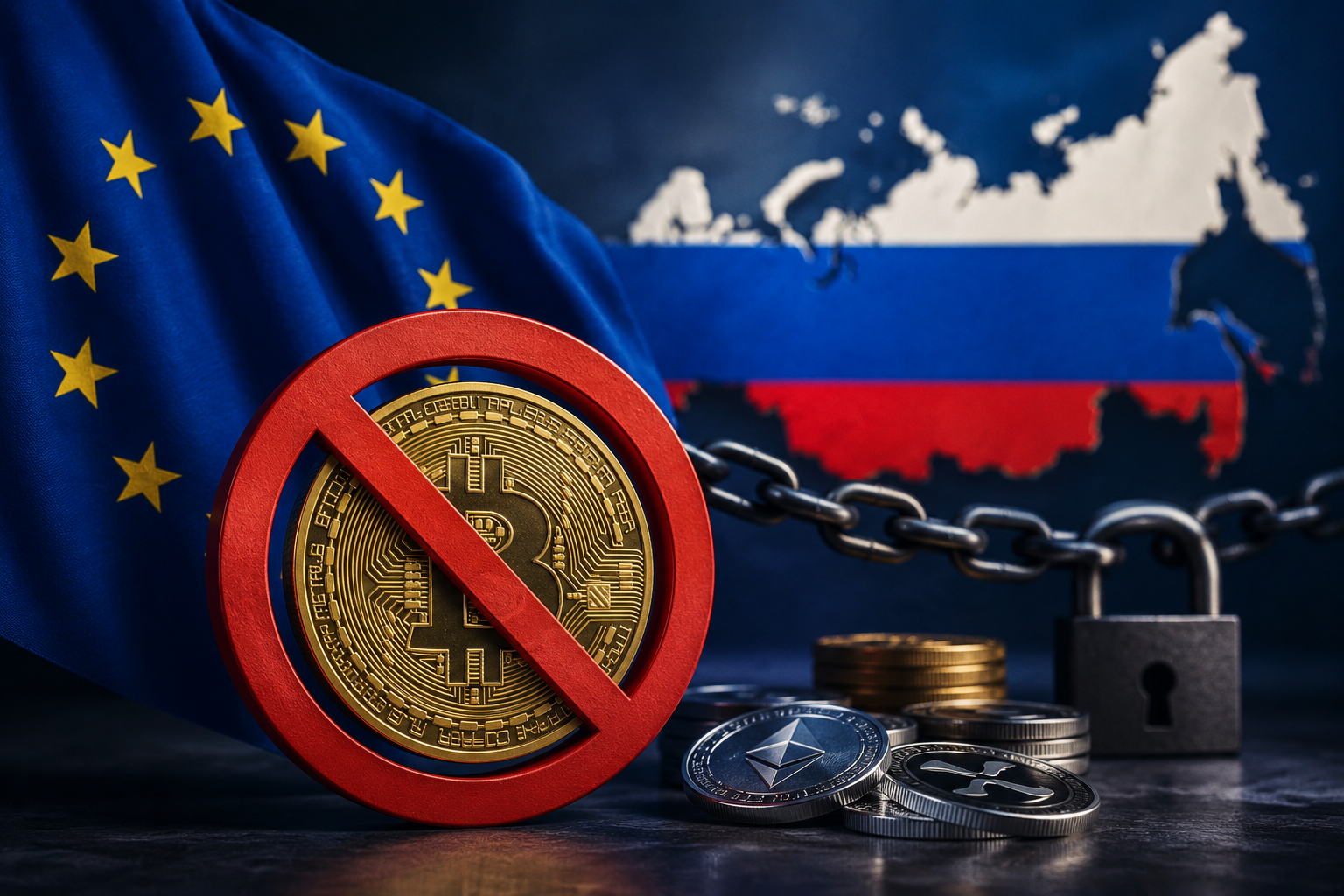
The European Union now plans a new step against Russia. EU leaders want tougher rules for crypto firms that may help Russia avoid sanctions. This move comes as the war in Ukraine continues and Western nations try to block Russian money flows.
The new proposal forms part of the EU’s 21st sanctions package against Russia. Officials believe some foreign crypto platforms may help Russian groups move money outside the normal banking system. Because of this, the EU now wants more power to act against such firms.
The proposal does not target all crypto companies. Instead, it focuses on businesses that may support sanctions evasion. EU leaders say digital assets can help move funds across borders with less control than banks. They fear Russia may use this path to reduce pressure from Western sanctions.
Why The EU Wants Tougher Rules
Since the start of the Ukraine war, the EU and its allies placed many sanctions on Russia. These sanctions cut Russian banks from large parts of the global financial system. They also blocked trade, froze assets, and limited money transfers.
After these actions, many officials began to worry about crypto use. Digital currencies can move fast and work across many countries. Some regulators fear that sanctioned groups may use crypto tools to hide transactions or send funds through foreign platforms.
EU officials now believe stronger action has become necessary. They say some crypto firms outside Europe may help Russia continue global payments. Because of this concern, the EU wants a legal system that allows direct bans on risky crypto services.
The proposal shows that the EU now sees crypto as a major part of sanctions control. In the past, the focus stayed mainly on banks and trade firms. Today, digital finance also stands under close watch.
What The New Proposal Includes
The proposed sanctions package includes many financial measures. One major part targets Russian banks. Another part focuses on crypto service providers that may support sanctions evasion.
Under the new plan, the EU could block crypto firms from third countries if officials find links to Russian sanctions bypass efforts. Third countries mean nations outside the European Union.
If approved, the law would allow the EU to stop certain crypto companies from offering services inside Europe. This could include exchanges, digital wallet firms, or payment providers.
The proposal also gives regulators more control over crypto activity tied to sanctioned Russian groups. EU leaders hope this step will reduce hidden financial networks that may help Russia continue international trade.
Officials say the goal is not to ban crypto itself. Instead, they want tighter checks on companies that may help illegal financial activity connected to sanctions.
Earlier EU Action Against Crypto Use
This is not the first time the EU has acted against crypto activity linked to Russia. Earlier sanctions already blocked many crypto services connected to Russian users and businesses.
Past rules banned transactions with Russia-based crypto providers. The EU also placed limits on some Russian digital assets and stablecoin activity. These measures aimed to stop Russia from using digital finance as an alternative to banks.
The latest proposal goes further than previous rules. Earlier actions mainly focused on firms inside Russia. Now the EU also wants power over foreign companies that may help Russian groups from outside the country.
This marks an important change in policy. EU officials now believe sanctions control must include global crypto networks, not just local exchanges.
Why Crypto Creates Concern
Crypto assets work in a different way than normal bank systems. Many transactions happen across borders within minutes. Some platforms also allow users to open accounts with fewer identity checks.
Because of this, regulators often worry about money laundering and sanctions evasion. Governments across the world already watch crypto firms more closely than before.
In the case of Russia, Western nations fear that hidden digital payments may weaken sanctions pressure. If sanctioned groups find new ways to move money, the effect of financial restrictions may become smaller.
EU leaders say crypto technology itself is not the enemy. Their concern centers on misuse by bad actors. They believe stronger oversight can help stop illegal financial activity while still allowing legal crypto business.
Impact On Crypto Companies
If the proposal becomes law, many crypto firms may face stricter rules. Companies that serve EU customers could need stronger compliance systems and deeper checks on transactions.
Foreign exchanges may also face more pressure from European regulators. Firms that fail to meet EU standards could lose access to European markets.
The proposal may especially affect companies in countries that EU officials view as weak points for sanctions control. Some businesses may need to improve customer checks and reporting systems to avoid future restrictions.
Crypto investors may also see changes. Transfers tied to sanctioned groups could face more delays, reviews, or blocks. Exchanges may place tighter limits on risky transactions.
At the same time, large crypto firms that already follow strong compliance rules may benefit. Tougher regulation could improve trust in the industry and reduce illegal activity.
Not Yet Final Law
The proposal still needs approval from EU member states. EU sanctions require full agreement from all member nations before new rules take effect.
Because of this process, discussions may continue for some time. Some countries may ask for changes before final approval.
Still, the proposal sends a strong message to the crypto industry. The EU wants to show that sanctions enforcement now includes digital finance as well as traditional banking.
Experts believe this move may also influence other Western nations. Countries such as the United States and the United Kingdom already watch crypto activity linked to sanctions risks. Future global cooperation on crypto regulation may grow stronger.
A Bigger Shift In Financial Control
The latest proposal reflects a wider global trend. Governments across the world now pay closer attention to digital assets and crypto payments.
In earlier years, crypto markets grew with limited oversight. Today, regulators focus more on security, financial crime, and consumer protection.
The Russia sanctions issue has added another layer to this debate. Western nations now see crypto control as part of national security and foreign policy.
For the EU, the main goal remains clear. Officials want to prevent Russia from using foreign crypto services to reduce sanctions pressure. They believe stronger rules can help close gaps in the global financial system.
The coming months will decide whether the proposal becomes official law. Yet even before final approval, the message from Europe already stands strong. Crypto firms across the world may now face a future with tighter regulation, closer monitoring, and greater responsibility.
ALSO READ: PPMS Real Estates Takes Control of AVI Products India