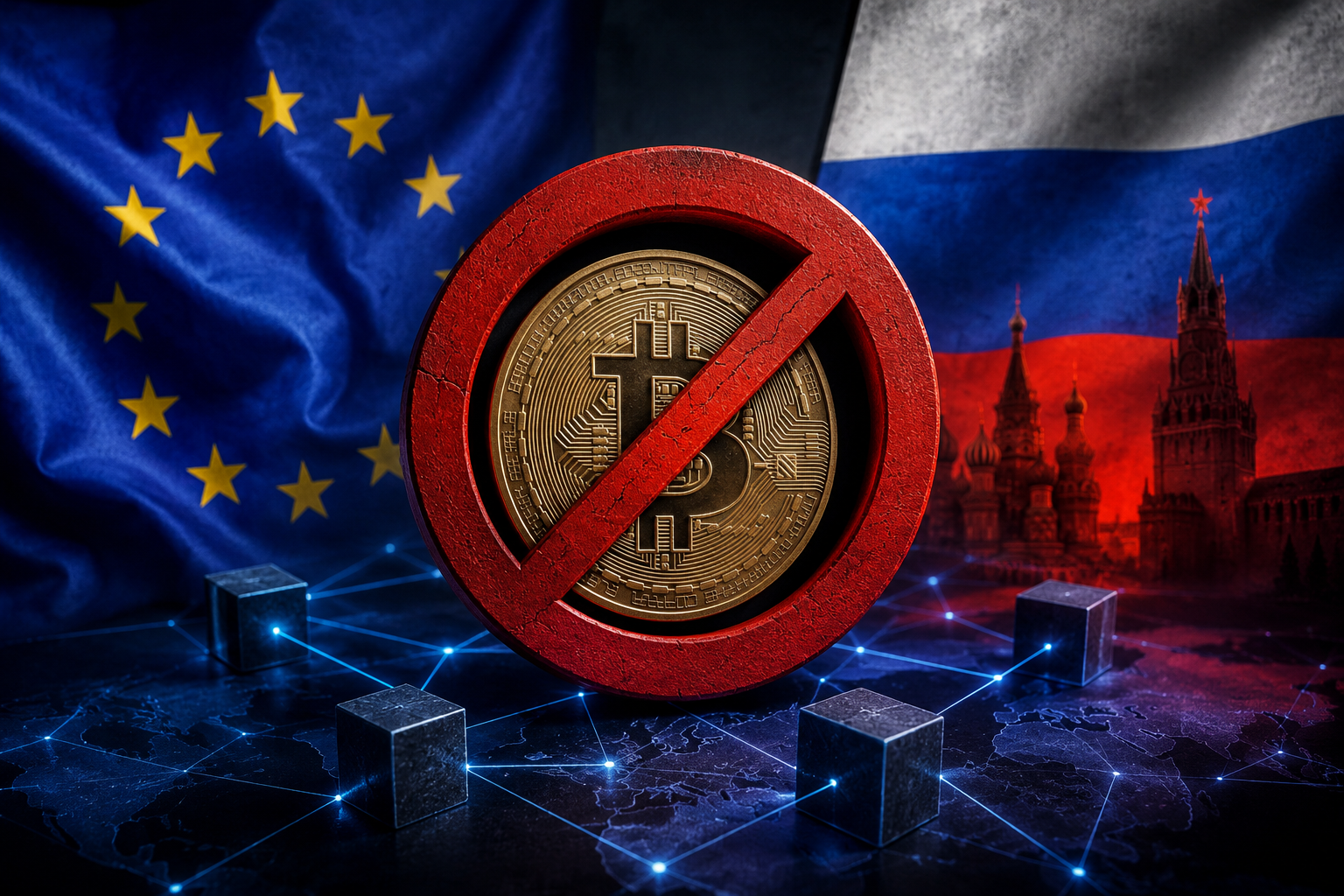
The European Union now plans stricter rules for crypto services linked to Russia sanctions evasion. Officials believe some foreign crypto firms may help Russian groups move money outside normal banking systems. Because of this concern, the EU wants tighter checks and stronger control over digital finance.
The proposal came as part of the European Commission’s 21st sanctions package against Russia. These sanctions aim to weaken financial channels that may support the Russian economy during the war in Ukraine. EU leaders say digital assets now play a bigger role in cross-border payments, so they want to close every possible loophole.
The new plan may affect crypto exchanges, payment platforms, and financial firms outside the EU that work with Russian clients or Russian-linked money networks.
Why the EU Feels Worried
Since the start of the Russia-Ukraine war, Western nations placed many sanctions on Russia. These restrictions target banks, companies, wealthy people, and trade systems. The goal is to reduce Russia’s access to global finance.
At first, traditional banking faced most of the pressure. But over time, regulators noticed that digital currencies may offer another route for money transfers. Crypto transactions move fast and often cross borders without help from banks. This raised concern among EU officials.
Authorities fear some firms outside Europe may allow Russian users to shift money through crypto wallets, stablecoins, or digital payment systems. Officials believe this may weaken the effect of sanctions.
The EU now wants to stop any company that may support these activities, even if the business operates outside Europe.
Foreign Crypto Firms Could Face Restrictions
Under the proposed rules, the EU may block foreign crypto services that help Russia avoid sanctions. This could include exchanges or payment firms that continue business with sanctioned Russian banks or entities.
The proposal may also stop some foreign financial platforms from operating inside the European market. If regulators find links to sanctions evasion, those firms may lose access to EU customers and EU financial systems.
Officials say the plan does not target crypto itself. Instead, the focus stays on illegal financial support connected to sanctioned Russian groups.
The EU believes stricter supervision will protect the financial system and improve sanctions enforcement.
Crypto Became a Global Financial Tool
Over the last few years, crypto moved far beyond small online communities. Today, many businesses and investors use digital currencies for payments, savings, and cross-border trade.
Because of this growth, governments now pay closer attention to crypto activity. Regulators across the world want more transparency in digital finance. They also want stronger checks against money laundering and sanctions violations.
The EU already introduced crypto laws under the Markets in Crypto-Assets framework, often called MiCA. These rules created licensing systems and consumer protections for crypto firms inside Europe.
Now the bloc wants to expand its focus toward foreign companies connected to risky financial behavior.
Russia and Digital Payments
Russia increased interest in digital finance after Western sanctions hit its banking system. Reports over recent years showed Russian businesses explored alternative payment methods to continue international trade.
Some firms looked at crypto, stablecoins, and blockchain payment systems as possible options. Russian officials also discussed digital currency projects to reduce dependence on Western banking networks.
This does not mean all crypto activity connects to sanctions evasion. However, EU leaders believe some bad actors may use digital assets to hide financial flows or move money quietly across borders.
Because blockchain transactions can pass through many wallets and platforms, investigators sometimes face difficulty tracing final destinations.
The EU now wants stronger cooperation between regulators, banks, and crypto companies to track suspicious activity faster.
Europe Wants More Financial Control
The latest proposal shows how seriously Europe now treats digital finance. A few years ago, many governments viewed crypto mainly as a new investment market. Today, national security and financial stability became major concerns as well.
European officials say sanctions only work when enforcement stays strong. If hidden financial channels remain open, then restricted groups may still access global markets.
By targeting foreign crypto services, the EU hopes to reduce these hidden pathways. Authorities also want to send a message that any company helping sanctions evasion may face serious consequences.
Experts say this move may increase pressure on crypto firms to improve customer checks, identity verification, and transaction monitoring.
Global Crypto Firms May Feel the Pressure
Large international crypto firms may now face greater regulatory pressure from Europe. Even companies outside the EU may need stronger compliance systems if they want access to European customers.
Many exchanges already follow anti-money laundering rules and sanctions laws. Still, regulators believe some smaller or offshore platforms may carry higher risks.
If the proposal becomes law, firms may need to prove they do not support restricted Russian entities or suspicious transactions.
Some analysts believe this could push more crypto businesses toward tighter regulation worldwide. Others warn that excessive restrictions may create uncertainty for the industry.
Even so, European leaders appear determined to move forward with stronger oversight.
Debate Around Crypto Regulation Continues
The crypto industry often argues that blockchain technology itself remains neutral. Supporters say illegal activity exists in every financial system, including traditional banking.
They also point out that blockchain records remain public and traceable in many cases. This can sometimes help investigators follow transactions more easily than cash transfers.
Critics, however, say weak regulation in some countries still creates major risks. They believe bad actors may exploit gaps between different legal systems.
Because crypto operates across borders, many governments now seek international cooperation. The EU proposal reflects this wider global trend toward stricter digital finance regulation.
What Happens Next
The sanctions proposal still needs approval from EU member states before it becomes official policy. Discussions may continue in the coming weeks as governments review the details.
If approved, the rules could reshape how foreign crypto firms interact with European markets. Companies may face more reporting duties and deeper compliance checks.
The move may also influence other countries that already worry about sanctions evasion through digital assets. More governments could introduce similar rules in the future.
For now, the proposal marks another important step in the changing relationship between governments and the crypto industry.
A New Phase for Digital Finance
Crypto once stood outside mainstream finance, but that situation changed quickly. Today, digital assets affect trade, payments, investments, and global politics.
The EU’s latest proposal shows that crypto regulation now reaches beyond consumer safety and market rules. It also connects with foreign policy and economic security.
European leaders believe stronger action will help protect sanctions systems and reduce hidden financial activity linked to Russia.
As governments tighten oversight, crypto firms around the world may enter a new era of regulation, accountability, and international scrutiny.
ALSO READ: ICICI Bank Exits Glittek Granites With Full Stake Sale