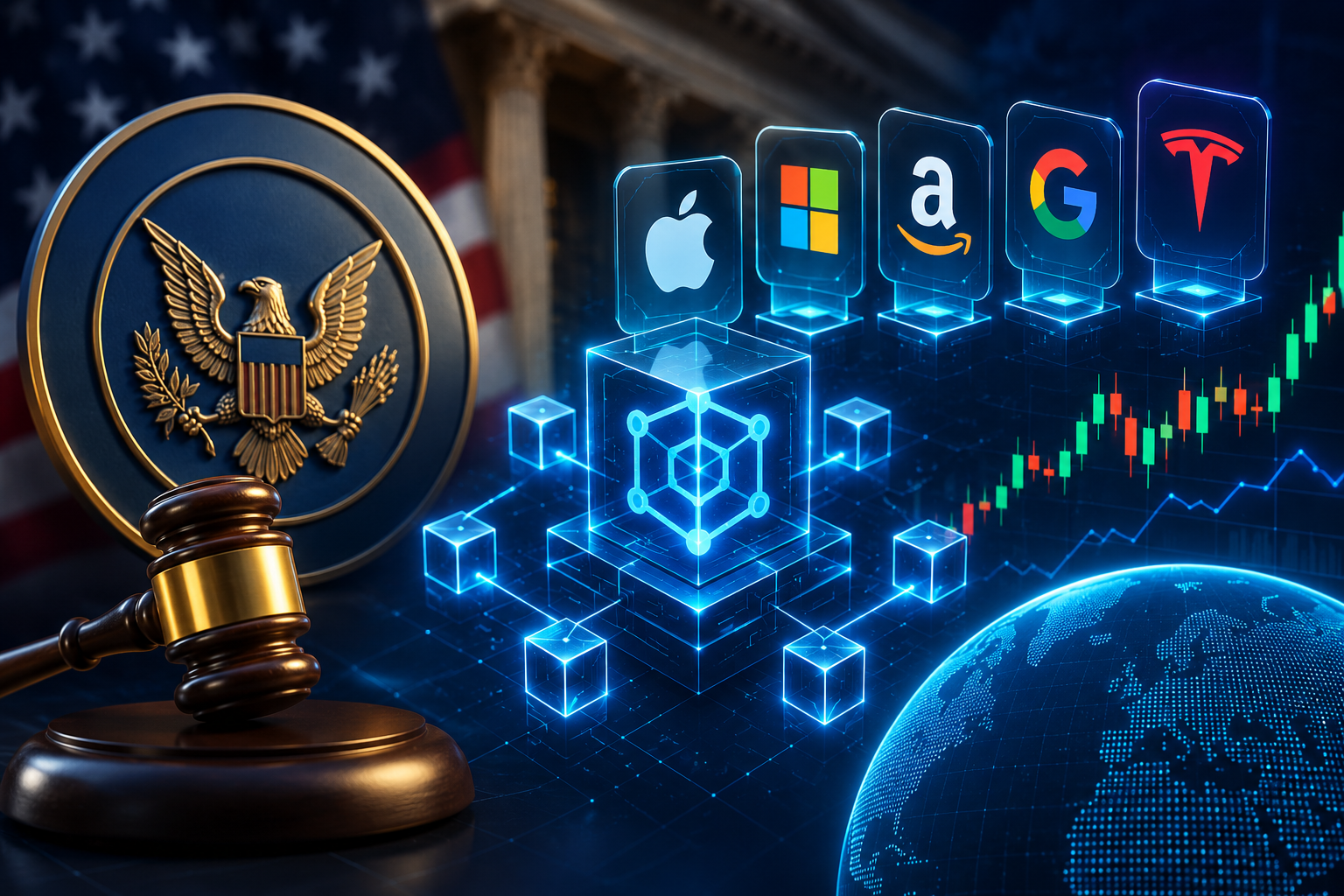
The crypto market may soon enter a very important new phase. A recent update from the United States has created excitement across both the blockchain and financial sectors. Reports suggest that the U.S. Securities and Exchange Commission, also known as the SEC, may remove or change an old stock trading rule. This change could open the door for tokenized U.S. stocks to trade directly on decentralized finance platforms, also known as DeFi.
If this happens, it could create a major connection between traditional finance and blockchain technology. Experts believe this step may change the way people buy and sell stocks in the future.
What Is The SEC Planning To Change?
The SEC currently follows a system called Regulation NMS, or National Market System. This set of rules controls how stock trading works in the United States. It has guided the market for almost twenty years.
One important part of this system is Rule 611. This rule requires brokers to send stock orders to the exchange that offers the best available price. The purpose is simple. Investors should always receive the best deal when they buy or sell shares.
Now, reports suggest that regulators may remove or reduce this rule. If that happens, companies could create new ways for stock trading outside the traditional exchange system.
This may create huge opportunities for blockchain-based finance.
Why This News Matters For Crypto
Today, tokenized stocks already exist in some parts of the crypto market. A tokenized stock is a digital token on blockchain that represents a real stock. For example, a person could own a blockchain token connected to shares of companies such as Apple or Tesla.
The problem is regulation.
Traditional stock markets work under a centralized system. Big exchanges handle transactions. Brokers route orders. Clearing houses settle trades. The market opens only during fixed hours.
DeFi works in a completely different way.
Blockchain systems use smart contracts instead of brokers. Users trade directly through decentralized applications. Many platforms stay active all day and all night without closing.
The current SEC rules were built for old financial systems. They were never designed for blockchain markets.
A rollback could remove this barrier.
The Rise Of On-Chain Stock Trading
If the SEC changes these rules, developers may build systems where people trade tokenized U.S. stocks directly on blockchain networks.
This means a user may buy digital shares connected to companies like Nvidia or Amazon without using a normal stock exchange.
The transaction could happen through blockchain technology instead of banks or brokerage firms.
This would create an entirely new way to access financial markets.
Many experts see this as a major step toward the future of finance.
A New Market Structure Through DeFi
One of the biggest changes could come through decentralized exchanges.
Traditional exchanges match buyers and sellers. Every trade needs both sides to agree.
DeFi uses a different model. It often uses something called Automated Market Makers, also known as AMMs.
In this system, liquidity pools replace traditional order books. These pools hold digital assets and stablecoins. Smart contracts automatically decide prices based on supply and demand.
If tokenized stocks enter this system, users may trade stocks in the same way they currently trade crypto assets on decentralized exchanges like Uniswap.
This would completely change how stock trading works.
Markets Could Stay Open Twenty Four Hours
One major advantage of blockchain finance is constant access.
Traditional U.S. stock markets follow fixed schedules. Most trading happens only between 9:30 AM and 4:00 PM Eastern Time.
Blockchain networks never close.
If tokenized stocks move into DeFi, people around the world may trade U.S. equities twenty four hours a day, seven days a week.
This could create more freedom for global investors.
It may also allow fractional ownership. This means someone may buy a very small part of an expensive stock instead of purchasing a full share.
For many retail investors, this could make stock investing easier.
Why Crypto Investors Feel Excited
This possible SEC change has created strong interest across the crypto industry.
One reason is the growing popularity of Real World Assets, often called RWAs.
This sector focuses on bringing traditional financial assets onto blockchain networks.
Tokenized U.S. stocks fit perfectly into this idea.
Companies that work in this sector may benefit greatly if the rule change becomes reality.
Projects like Ondo Finance already focus on real world asset tokenization. Securitize works on digital securities infrastructure. Chainlink helps blockchain networks connect with real world data.
Many investors believe these companies could play a major role in this new market structure.
Important Problems Still Exist
Even if the SEC removes these rules, tokenized stocks will not become instantly legal everywhere.
Several major challenges still remain.
First, a token connected to a stock must represent actual ownership rights. Without legal ownership, the token has little value beyond price exposure.
Second, companies need safe custody systems. Investors need confidence that their assets remain protected.
Third, stock ownership often includes dividend payments. Companies must create systems that transfer these payments to token holders.
There is also the issue of shareholder voting rights. Stock owners usually receive voting power in company decisions. Blockchain systems must solve this problem.
Governments also require anti-money laundering checks and identity verification through KYC systems.
Finally, regulators need tools that detect market manipulation and illegal activity.
These legal and technical barriers still need solutions.
The Bigger Financial Picture
This story is much bigger than crypto alone.
For years, many people asked whether blockchain technology could connect with Wall Street.
Now the conversation has changed.
Traditional financial systems slowly move toward blockchain infrastructure.
Banks, financial institutions, and regulators now show greater interest in tokenization.
If U.S. stock markets eventually move on-chain, blockchain may become part of everyday finance instead of a separate industry.
This would represent one of the biggest changes in modern financial history.
What Happens Next
Right now, the SEC has not officially completed this rollback. Discussions still continue, and no final decision exists.
However, the possibility alone has already attracted attention from investors, crypto companies, and financial experts.
If regulators move forward, tokenized stocks could become one of the biggest trends in both crypto and traditional finance.
The idea of twenty four hour stock markets, direct blockchain settlement, and decentralized equity trading no longer feels impossible.
The financial world may stand at the beginning of a major transformation.
And this small SEC rule change could become the event that starts it all.
Also Read – No One Has Ever Been This Rich — Elon Musk Makes History