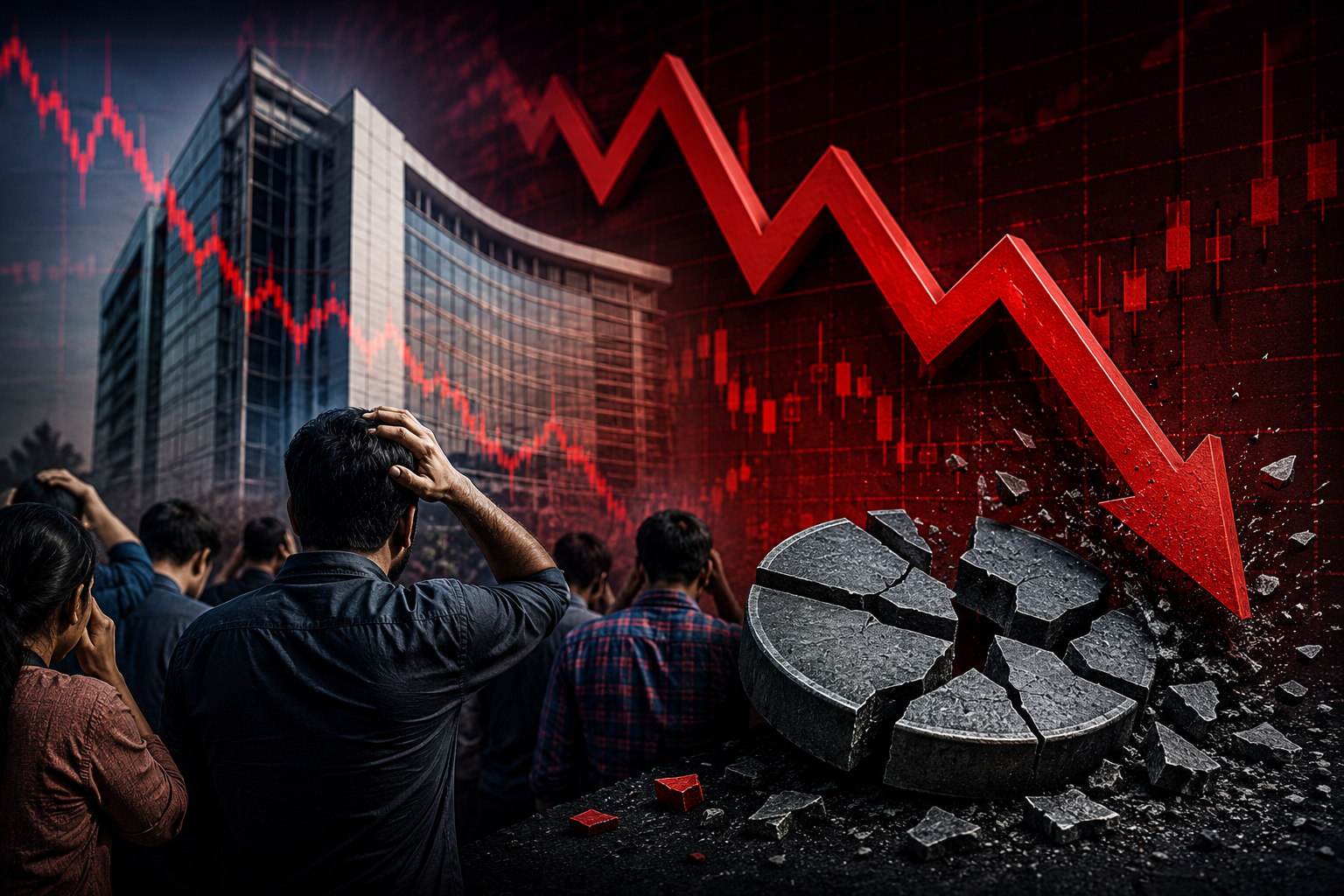
A major development in the Indian stock market has left nearly 6.5 lakh investors worried. Jaiprakash Associates Limited, once a well-known company in the infrastructure and construction sector, will officially leave the stock market on June 18, 2026. This decision has come after the company completed its insolvency process under India’s bankruptcy law.
For lakhs of shareholders, the biggest shock is not just the delisting itself. The real concern is that many investors may lose all the money they had put into the company because reports suggest there will be no compensation for existing shareholders.
This case has become one of the biggest reminders of how risky stock market investment can become when a company faces serious financial trouble.
Jaiprakash Associates To Exit Stock Market
Jaiprakash Associates, also known as JAL, has remained a known name in India’s infrastructure sector for many years. The company worked in several industries, including real estate, cement, engineering, power generation, and highway construction.
However, over time, the company faced severe financial pressure because of rising debt and business losses. The financial situation became so serious that the company entered the insolvency process under India’s bankruptcy system.
Now, after completion of that legal process, the company will officially leave both National Stock Exchange of India and BSE Limited on June 18.
Once this happens, its shares will no longer trade on the stock exchanges.
Nearly 6.5 Lakh Shareholders Face Big Loss
The biggest impact of this development falls on retail investors. Reports show that almost 6.5 lakh shareholders currently hold shares of Jaiprakash Associates.
These investors now face the harsh reality that their investment may become worthless after the company leaves the stock market.
Normally, when a company chooses to delist voluntarily, shareholders receive an exit offer. This allows investors to sell shares back to the company at a fixed price before delisting takes place.
But this situation is completely different.
Jaiprakash Associates has not left the market by choice. The company entered bankruptcy proceedings because of heavy debt, and the final resolution plan has removed existing shareholders from ownership.
This means investors do not receive the normal benefits usually seen in standard delisting cases.
Bankruptcy Process Changed Ownership Structure
The main reason behind this situation is the company’s insolvency case under India’s bankruptcy law known as the Insolvency and Bankruptcy Code, commonly called IBC.
When a company fails to pay large amounts of debt, creditors can take the company to the insolvency court so that a resolution plan can decide the future of the business.
In the case of Jaiprakash Associates, the company had debt obligations reported at more than ₹57,000 crore.
Because the debt amount became extremely high, the company entered formal bankruptcy proceedings.
During this process, a new resolution plan came forward and later received approval from the court.
As part of that plan, the ownership structure changed completely.
Existing shareholders lost their position in the company.
Why Shareholders Get No Compensation
Many investors now ask the same question. Why are shareholders not receiving any money?
The answer lies in bankruptcy rules.
Under insolvency law, payments follow a fixed priority system. The first payment goes toward insolvency-related costs. After that, secured lenders such as banks receive payment. Employees and workers come next. Unsecured creditors follow after that.
Equity shareholders stand at the very bottom of this payment structure.
This means shareholders receive payment only if money remains after all major creditors receive their dues.
In the Jaiprakash Associates case, available company assets could not cover all outstanding debt obligations.
As a result, equity shareholders received no recovery value.
Reports clearly state that the exit value for current shareholders stands at zero.
In simple words, investors may lose their entire investment.
Trading Will Stop After June 18
June 18, 2026 will become the final trading day connected to this company’s stock market journey.
After that date, Jaiprakash Associates shares will disappear from the stock exchanges permanently.
Investors will no longer buy or sell these shares on public exchanges.
For many shareholders, this marks the final chapter of an investment that once carried hope of future growth.
Those who purchased shares after major price declines may now face complete capital loss.
This has created disappointment among thousands of small investors who expected some recovery.
A Hard Lesson For Stock Market Investors
This case also offers an important lesson for stock market participants.
Many investors often believe that stocks trading at very low prices offer a good buying opportunity. People sometimes assume a falling stock will eventually recover.
But low share price does not always mean cheap value.
Sometimes a stock falls because the business itself faces serious trouble.
When a company struggles under massive debt, shareholders carry major risk.
If the company enters bankruptcy proceedings, shareholders usually stand last in line during repayment.
Even if banks and lenders recover part of their money, ordinary investors may receive nothing.
Jaiprakash Associates has become a real example of this harsh reality.
One Of India’s Biggest Equity Wipeouts
The Jaiprakash Associates delisting now stands among the biggest recent examples in India where equity investors lost complete ownership after insolvency resolution.
Nearly 6.5 lakh shareholders now face the possibility of total capital destruction.
For many retail investors, this news has come as a painful reminder that investing in financially weak companies can create serious losses.
The stock market always carries risk, but situations like this show why investors must carefully study debt levels, company health, and long-term business strength before buying shares.
As Jaiprakash Associates prepares to leave the stock market on June 18, thousands of investors now face one difficult truth.
Sometimes in the stock market, a falling stock does not recover.
Sometimes it disappears completely.
Also Read – India Faces Economic Pressure From Oil, Forex, and Rain