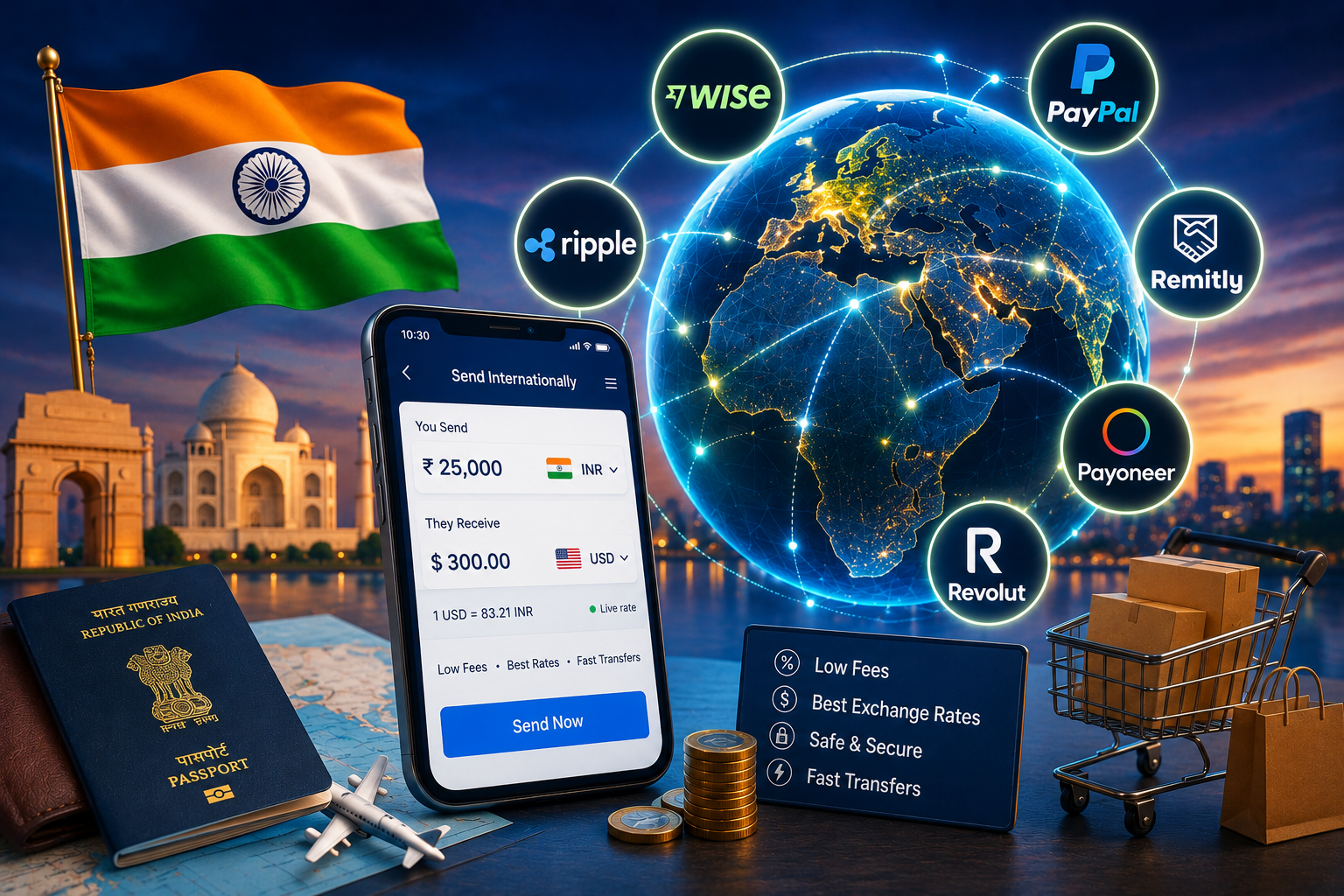
Travel outside India has become much easier in recent years. More Indians now visit foreign countries for holidays, education, work, and business. But one question often creates confusion before any international trip. What is the best way to make payments in another country?
Today, Indian travelers have many payment options. They can use UPI in some countries, carry a forex card, swipe a credit card, or exchange money and carry cash. Every payment method has its own benefits and drawbacks. Some options save money, while others offer better convenience or safety.
Choosing the right payment method can help travelers avoid extra charges and reduce unnecessary expenses. It can also make travel smoother and stress free. Let us understand which option works best for Indians in 2026.
Why Choosing the Right Payment Method Matters
Many people only focus on flight tickets and hotel bookings while planning an international trip. They often ignore payment costs. But payment charges can quietly increase total travel expenses.
Banks charge fees when people spend money abroad. Currency conversion fees, foreign transaction fees, ATM withdrawal charges, and exchange rate differences can all add extra cost. Sometimes travelers lose thousands of rupees simply because they use the wrong payment method.
This makes it important to understand all available options before leaving India.
Forex Card Remains the Best Option for Most Travelers
A forex card is one of the smartest payment methods for Indians who travel abroad. It works like a prepaid card. Travelers load money before departure in foreign currency such as US Dollar, Euro, Pound, or Dirham.
The biggest advantage of a forex card is exchange rate protection. The exchange rate gets locked at the time of loading money. If currency rates change later, the traveler does not lose extra money.
Most forex cards support many currencies at the same time. This helps people who plan to visit more than one country during a trip.
A forex card also offers better safety than carrying physical cash. If the card gets lost, many providers allow card blocking and replacement.
The cost remains fairly low. Card issuance usually costs between ₹0 and ₹500. Forex markup often stays between 0 percent and 1 percent. ATM withdrawals usually cost around 2 to 5 dollars depending on the provider.
This option works best for tourists, students, and travelers who already know how much money they may spend during the trip.
Because of lower charges and better security, forex cards still remain the best overall payment option for most Indian travelers.
Credit Cards Work Best for Frequent Travelers
Credit cards have become a popular option for international payments. They work almost everywhere in the world. Hotels, airlines, shopping stores, restaurants, and online services all accept credit cards.
The biggest benefit is convenience. Travelers do not need to preload money. They can spend whenever required.
Many premium credit cards also offer rewards. Users earn cashback, travel points, airport lounge access, and airline miles. This makes them attractive for people who travel regularly.
Credit cards also offer better fraud protection. If suspicious activity happens, banks can reverse unauthorized transactions in many cases.
But standard credit cards come with one major drawback. Most Indian banks charge foreign transaction fees. These charges usually range between 1 percent and 3.5 percent. GST applies on these charges as well.
This can make international spending expensive.
A better option is a zero forex markup credit card. Some cards now remove foreign transaction fees completely.
Examples include cards from IDFC FIRST Bank, Scapia, and RBL Bank.
Credit cards work best for business travelers, frequent flyers, and people who pay full bills on time every month.
UPI International Offers Great Convenience but Limited Access
UPI has completely changed the way Indians make payments inside the country. It has become simple, fast, and familiar for millions of users.
Now UPI has started expanding internationally. This allows Indian travelers to pay directly from their bank account in selected countries.
UPI works in countries such as Singapore, UAE, Nepal, Bhutan, Sri Lanka, and France. More countries may join in future.
The biggest advantage is convenience. Travelers do not need a separate card. They can pay directly through apps they already use in India.
Transactions usually happen instantly. The process feels very simple because most people already understand how UPI works.
But international UPI still has limitations. It does not work everywhere. Only selected merchants and payment systems accept it.
Some banks may also charge currency conversion fees. These charges often stay between 1 percent and 2 percent.
This means UPI cannot become the only payment option for international travel.
UPI works best for small daily payments in countries where international UPI support already exists.
Cash Still Matters but Should Stay Limited
Cash remains the oldest payment method for international travel. Many travelers still exchange Indian rupees before departure and carry foreign currency notes.
Cash helps in situations where digital payment options fail. Small shops, local taxis, street markets, and tipping often become easier with physical money.
Cash does not depend on internet connection or card machines. This makes it useful during emergencies.
But cash comes with several disadvantages.
Currency exchange counters at airports usually offer poor exchange rates. Travelers often lose money during exchange.
Cash also carries theft risk. If cash gets stolen or lost, recovery becomes almost impossible.
Another problem comes after returning home. Leftover foreign currency often leads to extra conversion loss while exchanging back to rupees.
Because of these issues, travelers should only carry a small amount of cash.
Experts usually suggest carrying around 5 percent to 10 percent of the total travel budget in physical cash.
Cash should act as backup rather than primary payment method.
Comparing Total Cost of Spending Abroad
Let us understand the cost difference with an example.
Suppose a traveler spends ₹1,00,000 during an international trip.
A forex card usually creates extra charges between ₹500 and ₹1,500.
A zero forex credit card may cost between ₹0 and ₹1,000 depending on provider rules.
A regular credit card often creates charges between ₹2,500 and ₹4,000 because of forex markup and taxes.
UPI international payments may add costs between ₹1,000 and ₹2,000 depending on bank conversion charges.
Cash exchange often creates the highest loss. Travelers may lose between ₹2,000 and ₹5,000 because of poor exchange rates.
This comparison clearly shows how payment choice directly affects travel budget.
Which Payment Method Should Indians Choose
There is no single perfect option for every traveler. The best choice depends on travel purpose and spending habits.
For vacation trips, forex cards usually offer the best balance of safety and low cost. Travelers can keep most funds inside the card, carry some cash, and use a credit card as backup.
Students who move abroad for long term education usually benefit most from forex cards because spending becomes easier to control.
Frequent business travelers may benefit more from zero forex credit cards because they provide flexibility and reward benefits.
Travelers who visit places like Dubai or Singapore can use UPI for small purchases because merchant support has improved there.
Cash should remain only a backup option for emergencies or small local payments.
Final Thoughts
International travel has become more common for Indians, but smart spending remains very important. The wrong payment method can quietly increase expenses and reduce travel budget.
Forex cards continue to remain the best overall option because they offer low charges, safety, and exchange rate protection.
Credit cards work very well for frequent travelers, especially zero forex cards that remove international transaction fees.
UPI international payments offer strong convenience but still work only in limited countries.
Cash remains useful for emergencies but should never become the main payment option.
The smartest travelers usually combine multiple options instead of depending on just one.
In 2026, the best strategy for Indians is simple. Use a forex card as the main payment option, keep a good credit card as backup, carry a small amount of cash, and use UPI wherever international support exists.
A smart payment decision can save money and make every international trip much easier.
ALSO READ: How to Get a Job at Angel One in 2026 Easily