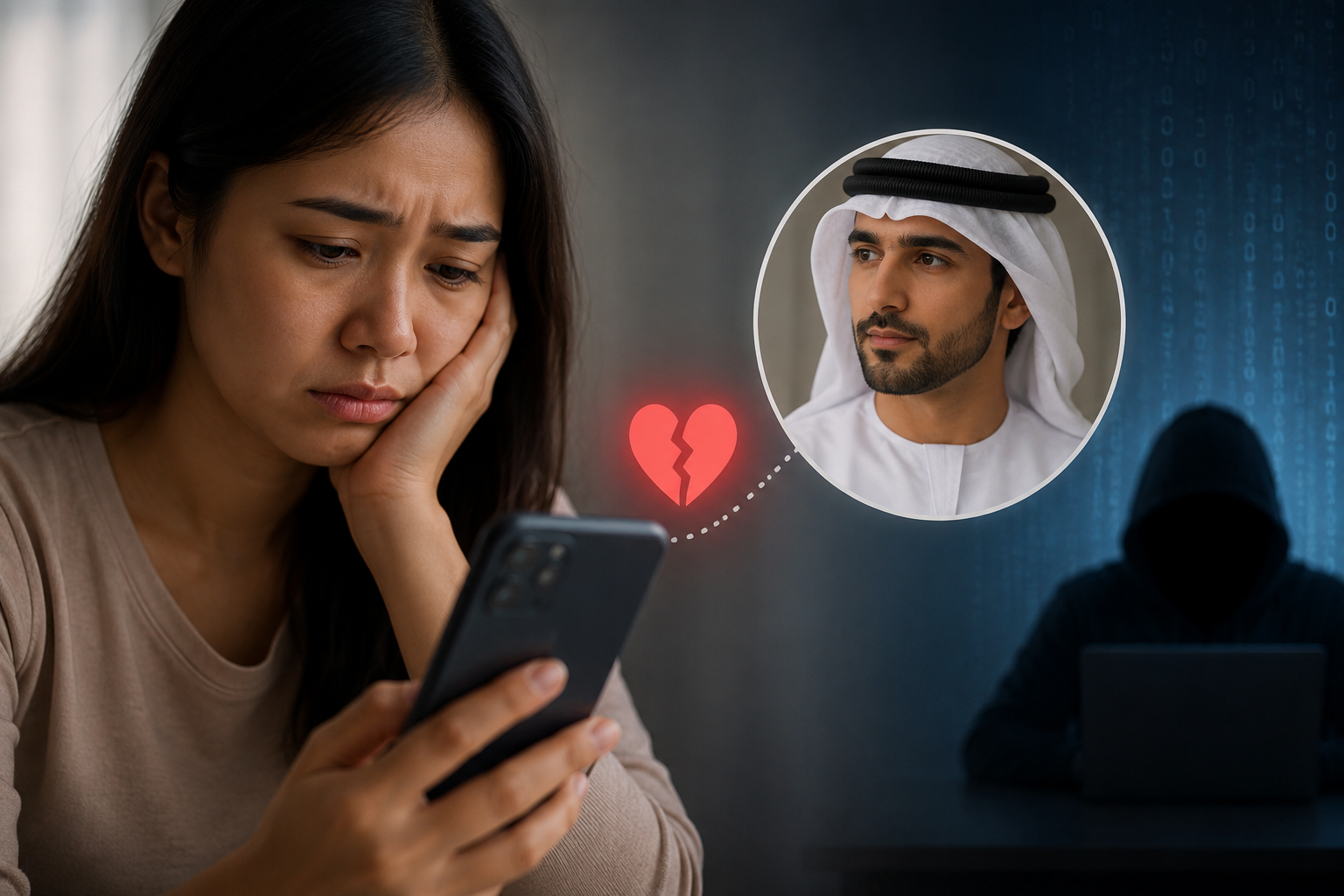
A woman lost almost all the money she had saved for one year after she became the victim of a smart online scam. The criminals used artificial intelligence to pretend they were Dubai’s crown prince. They built trust, made false promises, and finally convinced her to send money.
The case has received attention because it shows how modern technology has made online scams much harder to detect. Deepfake videos now look so real that many people find it difficult to tell the difference between a fake person and a real one.
The Victim Was Looking for Love
The victim, known only as Maria, works as a domestic helper from the Philippines. Like many people, she joined a dating website in the hope of finding a partner.
While using the platform, she met a man who claimed he was Sheikh Hamdan bin Mohammed, the crown prince of Dubai. The profile looked genuine, and the conversations felt warm and friendly. Nothing seemed unusual at first.
After some time, the man asked Maria to continue their conversations on WhatsApp. She agreed because she believed she had met someone honest and trustworthy.
AI Made the Scam Look Real
The scammers did much more than send messages. They also used AI technology to create fake video calls.
During those calls, Maria believed she was speaking to the real crown prince. The face looked natural. The lips moved in the right way. The voice matched the person’s face. Everything appeared real.
This technology is known as a deepfake. It uses artificial intelligence to copy a person’s face and voice. As the technology improves, fake videos become more convincing. Many people may not notice anything unusual, especially when they already trust the person on the screen.
Because of these realistic video calls, Maria had no reason to doubt the man’s identity.
Trust Grew Over Time
The conversations continued for some time. The man remained kind, caring, and respectful. He spoke about a future together and made Maria believe that their relationship was serious.
This emotional connection became the biggest tool in the scam. The criminals knew that trust often leads people to ignore warning signs.
Maria believed the relationship was real because the messages, video calls, and promises all matched the story that the scammers had created.
The First Request for Money
After gaining Maria’s trust, the fake prince asked for money.
He told her that she needed to pay for a marriage certificate and a royal membership card. He claimed these documents would help her get a job in Dubai and also prepare for their future together.
Maria believed the explanation and sent 100,000 Philippine pesos. The amount equals about 1,625 US dollars. It also represented almost a full year’s savings for her.
She believed she was investing in a better future. Instead, the money went straight to the scammers.
Another Demand Raised Questions
The criminals did not stop after the first payment.
They later asked Maria to send another 60,000 Philippine pesos. This time, they said the money would reserve a hotel room for their first meeting.
This new request finally made Maria feel uncertain. She began to wonder why someone who claimed to be a wealthy royal family member would ask her for money.
That single question became the turning point in the case.
The Truth Finally Came Out
Maria decided to check the Facebook account linked to the person who claimed to be Dubai’s crown prince.
Her search revealed an important detail. The account was not operated from the United Arab Emirates. Instead, it came from Nigeria.
At that moment, she realized she had become the victim of a carefully planned fraud.
She immediately ended all contact with the scammers. Sadly, the money she had already sent was gone.
Why This Scam Worked
This scam succeeded because it combined several powerful tricks.
First, the criminals chose a famous public figure. Many people know the name of Dubai’s crown prince, which made the story sound believable.
Second, they built an emotional relationship before asking for money. They did not rush. They spent time creating trust.
Third, they used AI deepfake video calls. The realistic face and voice made the fake identity much more convincing than simple text messages.
Finally, they gave believable reasons for every payment. They talked about official documents, future plans, and travel arrangements. These excuses made the requests appear normal.
When all these methods came together, the scam became difficult to recognize.
AI Creates New Challenges
Artificial intelligence offers many useful benefits, but criminals also use it in harmful ways.
Deepfake technology can copy the appearance and voice of well-known people with surprising accuracy. As a result, fake conversations may seem completely real.
This makes online fraud much more dangerous than before. In the past, poor-quality photos or unusual messages often exposed scammers. Today, advanced AI can hide many of those warning signs.
Experts believe more people may face similar scams unless they become aware of how these tricks work.
A Reminder for Everyone
Maria’s experience shows that anyone can become the target of an online scam. Age, job, or education does not always protect people from emotional manipulation.
When a person met online asks for money, especially for documents, travel, gifts, or special fees, it is wise to question the request. A genuine relationship should never depend on financial payments.
It is also important to verify a person’s identity through trusted sources instead of relying only on messages or video calls.
A Costly Lesson
Maria lost 100,000 Philippine pesos, which was almost an entire year’s savings. The money was meant to support her future, but it disappeared because of a carefully planned AI deepfake romance scam.
Her story serves as a warning for internet users around the world. Modern technology has made online fraud more convincing than ever before. A friendly conversation, a familiar face, or even a realistic video call may not always tell the truth.
As AI continues to improve, awareness remains one of the strongest ways to stay safe. Careful verification, healthy doubt, and refusal to send money to someone known only through the internet can help prevent similar losses.
Also Read – ONGC Sees Rs. 41.26 Crore Block Trade at Rs. 240.49 Share