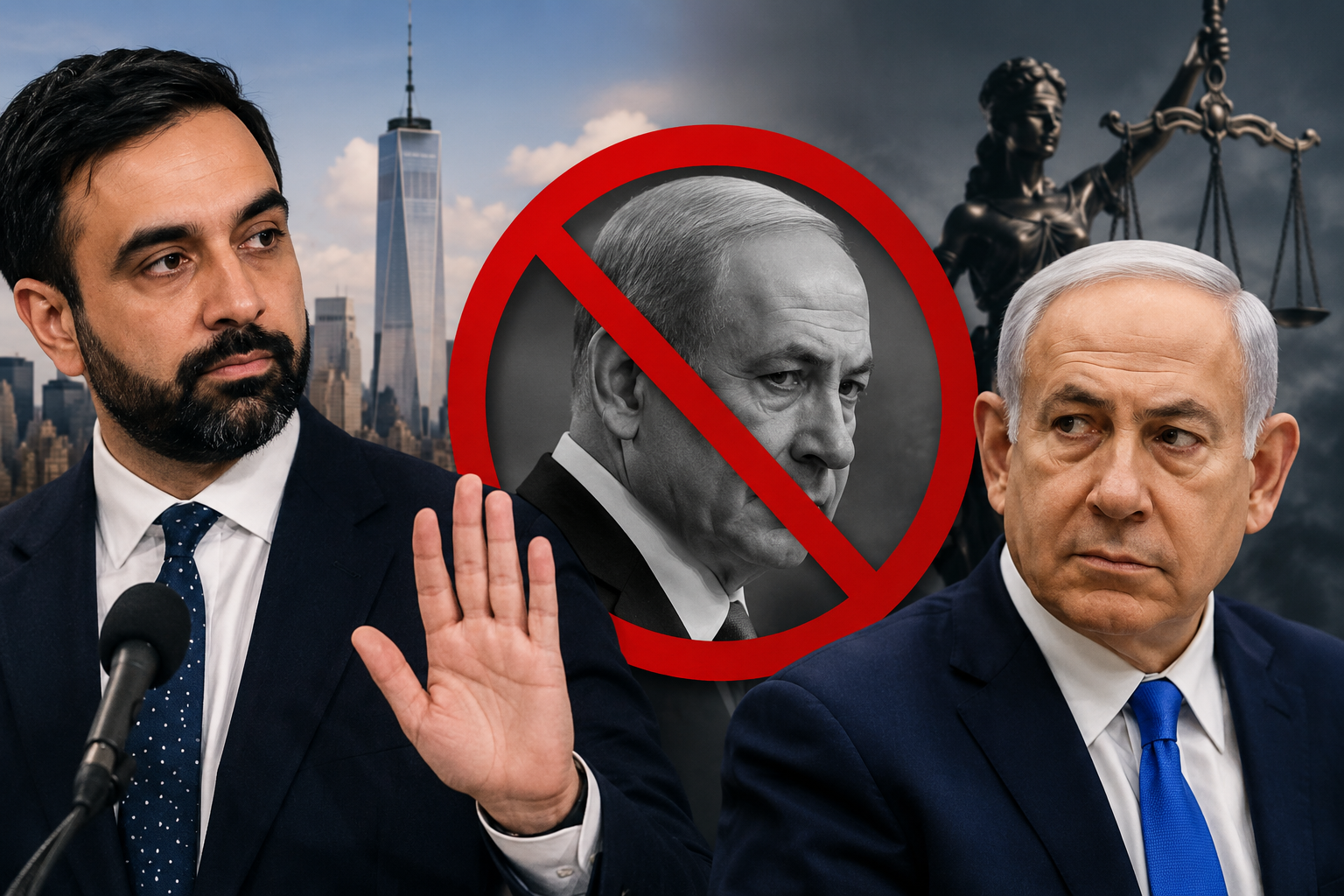
New York City Mayor Zohran Mamdani has changed his earlier position on Israeli Prime Minister Benjamin Netanyahu. During his political campaign, Mamdani said he would try to arrest Netanyahu if he came to New York City. That statement drew attention across the United States and in many other countries.
Now, Mamdani says he does not have the legal power to make such an arrest. After a closer look at the law, he said a New York City mayor cannot carry out an arrest based on a warrant from the International Criminal Court, also known as the ICC.
His latest comments mark a clear change from what he said before. Even so, he still holds strong views about Netanyahu and the war in Gaza.
Why Mamdani Changed His Position
Mamdani explained that his earlier statement came from his belief that leaders should face justice if they commit serious crimes. However, after legal review, he accepted that the mayor of New York City does not have the authority to enforce an ICC arrest warrant.
He said the power to deal with such international legal matters does not belong to a city government. Instead, those decisions fall under the authority of the federal government.
Because of this, Mamdani said he cannot carry out the promise he made during his campaign.
The ICC Arrest Warrant
The International Criminal Court issued arrest warrants for Israeli Prime Minister Benjamin Netanyahu and former Israeli Defense Minister Yoav Gallant in 2024.
The court accused both men of alleged war crimes and crimes against humanity linked to the conflict in Gaza. These accusations remain allegations. The court has not reached a final judgment.
Israel strongly rejects the claims. Israeli leaders have said the ICC does not have legal authority over Israel in this matter. They also say the accusations do not reflect the facts of the conflict.
The ICC exists to investigate and prosecute people accused of the most serious international crimes. These include war crimes, crimes against humanity, genocide, and the crime of aggression.
Why New York City Cannot Make the Arrest
Many people asked why a mayor could not arrest someone if an international court issued a warrant.
The answer lies in the limits of local government.
A mayor leads a city and has authority over local matters such as public services, city agencies, and local police. International legal cases do not fall under the powers of a city government.
Even if a foreign leader visits New York City, a mayor cannot simply order an arrest because an international court asks for one.
Questions about international law, foreign relations, and treaties belong to the federal government of the United States.
This legal reality led Mamdani to change his earlier position.
The Role of the United States
The United States is not a member of the International Criminal Court.
Because of this, the country does not have a legal duty to enforce ICC arrest warrants. The United States has taken this position for many years under different administrations.
As a result, any decision about cooperation with the ICC belongs to the federal government, not to state or city officials.
Mamdani said that if any action takes place, it should come from federal authorities instead of New York City.
Mamdani Still Keeps His Criticism
Although Mamdani no longer says he can arrest Netanyahu, he has not changed his opinion about the Israeli leader.
He continues to describe Netanyahu as a war criminal and says he does not welcome him in New York City.
His remarks show that his political views remain the same even though his understanding of the legal limits has changed.
This difference between personal opinion and legal authority has become a major part of the public discussion.
Strong Reactions After His Comments
Mamdani’s earlier promise became a major topic during his campaign. Supporters praised his tough stand and said leaders should face accountability for their actions.
Critics argued that he made a promise that a mayor could never legally fulfill. They said city officials do not have the power to enforce international court warrants.
His latest statement has also created debate.
Some people see the change as a sign that he accepted the legal facts after further review. Others believe he should not have made the original promise before he understood the limits of his office.
The issue has continued to spark discussion in political circles and on social media.
The Wider Debate
The controversy goes beyond one mayor or one city.
It raises larger questions about how international law works and who has the power to enforce it.
The International Criminal Court depends on countries to carry out its arrest warrants. The court does not have its own police force. If a country does not cooperate, the court has very limited options.
Countries that belong to the ICC usually have obligations under the court’s rules. Countries outside the ICC, such as the United States, do not have the same legal responsibilities.
This situation often creates difficult legal and political debates when world leaders travel abroad.
Netanyahu’s Position
Benjamin Netanyahu has denied the allegations against him.
Israel has rejected the ICC warrants and argues that the court does not have jurisdiction over Israeli officials.
Israeli leaders also say their military actions came as part of the country’s right to defend itself after the Hamas attack on October 7, 2023.
The legal and political dispute over the ICC warrants continues, and there is no final decision on the allegations.
A Story That Shows the Limits of Local Power
The latest statement from Mayor Zohran Mamdani highlights an important difference between political promises and legal authority.
During his campaign, he promised to arrest Benjamin Netanyahu if the Israeli leader came to New York City. After legal review, he acknowledged that such an action falls outside the powers of a city mayor.
He now says the federal government would have to handle any issue related to an ICC arrest warrant.
At the same time, he has not changed his criticism of Netanyahu or his opinion about the Gaza conflict.
The issue has become an example of how international law, national authority, and local government operate under different legal systems. It also shows how public officials may adjust their positions after a closer look at the law.
For now, Mamdani’s earlier arrest pledge has ended, replaced by his view that the decision, if any, belongs to the United States federal government rather than the mayor of New York City.
ALSO READ: HAL Breakout Confirmed? Charts Signal Strong Upside