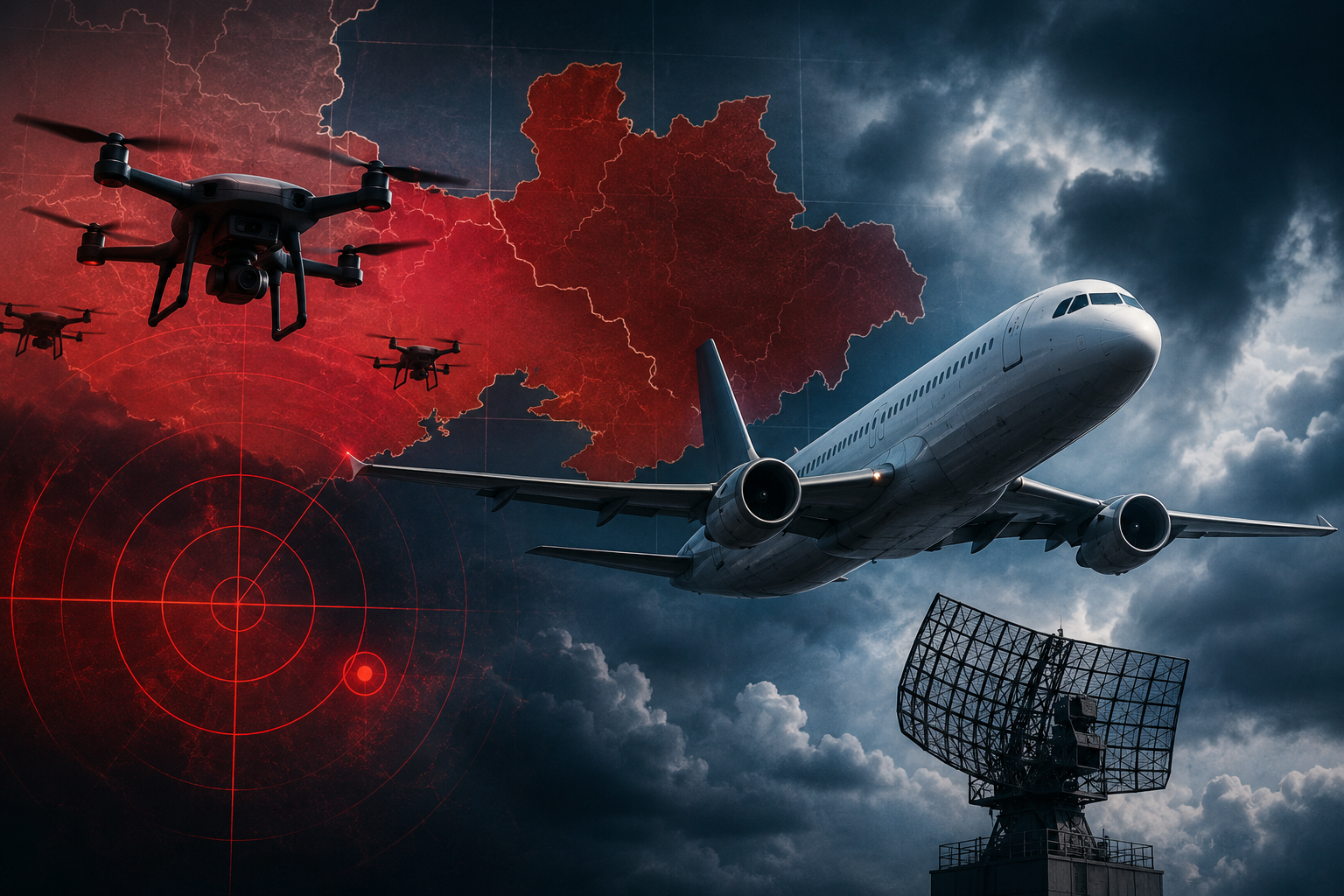
Ukrainian President Volodymyr Zelenskyy has issued a serious warning to airlines, insurers and passengers who still use Russian airspace. He says the skies over Russia are no longer a normal place for civilian flights because Ukrainian drones are now reaching deep inside Russian territory.
On September 3, Zelenskyy said airlines must pay attention to the real situation in Russian airspace. He said Russian skies have become a place for drones rather than civilian aircraft. His message was simple: airlines should put safety first and should not rely only on statements from Russian officials that air travel remains safe.
The warning came after a sharp rise in Ukrainian drone attacks inside Russia. Moscow and other Russian cities have faced repeated drone threats, and airports have had to delay, cancel or divert flights. This has raised a difficult question for international airlines: can they continue to treat Russian airspace as safe while the war reaches farther into the country?
Ukraine Warns the Global Aviation System
Ukraine has taken the warning beyond public statements. On September 2, Ukrainian Foreign Minister Andrii Sybiha said Kyiv had officially notified the International Civil Aviation Organization, or ICAO, that Russian airspace was unsafe for civilian aviation.
Ukraine urged airlines and governments to avoid Russian airspace because of increased military activity. Kyiv said Russia has not done enough to inform airlines about the risks. Ukraine said its action was meant to reduce the chance of an accident and protect civilian lives.
Ukraine also asked ICAO to support steps that could stop civilian aircraft from operating in Russian airspace. However, ICAO does not have the power to simply close the airspace of Russia. Its role is to set global aviation standards and guide member states. Individual countries and airlines still make many of the final decisions about flight routes.
Zelensky Says Drones Are the New Reality
Zelenskyy says Ukraine is not targeting civilian aircraft. He has made that point clear while warning that the number of Ukrainian drones inside Russia has become too large for airlines to ignore.
In his September 1 address, he said Russian airspace would effectively be closing because of the war. He also said Ukraine does not want innocent people to die.
His argument is based on a simple fact. A drone does not have to target a passenger plane to create a danger for one. A drone attack can lead to air defence systems firing weapons. Airports can close without much notice. Aircraft can change routes, divert to other airports or remain on the ground until the threat passes.
On September 3, Zelenskyy repeated this message. He said drones are a concrete reality, while words from Russian officials cannot remove the danger.
Moscow Rejects the Warning
Russia has strongly rejected Ukraine’s claims.
Russian Transport Minister Andrei Nikitin said Russian aviation authorities were improving flight safety and airport security. He said the authorities were in close contact with the Defence Ministry and the National Guard and would not allow major disruption to civil aviation.
Russian authorities have also said that airports and airlines can continue to operate despite the threat from Ukrainian drones. Moscow wants to show that its aviation system remains safe and under control.
The dispute therefore has two very different sides. Ukraine says the growing number of drones makes Russian airspace unsafe. Russia says its security system can protect civilian aviation and prevent major disruption.
The problem for airlines is that they must make their own safety decisions. They cannot simply depend on political statements from either side.
Moscow Airports Face Major Disruption
The situation on the ground has already caused problems for air travel.
On September 2, flight data showed major delays and cancellations at Moscow airports. Sheremetyevo had 21 cancelled flights and 235 delays. Vnukovo had 22 cancelled flights and 94 delays.
Turkish low-cost airline Pegasus Airlines also cancelled flights connected to Vnukovo. The airport said Pegasus cancelled six arriving and six departing flights on Tuesday. The airline said some overnight services would also face an impact, while other flights continued as planned.
A Pegasus flight from Antalya to Moscow was also diverted because of security concerns. Turkish Airlines mostly kept its Moscow services in place, although it cancelled two departures and two arrivals between Istanbul and Moscow.
These events show why the issue matters. An airspace does not need a formal closure to become difficult for airlines. If airports close for short periods, flights can face long delays and sudden route changes.
Why International Airlines Are Watching Closely
The effect could reach far beyond Russia.
Most airlines from the United States and Europe already avoid Russian airspace. They stopped using those routes after Russia launched its full-scale invasion of Ukraine in February 2022.
But several airlines from other parts of the world still use Russian airspace or serve Russian airports. These include major carriers from China, Turkey and the Gulf region. Emirates, Turkish Airlines, Air India, Etihad and Qatar Airways are among the airlines that have continued to use routes connected to Russia. Several Chinese carriers also remain active in the region.
For these airlines, the new drone threat creates a difficult choice. Avoiding Russian airspace may add time and fuel costs to some routes. Continuing to use it may expose aircraft to a greater security risk.
Airlines also have to consider insurance. If insurers decide that the risk has risen sharply, the cost of operating certain routes could increase. That could make some flights less attractive even if governments do not formally ban them.
The Risk Is Not Only From Drones
The danger to civilian aviation is not limited to a direct drone strike.
A modern air defence system can create risks of its own. When a military sees an unknown object near a protected area, it may try to destroy it. Missile launches, debris and mistakes in identification can all create danger for aircraft.
There is also the risk of sudden airport restrictions. If drones approach a major city, authorities may stop takeoffs and landings until the threat passes. This can cause a chain reaction across the airline network.
An aviation risk advisory company, Osprey Flight Solutions, said most Ukrainian drone and missile attacks were likely to take place within 300 kilometres, or about 186 miles, of the Ukrainian border. But it also assessed that attacks deeper inside Russia were likely to continue through 2026, including near Moscow and St Petersburg.
The company also warned about the risk of mistakes or misidentification in areas linked to the war.
A Past Air Disaster Adds to the Concern
The debate also comes with the memory of a major aviation tragedy.
In 2024, an Azerbaijan Airlines passenger plane that was flying toward Grozny in Russia crash-landed in Kazakhstan after it changed course. Thirty-eight people died.
Russian President Vladimir Putin later said two Russian missiles had exploded near the aircraft after Ukrainian drones entered the area. The incident became another reminder of the dangers that civilian aircraft can face when they operate close to active military activity.
Ukraine has also kept its own airspace closed to civilian aviation since Russia launched its full-scale invasion on February 24, 2022. Russian attacks forced Ukraine to keep its skies closed, while civilian aviation in Russia has continued despite repeated temporary airport closures.
ICAO Also Raises Concern
ICAO has not announced a blanket closure of Russian airspace. But the U.N. aviation agency has warned about the wider problem of civilian aircraft near conflict zones.
The agency said the risk of civilian aircraft being targeted or caught in crossfire has increased. It also noted that airlines can change routes during conflicts, but route changes do not remove the basic security threat.
That point is important. Airlines can avoid certain areas, but they cannot always predict where a drone will appear or how a military response will unfold.
What Happens Next?
The biggest question now is whether more airlines will change their routes.
If drone attacks inside Russia continue at a high level, airlines may decide that the cost and risk of Russian routes are no longer acceptable. Some may cancel services to Russian airports. Others may choose longer routes around Russian airspace.
Russia, meanwhile, is likely to keep its airports open and assure airlines that its security system can protect civilian flights.
Ukraine has said it will continue its military response to Russia’s attacks, while also leaving room for temporary pauses in drone activity along certain routes if international partners request them as part of peace efforts. Zelenskyy said safety could return to Russian skies if there is real progress toward peace.
For airlines, however, the immediate issue is much simpler: is the route safe today?
That is why Zelenskyy’s warning has attracted so much attention. He is not announcing a formal closure of Russian airspace. Instead, he is telling airlines that the old idea of Russian skies as a stable route for civilian aircraft may no longer match reality.
With drones now able to reach deep inside Russia, airports facing repeated disruption and governments on opposite sides of the war giving very different safety messages, airlines must make difficult choices.
For passengers, the result may be delays, cancellations, diversions and longer routes. For the aviation industry, it could mean higher costs and a major rethink of some routes across Russia.
The wider message from Ukraine is clear: the war is no longer only a problem near the front line. Its effects now reach deep into Russian airspace, and civilian aviation cannot ignore that reality.