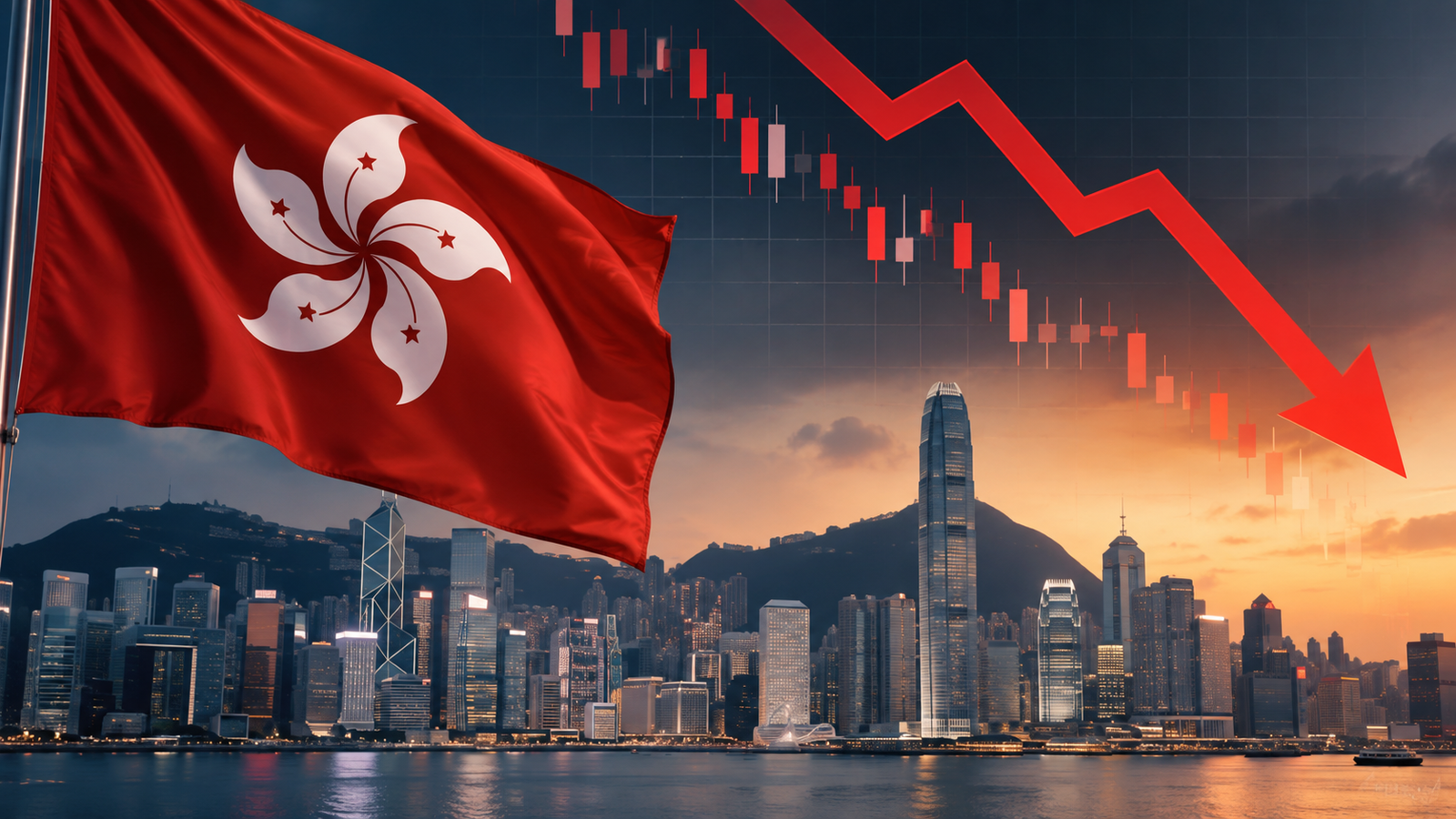
Hong Kong stocks had a weak session on Monday, September 7, 2026. The market first showed a small rise at the open, but that move did not last. The Hang Seng Index soon turned lower as investors grew more worried about US interest rates, higher oil prices and fresh tension in the Middle East.
By the close, the Hang Seng Index fell 248 points, or 1%, to 25,402. Market turnover reached HK$122.97 billion, which shows that trading activity stayed strong even as prices moved lower.
The Hang Seng China Enterprises Index fell 128 points, or 1.5%, to 8,426. The Hang Seng TECH Index lost 45 points, or 1%, to 4,524.
The decline came despite a stronger tone across some other Asian markets. Japan and South Korea both saw strong gains, helped by demand for chip and artificial intelligence stocks. Hong Kong, however, faced more pressure from rate concerns and oil prices.
The Hang Seng Changes Direction
The market opened at 25,652, up just 2 points, or 0.01%. That early gain quickly disappeared. The index soon moved into negative territory and was down about 239 points during the early part of the session.
This quick change shows how sensitive Hong Kong shares have become to global economic news. Investors are not only focused on company results. They are also watching US interest rates, oil prices, China policy and geopolitical risk.
A strong US jobs report had already changed views about the Federal Reserve. The report gave investors more reason to expect that US rates could stay high for longer. The chance of a September Fed rate hike rose to about 57%, although the final decision will depend on new inflation data.
Higher US rates can create pressure on Asian markets. When US bonds offer better returns, some investors may reduce exposure to riskier assets such as equities. Growth and technology shares can face extra pressure because their valuations often depend on expectations of future profits.
Oil Prices Add More Pressure
Oil was another major concern for investors on Monday. Tensions between the United States and Iran pushed crude prices higher after attacks on ships in the Gulf.
Brent crude reached about US$96.45 a barrel early in the Asian session. US crude reached about US$91.85 a barrel. Brent had already risen almost 10% during the previous week.
Higher oil prices can create a difficult situation for stock markets. They can raise costs for companies and consumers. They can also add to inflation pressure. If inflation stays high, central banks may have less room to cut rates and may even need to keep rates high for longer.
That concern was clear in market activity across Asia. Investors were also preparing for the next US inflation report, due later this week. The report could have a major effect on expectations for the Federal Reserve.
US Inflation Data Is the Next Big Test
The next major focus for global markets is US inflation. The August consumer price report is due on Friday.
Market forecasts point to a 0.2% rise in core consumer prices, with some risk of a 0.3% rise. Investors will look closely at this number because it may help decide whether the Federal Reserve raises rates at its September 16 meeting.
A softer inflation report could reduce rate concerns and help risk assets. A stronger result could have the opposite effect.
The US producer price report, due on Thursday, will also matter. Together, these two reports could shape expectations for US monetary policy and affect Hong Kong stocks before the end of the week.
Technology Stocks Face Mixed Results
Hong Kong’s technology sector had a mixed day. The Hang Seng TECH Index fell 1%, but some individual technology names still posted gains.
Xiaomi (01810) was one of the biggest weak spots. The stock fell 3.9% to HK$27.32, with turnover of HK$3.11 billion.
Tencent (00700) also fell, though its loss was smaller. The stock declined 0.7% to HK$439.60, with turnover of HK$2.36 billion.
Alibaba (09988) was more stable. It rose less than 0.1% to HK$110.20, with turnover of HK$2.39 billion.
These three companies were among the largest turnover names within the Hang Seng Index. Their performance matters because of their large size and strong influence on the wider Hong Kong market.
Some AI Stocks Move Against the Market
Not every technology stock fell. Some newer artificial intelligence names performed well despite the weak overall market.
MiniMax (00100) rose 3.7% to HK$374.60. Its turnover reached HK$4.22 billion.
Bilibili (09626) also gained 0.9% to HK$122.50, with turnover of HK$3.95 billion.
This contrast is important. It shows that investors still have strong interest in selected AI and technology companies. The wider market weakness did not lead to a complete exit from the technology sector.
Instead, investors appeared more selective. Companies with strong AI exposure could still attract capital, even when large parts of the market faced pressure.
China Adds a Major Financial Policy Story
Another important story for Hong Kong investors was China’s plan to add about RMB360 billion, or roughly US$53 billion, of capital to major banks and insurers.
The plan includes RMB300 billion from the Ministry of Finance and RMB60 billion from state tobacco companies. Major institutions such as Industrial and Commercial Bank of China, Agricultural Bank of China, China Life and China Reinsurance are among the beneficiaries.
The move aims to strengthen China’s financial system at a time when banks and insurers face pressure from weak economic activity and low interest rates.
However, the immediate market reaction was not fully positive for financial shares. Chinese bank and insurance stocks fell as investors focused on the reasons behind the capital support.
The move also shows that Beijing remains focused on financial stability. Weak consumer demand, the long property downturn and lower interest margins have created pressure across the financial sector.
Mainland China Markets Stay More Stable
Mainland Chinese stocks had a more balanced session than Hong Kong.
At the midday break, the Shanghai Composite was down 0.2% at 3,920.70, while the CSI300 rose 0.2%. Technology shares gained as chip companies followed stronger US technology stocks.
The ChiNext Composite rose 2.6%, while the STAR50 gained 1.6%. The chip sector rose 2.6%, and the CSI 5G Communication Index gained almost 5%.
At the same time, the insurance sector fell 2.5% and the banking sector dropped 1.5%. This created a clear divide between technology shares and financial stocks.
Hong Kong Faces a Different Mix of Risks
Hong Kong’s weaker performance shows that its market faces a different mix of risks. It remains closely linked to global money flows and US monetary policy. It also has high exposure to large Chinese technology companies and financial firms.
The rise in oil prices adds another risk because it can push global inflation higher. If central banks respond with higher rates, equity valuations may face more pressure.
At the same time, China’s capital support for banks and insurers offers some help to the financial system. It may improve confidence over time, but investors still want to see stronger economic demand and better corporate earnings.
What Investors Will Watch Next
The next few days could be important for Hong Kong stocks. The first major test will be US inflation data. A mild inflation result may reduce pressure on Hong Kong shares, while a hot result could increase fears about higher US rates.
Oil prices will also remain important. Any further escalation in the Middle East could push crude prices higher and add to inflation concerns.
Investors will also watch Chinese economic data, China-US relations and the performance of major technology stocks.
For now, the September 7 session looks more like a macro-driven pullback than a complete break in the Hong Kong market’s technology story. The Hang Seng ended at 25,402, down 1%, but selected AI stocks still gained. The next direction may depend heavily on US inflation, oil prices and expectations for Federal Reserve policy.
Also Read – Gold Near $4,426: Rates, Risk and the Next Market