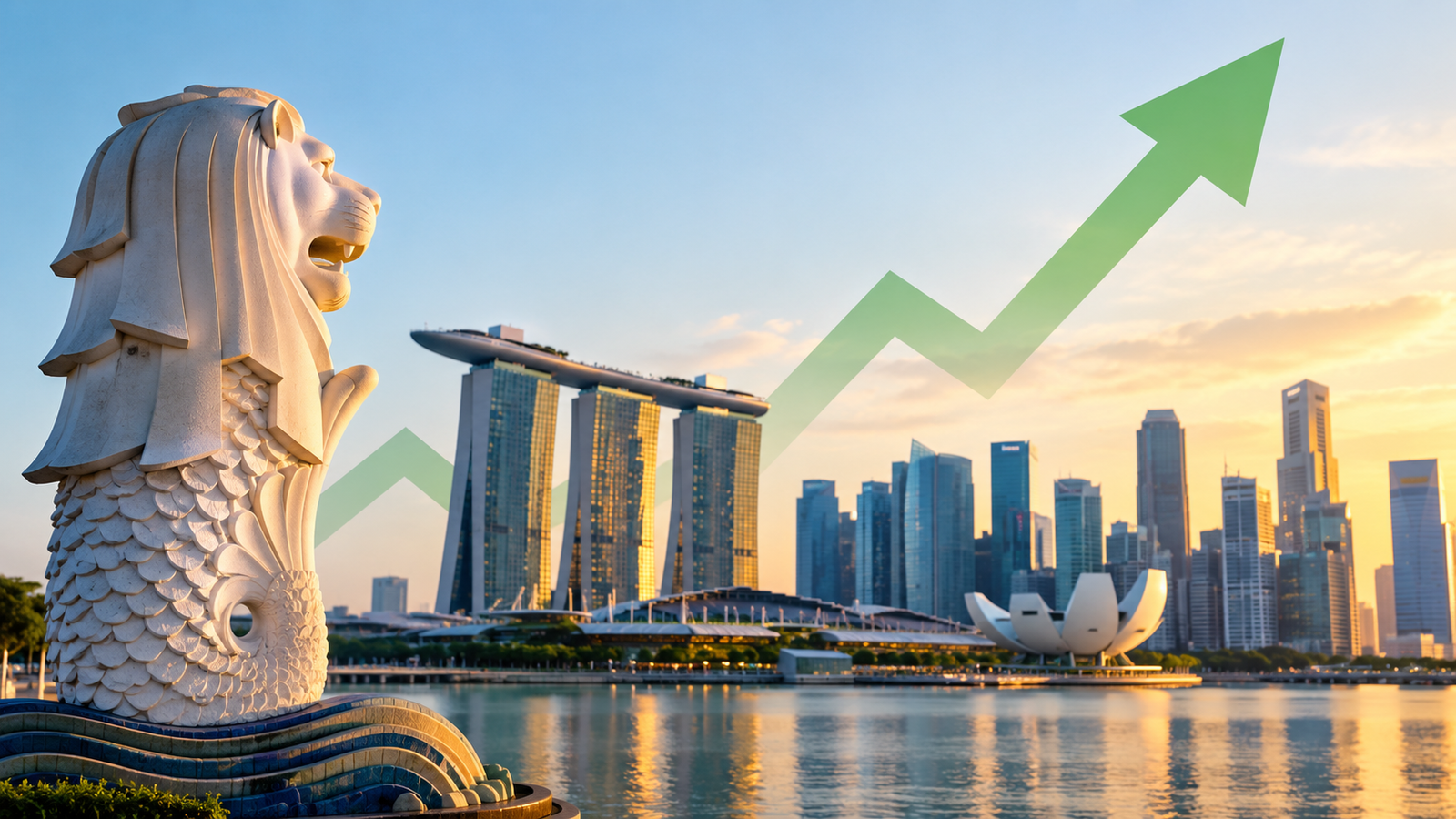
Singapore stocks began the new week close to their record level. The Straits Times Index, or STI, stood at 5,792.91 at about 2:47pm Singapore time on September 7, 2026. The index was down 9.05 points, or 0.16 per cent, on the day. The move came after the STI closed at a new all-time high of 5,801.96 on Friday, September 4.
The small fall does not change the wider market picture. The STI has had a very strong year and now sits about 25 per cent above its level at the end of 2025. The index also moved above 5,800 for the first time last week. This shows how strong demand for large Singapore companies has been in 2026.
The STI tracks the 30 largest companies on the Singapore Exchange and acts as the main market benchmark. After such a strong rise, some investors may now prefer to wait for better prices before they add more shares.
Banks Remain the Main Market Force
The three large Singapore banks have played a major role in the STI rally. DBS, OCBC and UOB all posted strong share price gains last week and helped push the main index above 5,800.
DBS rose S$2.50, or 3.3 per cent, last week to S$78.65. OCBC gained S$1.20, or 3.9 per cent, to S$32.27. UOB added S$1.23, or 3 per cent, to S$42.01.
The bank shares had already reached record levels before this latest move. Strong profits, good capital returns and solid demand for wealth services have helped support investor confidence. Analysts also expect the banks to benefit from better loan growth.
On September 7, Phillip Securities Research said Singapore loan growth reached 9.96 per cent year on year in July. This was the first time loan growth reached about 10 per cent since the Covid period. That is important because bank profits can gain from higher loan volumes even when interest margins do not rise.
Loan Growth Gives Banks New Support
Singapore interest rates have also changed the bank outlook. The three-month Singapore Overnight Rate Average, known as 3M SORA, rose by 1 basis point in August to 1.14 per cent. It was still 58 basis points below the level from one year earlier.
This means banks may not get much help from higher interest margins. However, loan growth can now provide another source of profit support. CASA, or current and savings account deposits, also grew 12 per cent year on year.
Phillip Securities Research kept its “Accumulate” view on the sector. It raised its target price for DBS to S$85 from S$79. It also lifted its OCBC target to S$33.20 from S$31.70. The research house said bank dividend yields for 2026 remain attractive at about 3.9 per cent.
Among the large banks, Phillip prefers DBS because of its fixed dividend policy and higher 2026 guidance. It also likes OCBC because of its wealth business and remaining capital return plans.
Oil Becomes a Major Market Risk
The main new risk for Singapore stocks is the sharp rise in oil prices. Oil moved higher on September 7 after new attacks between the United States and Iran.
Reuters reported that Brent crude rose 1.25 per cent to US$97.48 a barrel. West Texas Intermediate crude rose to US$92.62. Earlier market data had placed Brent at US$96.45 and US crude at US$91.85.
The Strait of Hormuz is at the centre of the concern. Around one-fifth of the world’s oil supply normally passes through this key waterway. Traffic has fallen sharply after recent attacks, which has raised fears of a wider supply problem.
Higher oil prices can create problems for many economies. They can raise transport and business costs and add pressure to inflation. For investors, this can also reduce hopes for lower interest rates.
US Rates Matter for Singapore
The US Federal Reserve remains another major factor for Singapore stocks. A stronger-than-expected US jobs report has changed rate expectations.
US non-farm payrolls rose by 162,000 in August, while the unemployment rate stayed steady. After the report, futures market odds of a rate hike at the September 16 Federal Open Market Committee meeting rose from about 50 per cent to 60 per cent.
At the same time, US President Donald Trump has called for lower rates. This has created a difficult situation for markets because strong jobs data can support higher rates, while political pressure points in the opposite direction.
US bond yields are important for Singapore because they affect the value of many assets across Asia. They are especially important for real estate investment trusts, or REITs.
REITs May Get More Attention
Singapore REITs have not kept pace with the banks. Higher bond yields have made some REITs less attractive compared with fixed income assets.
However, the gap between bank valuations and REIT valuations may now create a new opportunity. DBS analysts have said they prefer Singapore REITs over bank dividends for yield. Office REITs are of particular interest because Grade-A office vacancy in Singapore is about 3.3 per cent.
If interest rate pressure eases, REITs could receive more investor attention. Lower rates can reduce financing costs and make REIT dividend yields more attractive.
For now, however, the path for interest rates remains uncertain. Oil prices and US inflation data will be important factors.
Data Centres Add a New Growth Theme
Another major theme in Singapore stocks is data centres. Keppel DC REIT plans to buy two freehold data centres in Japan for about US$1.1 billion.
The deal shows how demand for data centre assets continues to grow. Artificial intelligence, cloud services and digital business all require more computing power and storage.
Singapore-listed companies with exposure to data centres, digital infrastructure and related services may therefore receive more attention. The sector also gives investors a way to gain exposure to the AI theme without relying only on technology companies.
Singtel and Share Buybacks
Capital returns are another important part of the Singapore market story. SGX Research said Singapore-listed companies had carried out more than S$2 billion of share buybacks in the first eight months of 2026.
Singtel accounted for about S$948.6 million of that total. That was about 45 per cent of all buybacks during the period.
Share buybacks can support a company’s share price because they reduce the number of shares in the market. They can also show that management believes the stock offers good value.
For investors who seek income and capital returns, large Singapore companies with strong cash flow and active buyback plans may remain attractive.
Brokerages See More Upside
Despite the strong rise in the STI, several brokerages have raised their market targets. The latest consensus 12-month target is about 6,140 points. That suggests about 5.5 per cent upside from the recent level.
DBS Group Research expects the STI to reach 5,850 by the end of 2026.
These forecasts show that analysts still see support from company profits and Singapore’s economic strength. However, the market is no longer cheap after its large rise this year. Future gains may depend more on actual earnings than on a simple expansion of valuations.
What Investors Should Watch Next
The Singapore market enters the new week from a position of strength, but several risks could create more price swings. The most important factors are oil prices, the US Federal Reserve, inflation data and geopolitical events around the Middle East.
The banks remain the strongest part of the market story. DBS, OCBC and UOB all have solid fundamentals, attractive dividend policies and strong recent share price performance. Yet their large gains also mean investors need to pay more attention to valuation.
REITs could become more attractive if bond yields fall. Data centres and digital infrastructure offer longer-term growth themes. Singtel remains notable for its large share buyback activity.
The Bigger Picture
The Singapore stock market still has a positive outlook, but the next phase may be less simple than the rally seen so far in 2026. The STI has reached a record level, bank shares have led the move, and loan growth has improved.
At the same time, oil prices near US$100 a barrel, uncertainty over US rates and tension around the Strait of Hormuz create clear risks.
As of September 7, the STI at 5,792.91 remains close to its record high of 5,801.96. The market trend is still strong, but investors now need to look beyond the index and focus on company profits, dividends, valuations and risk.
For Singapore stocks, the key question is no longer whether the market has had a strong year. It clearly has. The bigger question is whether company earnings can grow fast enough to support the higher share prices that investors now face.
Also Read – Hong Kong Stocks Fall 1% as Rate Fears Hit Market