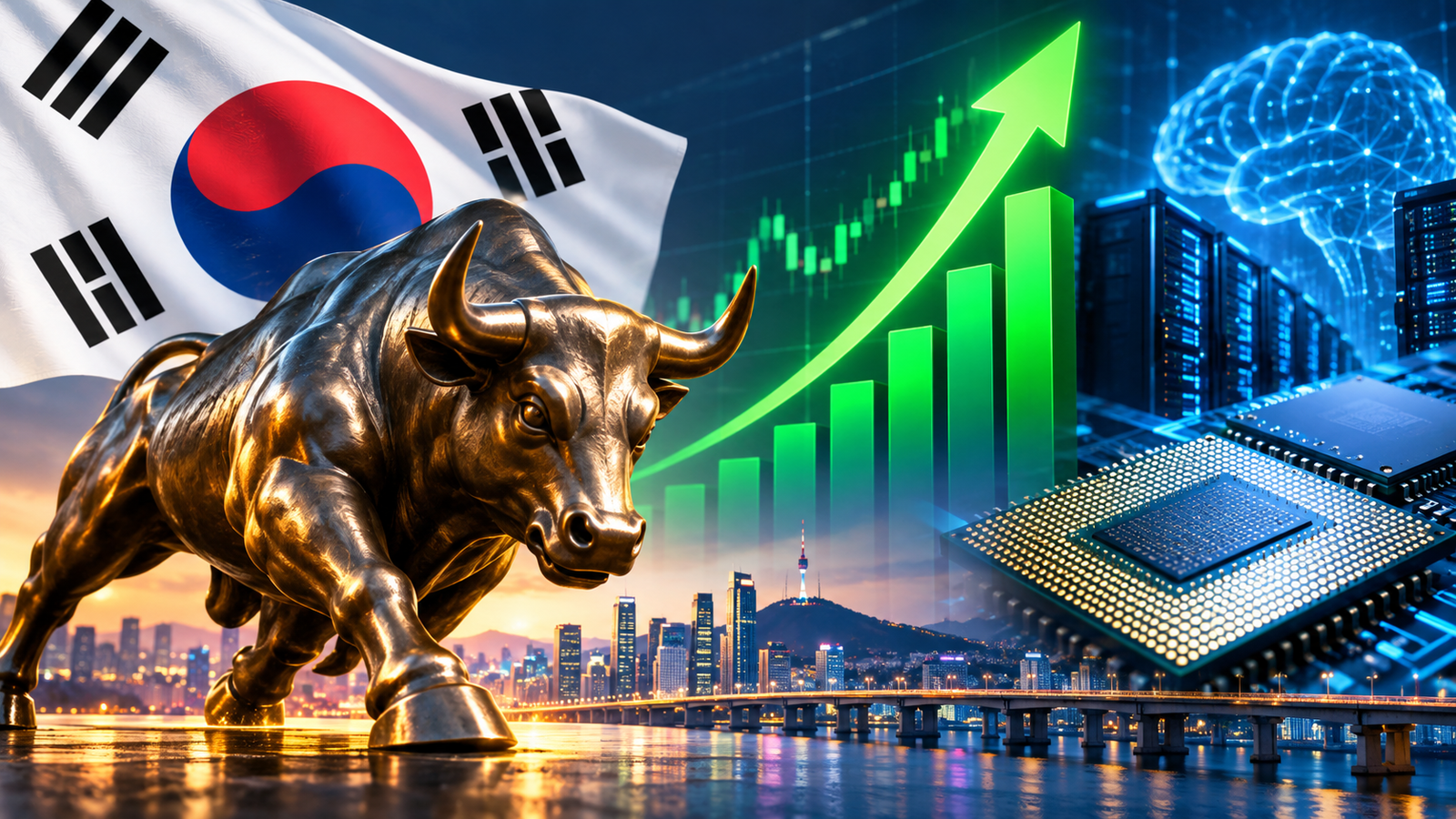
South Korea’s main stock index, the KOSPI, crossed 7,000 on September 8, 2026. The move came after a sharp rise in major semiconductor stocks, with investors showing fresh confidence in the future of artificial intelligence and memory chips.
The KOSPI opened at 7,045.79, up 50.40 points, or 0.72%, from the previous session. This was the first time the index moved above 7,000 in 15 trading sessions, since August 18. The move gave the Korean stock market a major psychological boost.
The 7,000 level is important because the KOSPI had come very close to it just one day earlier. On September 7, the index closed at 6,995.39, after a huge rise of 308.18 points, or 4.61%. It was only 4.61 points short of 7,000.
A close above 7,000 would also mark an important milestone. The last time the KOSPI closed above this level was on July 23, when it ended at 7,096.89.
Chip Stocks Lead the Move
The main force behind the rally is the semiconductor sector. Two of South Korea’s biggest companies, Samsung Electronics and SK hynix, have played a central role in the latest rise.
On September 7, Samsung Electronics gained 5.68% and closed at 270,000 won. SK hynix had an even stronger session. Its shares jumped 8.26% to close at 1.783 million won.
The strength continued on September 8. Samsung Electronics opened at 271,750 won, up 0.65%, while SK hynix opened at 1,792,000 won, up 0.50%. Later in early trade, SK hynix was up close to 3%, while Samsung remained higher as well.
These two companies matter far beyond South Korea. Both are major suppliers of memory chips used in computers, servers and AI systems. Their share prices can therefore give investors clues about how the global chip market may perform.
AI Demand Is at the Center
The latest market move is closely linked to the rapid growth of artificial intelligence.
Investors have become more confident that new and more powerful AI systems will need much larger amounts of high-performance memory. OpenAI’s new AI model, called Astra, has added to those expectations.
Modern AI systems need large amounts of memory to process huge volumes of data. High-bandwidth memory, or HBM, has become especially important because it helps AI chips handle data at very high speed.
That has created a major opportunity for companies such as Samsung Electronics and SK hynix. If AI companies build more data centers and buy more advanced chips, demand for HBM and other memory products could remain strong.
South Korean stocks have reacted strongly to this view. Analysts also expect tight memory supply to support chip prices and company profits.
A Huge Jump on September 7
The move above 7,000 did not happen on its own. It followed one of the strongest sessions for the KOSPI in recent weeks.
On September 7, the index rose 4.61% and ended at 6,995.39. That was its highest close since July 23.
The scale of the move shows how quickly investor confidence changed. Samsung Electronics rose more than 5%, while SK hynix gained more than 8%.
The rally also spread to companies that supply equipment, parts and materials to chipmakers. Doosan Tesna rose 11.31%, while Psk Holdings gained 8.33%. Eugene Technology rose 4.91%, Soulbrain added 4.77%, Tes climbed 4.02%, and Wonik IPS gained 2.44%.
This matters because a strong chip cycle can help more than just the two biggest Korean memory companies. Equipment makers, parts suppliers and other technology firms can also benefit when chip companies increase their spending.
Foreign Investors Return to Korean Stocks
Investor flows are another important part of the story.
On September 7, foreign investors bought about 2.59 trillion won worth of Korean shares. Institutional investors bought another 2.63 trillion won. Retail investors moved in the opposite direction and sold about 6.82 trillion won.
Another report put foreign purchases at about 2.5525 trillion won and institutional purchases at about 2.6398 trillion won. The exact figures differ slightly by source and calculation method, but both sets of data show the same broad picture: foreign and institutional investors were major buyers during the rally.
That support is important. A rally led by large global investors can have more strength than a move based only on small retail trades.
However, early trade on September 8 showed a different pattern. Retail investors bought 57.4 billion won, while foreign investors sold 60.3 billion won and institutions sold 4.2 billion won. This means the market will need fresh foreign demand if the rally is to continue at the same pace.
The Korean Won Also Strengthens
The stock market was not the only part of South Korea’s financial system to show strength.
The Korean won also gained value against the U.S. dollar. On September 7, it closed at 1,340.5 won per dollar, up 9.9 won from the previous session’s 3:30 p.m. level. The currency remained around the 1,340 area on September 8.
A stronger won can support confidence in Korean assets because it can signal better demand for the local currency. It can also make foreign investors more comfortable with Korean stocks when currency risk becomes less severe.
Still, the currency market has other forces at work, including oil prices, U.S. interest rates and global political risks.
The Rally Is Not Without Risks
Despite the excitement around 7,000, investors should not assume that the KOSPI will move higher every day.
The index had already gained 4.61% in one session before it crossed 7,000. After such a fast rise, some investors may choose to take profits.
Foreign investor activity is also worth close attention. Foreign and institutional investors were major buyers on September 7, but both groups were sellers in early trade on September 8.
There are also wider global risks. Oil prices have remained high, with Brent crude close to $91 per barrel amid tensions linked to the U.S. and Iran. Higher oil prices can create more pressure on inflation and interest rates.
These factors could make the path ahead less smooth.
Why 7,000 Matters for Global Markets
The KOSPI crossing 7,000 is more than a number for South Korea. It is also a useful signal for the global semiconductor market.
South Korea has a major position in the world memory-chip industry. Samsung Electronics and SK hynix are among the most important companies in this field.
If their shares continue to rise because of strong AI demand, investors may also look more closely at chip companies in the United States, Japan, Taiwan and other markets.
The connection is simple. More AI systems can mean more data centers. More data centers can mean more advanced processors and memory. More demand for those products can mean stronger sales for chipmakers and their suppliers.
That is why the KOSPI move has attracted attention beyond Seoul.
What Investors Will Watch Next
The biggest question now is whether the KOSPI can hold above 7,000.
The index crossed the level early on September 8, but an intraday move is not the same as a close above it. Investors will also watch Samsung Electronics and SK hynix for signs that their rally has more room to run.
Foreign fund flows will be another key signal. If global investors continue to buy Korean shares even after the recent jump, confidence in the market could remain strong.
For the global AI trade, the next test will be whether high memory demand turns into stronger earnings and long-term orders for chipmakers.
A Major Signal for the AI Trade
South Korea’s move above 7,000 shows how strongly the AI story now affects global markets.
The KOSPI rose 4.61% to 6,995.39 on September 7 and then opened at 7,045.79 on September 8, crossing 7,000 for the first time in 15 sessions. Samsung Electronics and SK hynix were at the heart of the move, while expectations for stronger AI memory demand gave investors another reason to buy.
The milestone is important, but the next few sessions may matter even more. If the KOSPI can stay above 7,000 and foreign investors return to large chip stocks, the move could become a broader sign of confidence in the global semiconductor cycle.
For now, the message from Seoul is clear: AI demand remains one of the strongest forces in the global chip market, and South Korea’s biggest semiconductor companies are at the center of that story.
ALSO READ: GE Vernova T&D L1 for Major 6,000 MW HVDC Project