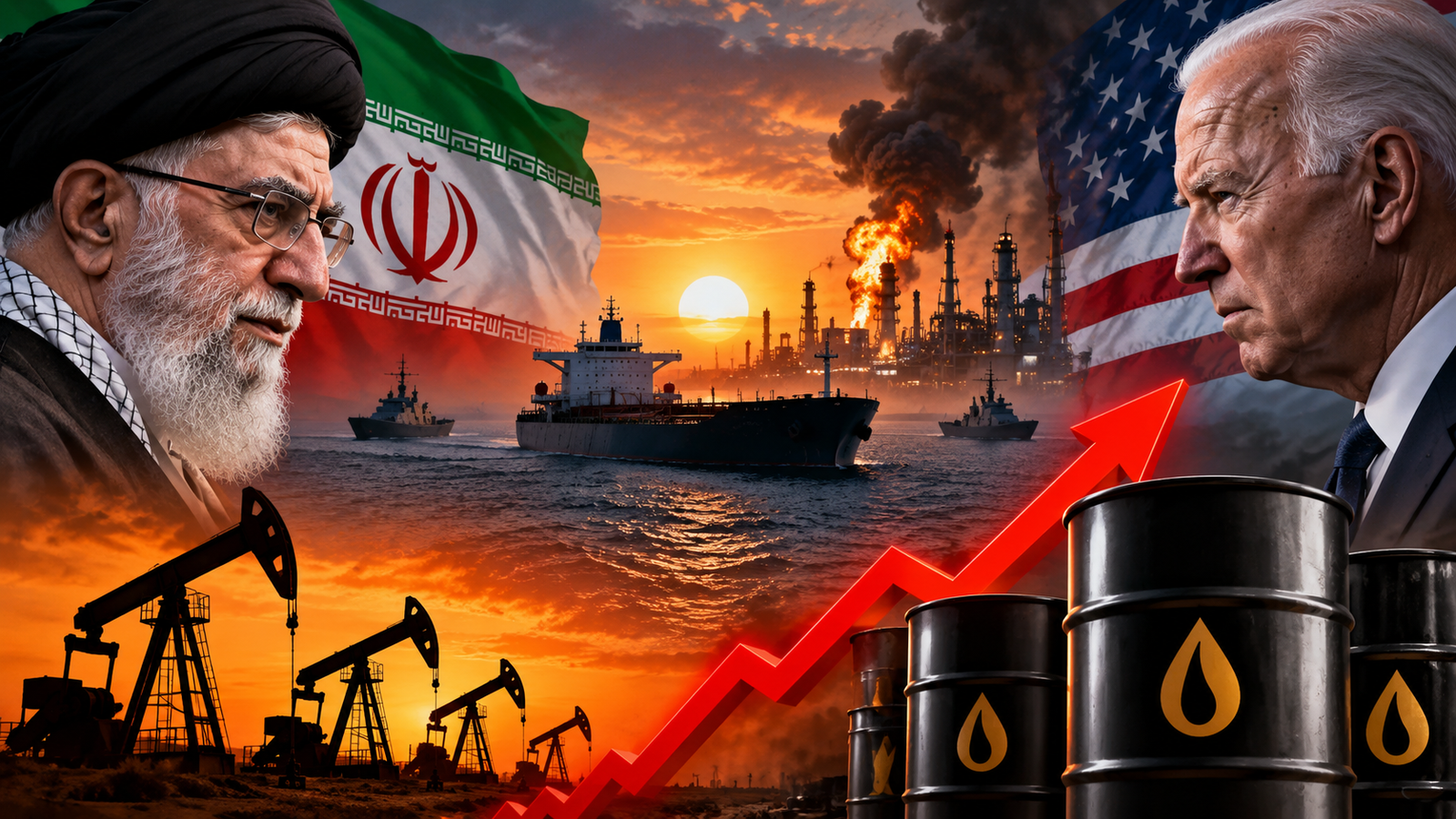
Brent crude futures saw a major jump on Thursday as fresh attacks on ships in the Middle East raised fears about oil supply. The international oil benchmark settled at $107.63 a barrel, up $6.42, or 6.34%, in one session.
The move took Brent to its highest close since May 19. The price had already moved above the important $100 level, but the latest rise showed that traders now expect the supply problem to last for a longer period.
The oil market has become very sensitive to news from the Middle East. Any threat to major shipping routes can quickly push prices higher because a large share of the world’s oil passes through the region.
WTI crude also moves above $100
Brent was not the only major oil benchmark to see a strong rise. U.S. West Texas Intermediate, known as WTI, crude futures rose $6.43, or 6.69%, to $102.48 a barrel.
WTI also reached its highest level since May 19.
Both major oil benchmarks are now well above $100. This is an important level for traders, companies and consumers because crude prices above $100 can have a wide effect on the global economy.
Oil prices can rise even before a real shortage appears. When traders fear that supplies may fall in the future, they often buy oil contracts at higher prices. This can create a fast rise in the market.
Tanker attacks raise fresh concerns
One of the main reasons for the latest oil price rise is the increase in attacks on ships near the Strait of Hormuz.
Iran said it had attacked 10 ships near the strait after the United States struck and sank five Iranian oil tankers. Iran’s Islamic Revolutionary Guard Corps also warned that it could take stronger action after further attacks.
These events have created fresh concerns about the movement of oil from the Middle East.
The Strait of Hormuz is one of the most important energy routes in the world. Before the current war, the waterway carried about one-fifth of global oil and gas supplies. Current flows are far below normal levels.
Any further trouble in this area could put more pressure on the global oil market.
Red Sea risks also increase
The concern is not limited to the Strait of Hormuz. The Red Sea has also become a major issue for the oil market.
Iran-aligned Houthi forces seized control of Yemen’s Mocha port on Thursday. This has raised fears about trade through the Red Sea and the nearby Bab el-Mandeb route.
At the same time, Houthi attacks on Saudi energy sites have created another source of risk.
This means traders now have to watch several important energy routes at the same time. The focus is not only on Iranian oil exports. A wider conflict could affect Saudi energy sites, shipping routes, export terminals and other parts of the regional oil system.
Conflict may last longer
Another major concern is how long the current conflict could continue.
The latest attacks have reduced hopes for a quick return to normal oil flows. U.S. President Donald Trump said the war could continue beyond the November midterm elections. Iran has also warned of a stronger response to future attacks.
This has changed the mood in the oil market.
Earlier, many traders expected the disruption to ease after a period of conflict. Now, there is a growing belief that supply problems could remain for a longer time.
If that happens, oil prices could stay above $100 for an extended period.
China remains an important factor
China could also have a major effect on the next move in oil prices.
China is the world’s largest crude oil importer. Its oil purchases had been weak for several months, which gave traders a reason to expect softer demand.
However, Chinese purchases have improved in recent weeks.
If this stronger demand continues while Middle East supplies remain under pressure, crude prices could face more upward pressure.
If Chinese demand becomes weaker again, the pressure on oil prices could ease.
This makes China’s oil import data an important factor for the market in the coming weeks.
U.S. oil stocks show a small decline
U.S. crude inventories also gave some support to oil prices.
U.S. crude stocks fell by 391,000 barrels to 424.1 million barrels last week, according to the Energy Information Administration.
Analysts had expected a much larger decline of 1.55 million barrels.
The smaller-than-expected fall does not point to a major supply problem in the United States. However, the data arrived at a time when traders were already worried about lower supplies from the Middle East.
Strong refinery activity has also supported demand for crude oil.
OPEC cuts its demand forecast
There is also a factor that could limit the rise in oil prices.
OPEC lowered its forecast for global oil demand growth in 2026 to 380,000 barrels per day.
This was the group’s fifth straight downward revision to its demand outlook.
At the same time, OPEC oil output fell by 640,000 barrels per day in August.
The fall came as the war affected Saudi exports and a U.S. blockade reduced Iranian shipments.
This creates two opposite forces in the oil market.
Lower demand can push prices down, while lower supply can push them higher. At present, supply concerns are having a much stronger effect.
Higher oil prices could lift inflation
The rise in crude prices is important for the wider global economy.
When oil becomes more expensive, the cost of petrol, diesel, air travel and transport can rise. Companies that depend on fuel may also face higher costs.
Those higher costs can eventually reach consumers through more expensive goods and services.
This can create a difficult situation for central banks. If energy prices push inflation higher, interest rates may stay high for longer.
Financial markets have already reacted to the latest oil move.
U.S. stocks fell on Thursday. The S&P 500 dropped 0.58%, the Nasdaq fell 0.65%, and the Dow Jones Industrial Average declined 0.60%.
Treasury yields also moved higher.
$110 becomes the next key level
With Brent crude at $107.63, the next major level for traders is $110 a barrel.
A move above $110 could increase fears of another sharp rise, especially if attacks continue and oil flows through major Middle East routes remain weak.
On the other hand, a move back below $100 could show that traders expect some improvement in supply conditions.
For now, the market remains very sensitive to every major development around Iran, the Strait of Hormuz, Saudi energy sites and the Red Sea.
What could happen next?
The latest settlement at $107.63 a barrel, up 6.34%, shows how quickly the oil market can change when supply risks rise.
The sharp move is not the result of one event alone. It comes from a mix of tanker attacks, weaker Middle East oil flows, shipping risks and fears that the Iran conflict could last longer than expected.
China’s oil demand, U.S. stock levels and future OPEC output will also play a role. But the biggest factor remains the safety of major Middle East supply routes.
If the conflict spreads further or shipping through key routes becomes more difficult, Brent could rise again.
If tensions ease and crude flows return to normal, some of the extra risk in oil prices could disappear.
For now, however, Brent’s close at $107.63 is a clear sign that traders see a much higher risk of a long supply disruption. The next few weeks could be very important for the direction of global oil prices.