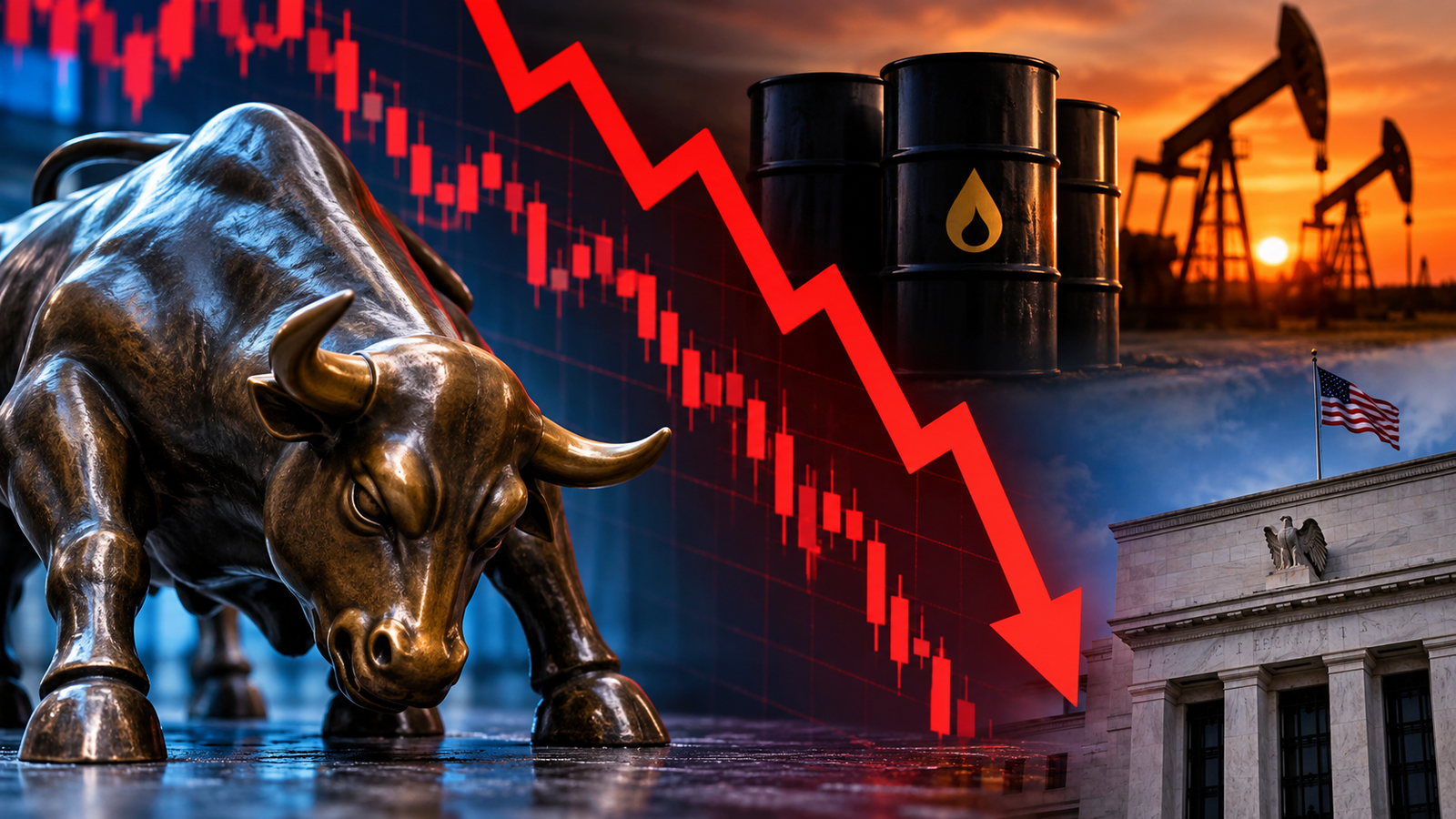
The U.S. stock market faced another difficult session as worries about inflation, oil prices and higher interest rates put pressure on major indexes. The S&P 500 fell 0.60% to close unofficially at 7,590.44, as investors took a more careful view of the economic outlook.
The decline came after several sessions of weakness and added to concerns that the long period of strong gains on Wall Street could face a tougher phase. Recent market pressure has come from several sides at once. Oil prices have moved sharply higher, Treasury yields have climbed, and traders have raised their expectations for a Federal Reserve rate hike.
Reuters reported a final S&P 500 close of 7,591.75, down 0.58%, while the Associated Press reported 7,591.70, down about 0.60%. The difference from the unofficial figure of 7,590.44 is small, but the main message is clear: U.S. stocks ended lower for a fourth straight session.
Wall Street Faces Fresh Pressure
The latest drop shows how quickly market sentiment can change when several economic risks appear at the same time. Investors have spent much of 2026 focused on strong corporate profits, artificial intelligence demand and hopes for a stable economy.
That confidence has faced a new test in recent days. Oil prices have climbed sharply, bond yields have moved higher and inflation concerns have returned to the center of the market debate.
For stock investors, these developments matter because they can affect company profits, consumer demand and the cost of borrowing. Higher costs can reduce business profits, while higher interest rates can make stocks less attractive.
The S&P 500 remains well above its level at the start of the year. However, four straight sessions of losses have caused investors to become more cautious about the next phase of the market.
Oil Prices Become a Major Concern
One of the biggest reasons for the market decline was the sharp rise in oil prices. Brent crude rose more than 6% and settled at $107.63 a barrel. U.S. West Texas Intermediate crude reached $102.48 a barrel.
Both prices reached their highest levels since May. The rise came as the conflict with Iran created fresh concerns about global oil supplies and key shipping routes.
Higher oil prices matter to stock investors because energy costs affect almost every part of the economy. Airlines, transport firms, manufacturers and many other businesses face higher costs when fuel becomes more expensive.
Companies may try to pass those costs to customers, but that can also hurt demand. When products and services become more expensive, consumers may reduce spending.
There is another major concern. A sharp rise in oil can push inflation higher. That creates a difficult situation for the Federal Reserve because the central bank must balance price stability with economic growth.
Inflation Adds to Market Anxiety
The latest economic data also gave investors another reason to stay cautious. U.S. producer prices rose in August, adding to fears that inflation may prove harder to control than expected.
Producer prices measure what businesses pay for goods and services before those costs reach consumers. When producer prices rise, companies may face higher expenses. Some of those costs can later reach shoppers through higher prices.
The August Producer Price Index rose 0.4% from July and 5.4% from a year earlier, according to market reports. Energy costs were a key part of the pressure.
This data arrived just before the important U.S. Consumer Price Index report. Investors see the CPI report as a major test of the current inflation picture.
A hotter result could increase fears that the Federal Reserve may need to keep rates high or even raise them. That could create more pressure on stocks, especially companies with high valuations.
Treasury Yields Move Higher
The bond market also added pressure to stocks. The yield on the 10-year U.S. Treasury note rose to about 4.95%, its highest level in almost three years.
The 30-year Treasury yield also reached its highest level in more than 19 years, while the two-year yield touched its highest level in more than two years.
Higher bond yields can make stocks less attractive. Investors often compare the possible return from stocks with the income available from government bonds. When Treasury yields rise, bonds can offer a more attractive alternative, especially for investors who want lower risk.
Higher yields also raise borrowing costs across the economy. Businesses may pay more for loans, while households can face higher costs for mortgages and other forms of credit.
That creates extra pressure on companies and consumers at a time when investors are already concerned about inflation.
Federal Reserve Expectations Change
The latest market moves have also changed expectations for the Federal Reserve.
Traders now place about a 70% probability on at least a 25-basis-point rate hike next week, according to Reuters. Another report put the probability near 73%.
That is important because financial markets had hoped for easier monetary policy as inflation cooled. Higher oil prices now create a new risk. If energy costs push inflation higher, the Federal Reserve may have less room to cut rates or keep policy loose.
A rate hike would raise borrowing costs further. It could also place more pressure on companies whose share prices depend on expectations of strong future growth.
For investors, the next Federal Reserve meeting has therefore become one of the most important events on the market calendar.
Technology Stocks Take a Hit
Technology shares were among the main sources of weakness in the S&P 500.
Nvidia fell 2.3%, while Micron Technology dropped 4.7%. Both companies have a large presence in the technology and semiconductor sectors, so their declines added weight to the broader index.
Technology stocks can be especially sensitive to higher interest rates. Their value often depends on profits expected far into the future. When bond yields rise, those future profits can become less valuable in today’s terms.
The recent decline does not mean that the AI trade has ended. Investors remain focused on strong demand for chips, data centers and AI systems.
However, higher rates and a more uncertain economic picture can make investors more selective. The information technology sector was among the weaker parts of the S&P 500 during the latest session.
Nine of the index’s 11 sectors ended lower, which shows that the pressure was broad rather than limited to a small group of companies.
Apple Moves Against the Market
Apple was one of the major exceptions.
Apple shares rose 3.6% after the company launched a new product, including a $1,999 iPhone. The strong move in Apple’s stock helped offset some of the weakness from other large technology names.
Apple’s performance showed that company-specific news can still have a major effect even when the wider market is under pressure. Investors were willing to push the stock higher because of interest in its latest products.
This also shows why the market cannot be explained by one factor alone. Oil, inflation and interest rates affected the broad index, but individual companies continued to move based on their own earnings outlook, products and business plans.
Four Straight Sessions of Losses
The latest fall marked the fourth consecutive losing session for the S&P 500.
Across those four sessions, the index has lost about 2%. It now sits nearly 3% below its all-time high from August.
The recent decline may look serious, but the broader picture remains stronger. The S&P 500 is still about 11% higher in 2026, according to Reuters.
The market therefore remains well above its level at the start of the year despite the recent pressure.
The latest move also does not automatically mean a major market crash is ahead. Market analysts have described the recent decline as relatively orderly.
Still, the combination of expensive oil, high Treasury yields and inflation risk has created a less comfortable setup for stocks.
What Investors Will Watch Next
The next major test is the U.S. inflation report. Investors will look closely at the CPI figures for clues about the direction of prices and the Federal Reserve’s next decision.
Oil prices will also remain important. If Brent crude stays above $100 a barrel, markets may continue to worry about another wave of inflation. If prices fall, some of that pressure could ease.
Treasury yields will be another key signal. A 10-year yield near 5% can place considerable pressure on stock valuations. A move lower could provide some relief, especially for technology shares.
Investors will also watch corporate results and comments from major companies. Strong earnings could help support stocks even when the wider economic picture remains uncertain.
A Market at an Important Point
The S&P 500’s 0.60% fall to 7,590.44 reflects more than one weak session. It shows how quickly market sentiment can change when oil, inflation and interest rates move in the same direction.
The index remains up strongly for the year, but the recent four-session decline has made investors more cautious. Brent crude above $100, a 10-year Treasury yield near 5%, and rising expectations for a Federal Reserve rate hike have created a difficult mix for equities.
For now, the market is waiting for clearer answers. The next inflation report and the Federal Reserve’s decision could help decide whether this is a short pause after a strong year or the start of a deeper correction.
ALSO READ: Brent Crude Hits $107.63 as Middle East Risks Rise