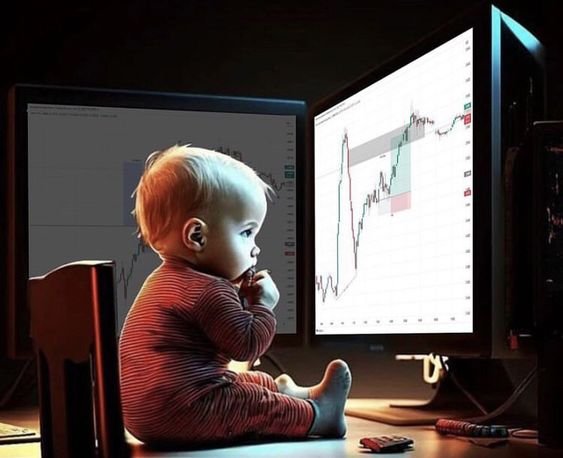
Market timing means trying to decide the best time to buy or sell an investment. The basic idea sounds easy. An investor wants to buy before prices rise and sell before prices fall. If someone could do this again and again, they could make very high returns.
The problem is that no one knows the future with certainty. A market can rise when it looks weak. It can fall when everything seems fine. A piece of good news can fail to push prices higher. A bad news report can sometimes have little effect at all.
This makes market timing much harder than it looks.
A person may look at past prices and feel that the next move is easy to predict. But the market does not follow a fixed pattern. Many factors affect prices at the same time. Interest rates, inflation, company profits, economic growth, world events, investor mood, and government decisions can all affect the market.
This is why even smart and experienced investors can make wrong calls.
Markets Look Ahead
One of the biggest reasons market timing is hard is that stock prices do not only reflect what is happening today. They also reflect what investors expect to happen in the future.
Suppose a company reports strong profits. At first, this sounds like good news. A person may expect the stock price to rise. But the price may not move much if investors already expected those strong profits.
The same idea works in the opposite way. A company may report weak results, but its stock price may rise if investors expected even worse results.
The market often reacts to the difference between what people expect and what actually happens.
This means that by the time a major piece of news becomes clear to the public, investors may have already reacted to it. Prices can move before the news becomes obvious.
That creates a major problem for anyone who tries to use news as a simple signal to buy or sell.
The Market Can Move Very Fast
Markets can change direction in a very short time. A stock may fall sharply in the morning and recover later in the day. A market that looks weak for several weeks can suddenly rise because of a new report or a change in investor confidence.
This speed makes market timing even harder.
Imagine an investor who sells because the market looks dangerous. The investor may feel safe after the sale because the money is no longer exposed to the fall. But what happens if the market turns around soon after?
The investor now faces another decision. Should they buy again? If they wait for more proof, prices may rise further. If they buy too soon, the market could fall again.
The first decision was only half of the problem. The second decision matters just as much.
You Must Get Two Decisions Right
Market timing requires more than finding the right time to sell. An investor also needs to find the right time to return.
Suppose someone believes a large market fall is about to happen. They sell their stocks and avoid a 15% decline. That sounds like a great decision.
But suppose the market reaches its low point and then starts to recover. The investor now needs to decide when to buy again.
If they wait for the market to feel safe, they may miss a large part of the recovery. If they buy too early, another fall may come.
This is one of the biggest problems with market timing. A person can correctly predict a fall but still lose money because they fail to make the right second decision.
A successful market timer needs to make several difficult choices at the right time. That is much harder than making one good prediction.
The Best Market Days Can Come Without Warning
Another major problem is that some of the strongest market gains can happen on days that are very hard to predict.
Markets do not always recover in a slow and steady way. After a large fall, prices can rise sharply in a short period. Some of the best market days can happen close to some of the worst days.
This matters because an investor who leaves the market during a difficult period may miss the strong recovery that follows.
For example, a person may sell after a large fall because they fear an even bigger decline. The market may then recover quickly. If that person stays out, they miss part of that recovery.
A few strong days can make a major difference to long-term returns.
This is why missing the best days in the market can hurt an investor. A person does not need to miss many days to see a meaningful effect on their final result.
Fear Can Lead to Poor Decisions
Market timing is not only a financial problem. It is also a human problem.
When prices fall, people naturally feel worried. They see their savings lose value and may fear that the fall will continue. This can create a strong desire to sell.
The problem is that fear often becomes strongest after a large fall has already happened.
An investor may think, “I should get out before things become worse.” But the market may already have fallen a lot by that point.
If prices recover soon after, the investor may regret the decision.
Fear can also make a person wait too long before they return to the market. They may tell themselves that they will buy once things feel safe again. But markets rarely give a clear signal that says the danger is over.
By the time confidence returns, prices may already be much higher.
Greed Can Cause Problems Too
Fear is not the only emotion that affects investment decisions. Greed can also lead people away from a sensible plan.
When prices rise for a long time, investors may feel that the market will keep going up. They may buy more because they do not want to miss out.
This feeling is often called FOMO, or the fear of missing out.
A person may see friends, news reports, or social media posts about large profits. They may then feel pressure to enter the market quickly.
The problem is that a strong rise does not mean another rise is guaranteed.
Prices can fall soon after a period of rapid growth. An investor who buys only because everyone else seems confident may face a large loss.
This shows why market timing is closely tied to human emotions. Fear can push people to sell after a fall. Greed can push them to buy after a large rise.
Both reactions can lead to poor results.
Markets Can Stay Expensive for a Long Time
An investor may sometimes be correct about the market but still lose money because their timing is wrong.
Suppose someone believes stocks are too expensive. They may sell because they expect a correction. But the market may continue to rise for months or even years.
The investor may sit on cash while stock prices move higher.
Eventually, the market may fall. The original idea may turn out to be correct. But the investor may still have missed a large part of the earlier rise.
This is an important lesson.
Being right about the direction of the market is not enough. The timing also matters.
Markets can remain at high prices for much longer than an investor expects. A person who waits for the “perfect” entry point may spend years outside the market.
Too Many Things Affect Prices
Another reason market timing is difficult is the huge number of factors that can affect prices.
Interest rates matter because they affect borrowing costs and the value investors place on future profits. Inflation matters because it can affect company costs, consumer demand, and central bank decisions.
Company earnings matter because investors want to know whether businesses can make more money in the future. Economic growth matters because strong or weak growth can affect company sales and profits.
World events can also create sudden changes. A war, political crisis, natural disaster, major technology change, or unexpected government decision can affect investor confidence.
Then there is investor mood.
Two people can see the same information and reach different conclusions. One may see a buying opportunity. Another may see a reason to sell.
All these factors make short-term market moves very hard to predict.
News Does Not Always Give a Clear Answer
Many people try to time the market by following financial news.
The problem is that the same news can have different effects at different times.
A rise in interest rates may hurt stocks in one situation. In another situation, investors may already expect the rate increase, so the market may barely react.
A strong jobs report may appear positive. But if it makes investors worry about higher interest rates, stocks may still fall.
A company may report record profits, but its stock may decline because investors expected even better results.
This shows why news alone cannot provide a simple buy or sell signal.
The market does not just ask, “Is this news good or bad?”
It also asks, “Was this better or worse than what people expected?”
That difference can be very difficult to judge.
Frequent Trading Has a Cost
Trying to time the market can also create extra costs.
Every time an investor buys or sells, there may be costs such as brokerage fees, bid-ask spreads, taxes, or other charges. These costs may seem small when viewed one trade at a time.
But frequent trades can make them add up.
Even if an investor makes several correct decisions, these costs can reduce the final return.
Taxes can also matter. Depending on the investment and the country, selling an asset for a profit may create a tax bill.
This means an investor should not only ask whether a trade could make money. They should also ask whether the possible gain is large enough to justify the costs and risks involved.
Even Professionals Get It Wrong
Market timing is difficult for individual investors, but it is not easy for professionals either.
Professional investors have access to large amounts of research, financial data, analysts, and advanced tools. Even with these resources, they cannot predict every market move.
That does not mean professional investors never make good predictions. They certainly can.
The important point is that making one correct prediction is different from making correct predictions again and again.
A person may correctly predict one crash. Another person may correctly predict one major rally. But consistent success requires many decisions over many years.
A strategy that depends on repeated short-term predictions therefore carries a high level of uncertainty.
The Problem With the Perfect Entry Point
Many investors spend a lot of time trying to find the perfect time to invest.
They may wait for a market fall. Then the market falls, but they think it could fall more.
So they wait.
The market then starts to recover. They still wait because they want more proof.
Prices rise further. Now they feel uncomfortable because they missed the lower prices.
Eventually, they may buy at a much higher level.
This cycle can repeat again and again.
The desire to find the perfect entry point can sometimes become more harmful than simply following a clear investment plan.
A Long-Term Approach Can Be Simpler
Because market timing is so difficult, many long-term investors take a different approach.
Instead of trying to predict every rise and fall, they focus on staying invested for a long period.
The idea is simple. Markets can have bad periods, but a long-term investor does not need to predict every short-term move.
A diversified portfolio can also reduce the damage from one company, one industry, or one part of the market.
Regular rebalancing can help an investor keep the portfolio close to their chosen level of risk.
This approach does not remove risk. Markets can still fall, sometimes by a large amount.
But it reduces the need for constant predictions.
The Main Lesson
The biggest lesson is not that market timing is impossible.
People sometimes predict market moves correctly. Some investors have strong research methods and may make very good decisions.
The real problem is consistency.
To time the market successfully, an investor must know when to get out and when to get back in. They must deal with fear when prices fall and greed when prices rise. They must understand what the market already expects. They must also deal with taxes, trading costs, and unexpected events.
That is a lot to get right.
For most long-term investors, the more useful question may not be, “What will the market do next month?”
A better question may be, “What investment plan can I follow even when the market becomes difficult?”
A good plan can help an investor stay calm during periods of fear and avoid impulsive decisions during periods of excitement.
Conclusion
Timing the market is difficult because the future is uncertain, prices move quickly, and human emotions often make decisions harder.
The market reacts to expectations, not just current facts. Some of the strongest gains can arrive without warning. A person who sells during a fall must also know when to return. Fear can cause selling at the wrong time, while greed can cause buying after a large rise.
Markets can also remain expensive or cheap for much longer than expected. Economic data, company results, interest rates, inflation, politics, world events, and investor confidence can all affect prices.
Frequent trading can add taxes and other costs. Even professional investors cannot predict every move with perfect accuracy.
This does not mean investors should ignore the market or stop learning about it. It simply means that trying to predict every short-term move is a very difficult task.
For many people, a clear long-term strategy may offer a more practical path. Staying invested, keeping a diversified portfolio, and rebalancing from time to time can reduce the need to make constant market calls.
The goal is not to predict every market move.
The goal is to build a strategy that can survive those moves.
ALSO READ: Regulatory Risk as an Investment Variable