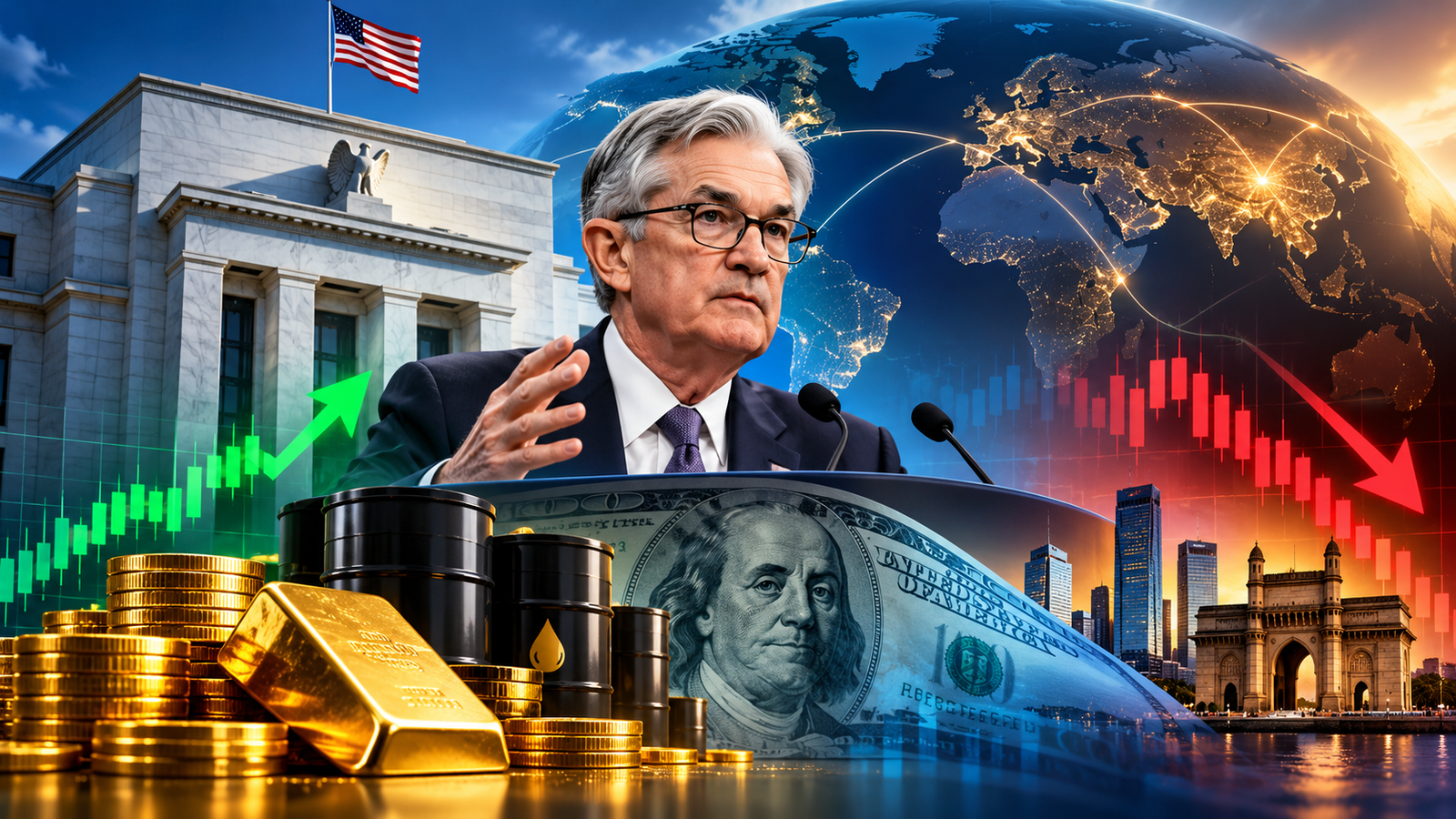
The US Federal Reserve, also called the Fed, is the central bank of the United States. It plays a major role in the world economy because the US dollar is the world’s main reserve currency. Many countries, banks, companies, and investors depend on the dollar for trade, loans, and investments.
The Fed controls its main interest rate and uses other tools to support economic growth and keep inflation under control. Its decisions affect the cost of loans, the value of currencies, and the prices of financial assets around the world. A small change in US policy can have a major effect on markets in Europe, Asia, and other regions.
How Fed Decisions Affect Global Markets
The Fed mainly makes three types of decisions. It can cut interest rates, raise them, or keep them at the same level. Each choice can affect global markets in a different way.
When the Fed cuts rates, loans often become cheaper. People and companies may spend more, while investors may look for better returns in stocks and other assets. This can support stock markets and help some developing economies attract foreign money.
When the Fed raises rates, loans often become more expensive. Investors may prefer safer US assets because they can earn better returns with less risk. This can put pressure on stocks and reduce the flow of foreign money into some emerging markets.
When the Fed keeps rates unchanged, the market response depends on its message about future policy. A softer message may support stocks and gold, while a stricter message may support the dollar. Investors often react not only to the decision itself but also to whether it meets their earlier expectations.
Impact on Global Stock Markets
Interest rates have a strong effect on stock prices. When rates fall, companies may pay less interest on their loans. This can reduce costs and support business growth. Investors may also place more value on future company profits because the return from safer assets becomes less attractive.
For these reasons, lower rates often support US and global stock markets. However, a rate cut does not always lead to higher stock prices. If the Fed cuts rates because the economy faces serious trouble, investors may fear lower sales and weaker profits. In that case, stocks may fall even after a rate cut.
Higher rates can have the opposite effect. Companies may face higher loan costs, while consumers may spend less. This can hurt company profits and place pressure on stock prices. Still, strong economic growth can sometimes support stocks even when rates rise.
Impact on Bonds
Bonds are loans made by investors to governments or companies. In return, the bond issuer pays interest under agreed terms.
US Treasury bonds are especially important because investors view them as a major safe asset. When market interest rates fall, the prices of existing bonds often rise. This is because their fixed payments become more attractive than the returns on new bonds.
When market rates rise, existing bond prices often fall because new bonds may offer higher returns. The size of the price change depends on factors such as the bond’s maturity and its interest rate.
The yield on the US 10-year Treasury bond is a key measure for global markets. It helps shape borrowing costs, mortgage rates, and the value investors place on stocks and other assets. A sharp rise in this yield can create pressure across many financial markets.
Impact on the US Dollar
The US dollar often gains strength when the Fed raises rates or signals that rates may stay high. Higher US returns can attract foreign investors who want to hold dollar-based assets.
A stronger dollar can make imports cheaper for US buyers, but it can make dollar-priced goods more costly for other countries. It can also raise the cost of debt for governments and companies that borrow in dollars but earn money in other currencies.
When the Fed cuts rates, the dollar may weaken if US assets become less attractive than those in other countries. However, the dollar can still rise during a rate-cut period if investors fear a global crisis and seek safety in US assets.
Impact on Gold and Crude Oil
Gold often benefits when US interest rates and real yields fall. Real yields show the return on bonds after adjustment for inflation. Since gold pays no interest, it may look more attractive when the return from bonds falls. Gold can also gain value when investors fear a crisis or seek a safe asset.
Higher real yields can put pressure on gold because bonds may offer better returns. A strong dollar can also make gold more expensive for buyers who use other currencies. Even so, gold prices depend on several factors, so the Fed alone does not decide their direction.
Crude oil prices may rise when lower rates support economic growth and demand for energy. On the other hand, high rates can slow business activity and reduce demand for oil. Yet oil prices also depend on global supply, conflicts, production decisions, and transport risks. Therefore, the link between Fed policy and oil prices is not always direct.
Impact on Emerging Markets
Emerging markets are countries whose economies and financial markets are still in a period of growth. These include India and several other economies in Asia, Latin America, and Africa.
When the Fed cuts rates, investors may seek higher returns in these markets. This can bring more foreign money into local stocks and bonds. It may also ease pressure on local currencies and reduce the cost of some foreign loans.
When the Fed raises rates, investors may move money back to US assets. This can lead to capital outflows, weaker local currencies, and greater market volatility. Countries with large dollar debts may face extra pressure because they need more local currency to repay the same amount of dollar debt.
These effects vary by country. Strong economic growth, low debt, stable prices, and sound public finances can help a country manage changes in US policy.
Impact on India
Fed decisions matter to India through foreign investment, the rupee, oil prices, and gold prices.
When US rates rise, some foreign investors may move money from Indian assets to US assets. This can place pressure on Indian stock prices and the rupee. However, domestic growth, company profits, government policy, and investor confidence also affect Indian markets.
A stronger US dollar can put pressure on the Indian rupee. Since India imports large amounts of crude oil, a weaker rupee can raise the cost of oil imports in local currency. This may add to inflation and widen the trade deficit if other factors remain unchanged.
The Reserve Bank of India sets its own policy rates based on Indian conditions. It does not have to follow every Fed decision. However, US policy affects the choices available to the RBI, especially when it must balance inflation, growth, and currency stability.
Gold prices in India depend on global gold prices, the rupee-dollar exchange rate, import duties, and local demand. A fall in global gold prices may not lead to an equal fall in Indian prices if the rupee weakens at the same time.
Key Factors to Watch
Investors should pay attention to five main factors when they assess the effect of Fed policy. The first is the Federal Open Market Committee statement, which explains the Fed’s decision and its policy outlook. The second is the US 10-year Treasury yield, which offers a useful view of long-term borrowing costs.
The third is the US Dollar Index, or DXY, which measures the dollar against a group of major currencies. The fourth is US real yields, which can help explain changes in gold prices. The fifth is US inflation and employment data, as these reports help shape expectations for future Fed decisions.
Together, these factors offer a clearer view of market direction than the Fed’s rate decision alone.
Conclusion
The US Federal Reserve has a major influence on global financial markets. Its decisions affect stocks, bonds, gold, oil, currencies, and the flow of foreign money across countries. Rate cuts often support riskier assets, while rate hikes can create pressure. However, these results are not certain.
The reason behind a policy decision matters greatly. A rate cut due to lower inflation may support markets, while a rate cut due to a weak economy may hurt stocks and oil. Investors should therefore assess the Fed’s decision, the state of the economy, the dollar, bond yields, and local market conditions together.
For India and other emerging markets, Fed policy is an important external factor, but it is only one part of the larger economic picture.