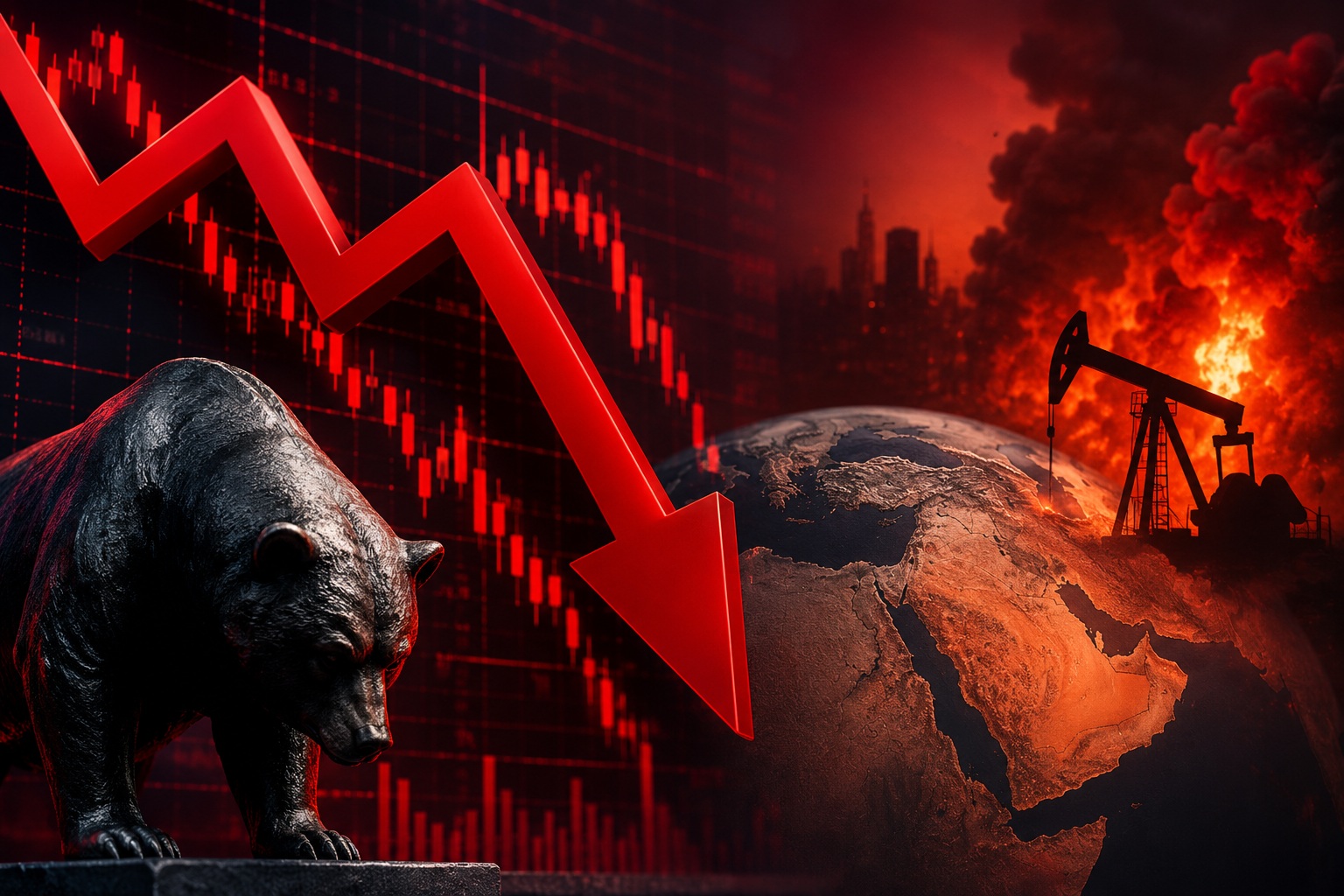
The strong rally in the United States stock market came to a stop after fresh tension in the Middle East shook investor confidence. S&P 500 futures moved lower after the main index ended its nine-day winning streak. The fall came as traders and large investors reacted to rising fear around global conflict, high oil prices, and possible pressure on inflation.
The recent rally in Wall Street gave investors hope that the market could continue its path toward new record highs. Big technology firms and strong company earnings helped the market move higher for many days. However, global events once again changed market mood and pushed investors toward safer assets.
Major Indexes Close Lower
The S&P 500 lost around 0.7 percent during the latest trading session. The Dow Jones Industrial Average dropped nearly 1.2 percent, while the Nasdaq also closed lower with a fall close to 0.9 percent. After the market closed, futures linked to the major indexes continued to trade in negative territory. This showed that traders still carried concern about what could happen next.
The market decline came after a very strong rally that lasted more than a week. During the nine-day winning streak, the S&P 500 moved close to record levels. Many investors believed strong technology shares and better economic data could help stocks continue higher. Artificial intelligence firms and chip makers played a major role in the rally.
Middle East Tension Creates Fear
The biggest reason behind the market decline came from the Middle East. Rising conflict involving the United States and Iran created fear about possible supply problems in the global oil market. Investors worry that any major disruption in the region could affect oil shipments through the Strait of Hormuz, one of the world’s most important trade routes for crude oil.
The Middle East remains one of the most sensitive regions for financial markets because of its role in global energy supply. Even small conflicts in the area can create sharp reactions in oil prices, currencies, and stock markets around the world.
Oil Prices Move Higher
Oil prices rose after reports of rising tension reached financial markets. Traders believe any threat to oil supply could quickly push prices much higher. This fear often causes market pressure because expensive oil can raise costs for businesses and consumers across the world.
When oil prices rise sharply, inflation may also rise. Inflation means prices for goods and services move higher over time. Central banks like the United States Federal Reserve closely watch inflation because high price growth can hurt economic stability.
Inflation and Interest Rate Concerns Return
Investors now fear that rising oil costs may make it harder for the Federal Reserve to cut interest rates in the near future. Higher interest rates usually create pressure on stock markets. Companies face larger borrowing costs, while consumers may spend less money. Because of this, investors often become careful when inflation risks increase.
Treasury yields also moved higher during the session. Bond yields often rise when investors expect inflation to remain strong. Higher yields can compete with stocks because some investors prefer safer fixed-income returns instead of risky equities.
Technology Stocks Face Pressure
The Dow Jones saw one of its weakest sessions in several months. Large industrial and energy-sensitive companies faced pressure as investors moved money into safer areas such as government bonds and gold. Technology shares also slipped as traders reduced risk exposure.
The Nasdaq, which includes many major technology firms, remained under pressure throughout the session. Investors worry that higher bond yields and inflation fears could reduce demand for high-growth stocks. Technology firms usually perform well when borrowing costs remain low. Any sign of long-term rate pressure can weaken investor confidence in the sector.
Investors Book Profits After Big Gains
Markets rarely move in one direction forever. After such a long period of gains, many traders decided to lock in profits. Profit booking often happens when investors fear new risks may affect market momentum. The Middle East crisis gave traders another reason to sell stocks after recent gains.
Market experts say the current decline does not yet confirm the start of a major market crash. Many analysts believe this may simply be a pause after a powerful rally. However, they also agree that geopolitical risks now hold greater importance for global investors.
Focus Shifts to Economic Data
At the same time, investors continue to watch the United States economy very closely. Upcoming economic reports, especially jobs data and inflation numbers, could shape the next move in financial markets. Strong economic growth may support company earnings, but it may also keep inflation above the Federal Reserve’s target.
Many investors still hope the Federal Reserve may lower interest rates later this year if inflation slows down. Rate cuts usually help stock markets because they reduce borrowing costs and support economic growth. But fresh pressure from oil prices may delay those hopes.
Artificial Intelligence Still Supports Markets
Wall Street also continues to depend heavily on large technology companies. Artificial intelligence remains one of the biggest themes in the market. Strong demand for AI products and services helped several major firms report solid earnings in recent months. This trend pushed indexes higher despite worries about inflation and global politics.
Still, some experts warn that the market has become too dependent on a small group of technology firms. If those companies fail to meet investor expectations, the broader market could face larger declines.
What Investors Expect Next
Global investors now face a difficult situation. On one side, the United States economy still shows strength in several areas. Consumer spending remains stable, and many companies continue to report healthy profits. On the other side, geopolitical tension, oil price pressure, and uncertainty around interest rates create major risks for financial markets.
The next few trading sessions may remain volatile as investors react to new headlines from the Middle East and fresh economic data from the United States. Traders will likely pay close attention to oil prices because any sharp rise could increase inflation fears further.
Market Outlook Remains Uncertain
Despite the latest decline, many analysts still believe the broader market trend remains positive over the long term. They say strong business earnings, innovation in technology, and steady economic growth may continue to support stocks after short-term pressure fades.
For now, caution has returned to Wall Street. Investors no longer focus only on company profits and economic growth. Global politics and energy prices once again stand at the center of market attention.
The fall in S&P 500 futures shows how quickly investor mood can change. One week of strong gains may disappear after a single global event creates uncertainty. Financial markets often react fast to fear, especially when conflict and oil supply risks enter the picture.
As traders wait for more clarity, many investors may choose safer strategies until market conditions improve. The coming days could decide whether this decline remains a short pause or grows into a deeper market correction.
Also Read – How Analysts Mislead Retail Investors