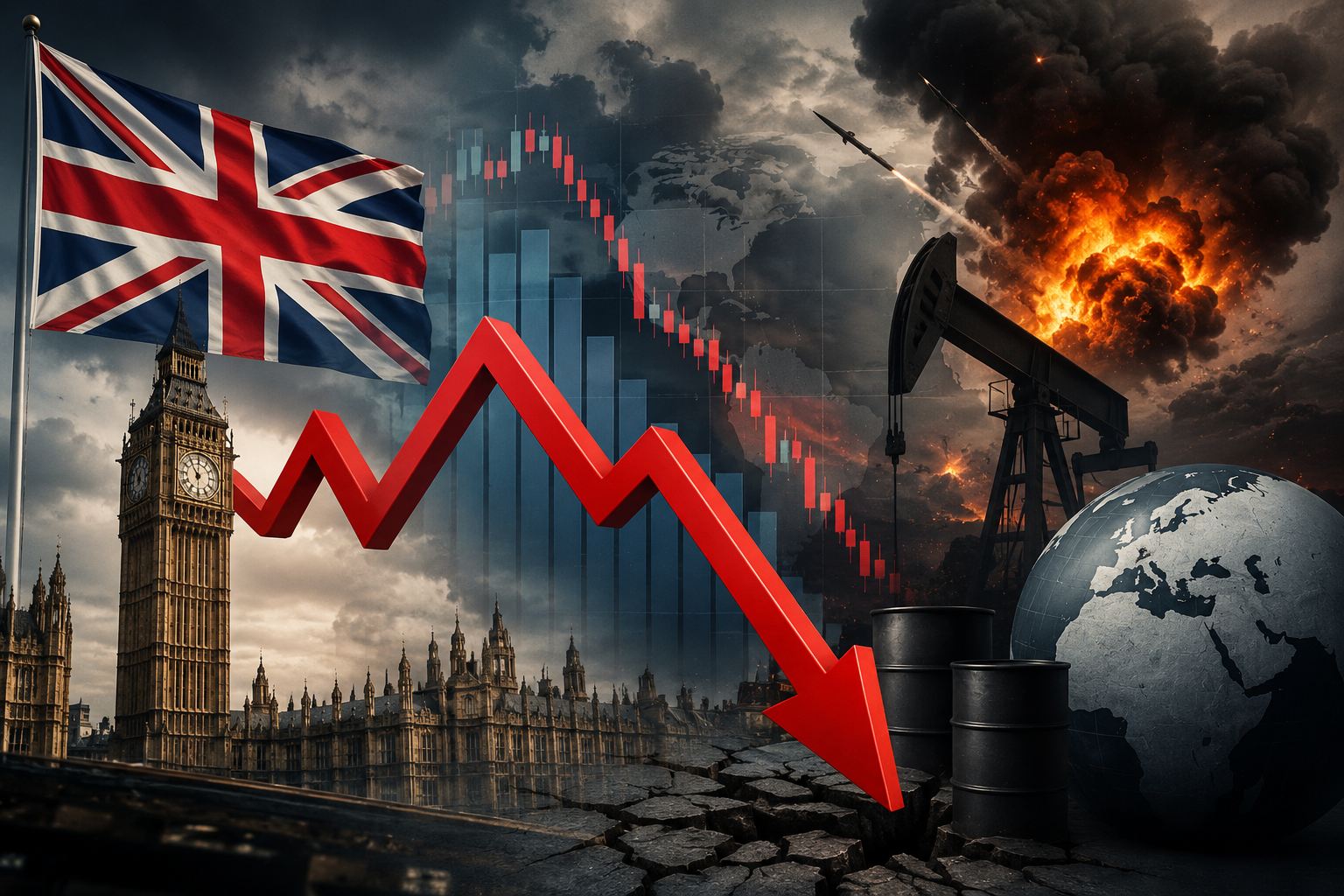
The United Kingdom economy saw an unexpected setback in April 2026 after official data showed the country’s economic output fell by 0.1 percent. This decline came after a period of steady recovery and surprised many experts who expected growth to continue. The sudden fall has raised fresh concerns about the wider impact of the ongoing conflict involving Iran and how global tensions can quickly affect economies far away.
Economists now believe the war in the Middle East has started to put pressure on businesses across Britain. The biggest concern comes from rising energy prices, weaker business activity, and the return of inflation fears. What looked like a stable recovery just weeks ago now faces uncertainty.
Earlier Growth Suddenly Comes to a Stop
Before April, the UK economy showed positive signs. Growth had slowly returned after months of economic pressure, and many businesses hoped better days were ahead. Consumer confidence had improved, and spending patterns started to look stronger.
However, the latest economic report changed that picture. Instead of continued recovery, the economy moved backwards by 0.1 percent in April. While this may seem like a small number, even a small decline can create serious concern when growth was already fragile.
The sudden slowdown has forced experts to reconsider what may happen in the coming months. Many now worry that outside global events, especially war-related disruptions, may damage economic progress.
Iran Conflict Sends Shock Through Global Markets
The main reason behind this economic slowdown appears connected to the conflict involving Iran. Wars in major oil-producing regions often create problems across the world because they affect the supply of energy.
One major concern remains the Strait of Hormuz, one of the most important shipping routes for oil and gas. A large share of the world’s energy supply passes through this narrow route. Any disruption there causes immediate fear in global markets.
As tensions around Iran increased, oil and gas prices quickly moved higher. Countries like Britain, which depend on imported energy, felt the impact almost immediately. Businesses that rely on fuel, transport, and electricity suddenly faced much higher operating costs.
This pressure started to spread across the economy.
Businesses Face Rising Costs
Higher energy prices create problems for almost every industry. Factories need electricity to produce goods. Delivery companies need fuel to move products. Retail stores depend on transportation networks to keep shelves full.
When energy becomes expensive, companies have only limited options. Some raise prices for customers. Others reduce spending or delay expansion plans. Smaller businesses often struggle the most because they have fewer resources to absorb sudden cost increases.
Across Britain, many companies started to feel this pressure during April. As a result, overall business output weakened, which directly affected national economic performance.
Experts believe this was one of the biggest reasons the country recorded negative growth.
Services Sector Shows Signs of Weakness
The United Kingdom has an economy heavily built around services. Unlike countries that depend mostly on manufacturing, Britain earns a large share of income through industries like finance, tourism, entertainment, hospitality, and business support services.
Recent reports show this sector became weaker during April.
Areas connected to entertainment, recreation, and support services recorded noticeable declines. These industries usually depend on consumer spending and international activity.
Some international sporting events planned in Gulf countries also faced cancellation because of growing regional instability. While this happened far from Britain, these cancellations affected businesses connected to tourism, travel planning, event management, and international partnerships.
This created another layer of economic pressure at a time when the country already dealt with rising costs.
Inflation Fears Return Again
One of the biggest worries for governments and central banks remains inflation. Inflation means prices rise across the economy, which makes daily life more expensive for ordinary people.
For much of the year, Britain had started to see progress in controlling inflation. Price pressures had slowly reduced, giving hope that the situation was improving.
But the Iran conflict has changed that outlook.
Higher oil and gas prices usually affect transportation costs first. When transportation becomes expensive, companies pay more to move products from one place to another.
Soon after, food prices often rise because farms, suppliers, and stores all face higher delivery costs. Household energy bills may also increase.
This creates a chain reaction where almost everything becomes more expensive.
Economists now warn that inflation pressure may begin to rise again after months of improvement.
Europe Could Face Bigger Economic Trouble
The concern does not stop with Britain alone. Experts across Europe now worry that the current conflict could create wider economic problems for many countries.
The biggest fear is something called stagflation.
Stagflation happens when economic growth becomes weak while prices continue to rise at the same time. This creates a difficult situation because governments cannot easily fix both problems together.
Several European economies now face this risk.
Countries seen as most vulnerable include the United Kingdom, Germany, and Italy because these economies rely heavily on imported energy.
If energy prices continue to rise for a longer period, recession fears may grow stronger across the region.
This could create pressure not only for businesses but also for workers and families who already face high living costs.
Financial Markets Watch Closely
Investors now pay close attention to how this situation develops.
One area under pressure remains oil prices, which may stay high if tensions around Iran continue.
The FTSE 100, Britain’s main stock market index, could face more volatility as investors react to economic uncertainty.
Attention also turns toward the Bank of England, which controls interest rates.
Before this slowdown, many expected the central bank to cut interest rates later this year. Lower rates usually help businesses borrow and invest more easily.
Now that inflation fears are rising again, those expected rate cuts may face delay.
In some cases, experts even warn that further interest rate increases could return if inflation becomes a serious problem again.
This creates uncertainty for businesses, investors, and ordinary consumers.
A Warning Sign for the Global Economy
The latest UK economic data serves as an early warning about how quickly global conflicts can damage economies around the world.
Just weeks earlier, Britain looked on track for steady recovery. Growth had returned, inflation had eased, and confidence slowly improved.
Now a war thousands of miles away has already pushed energy prices higher, weakened business activity, and raised fears of another difficult economic period.
The 0.1 percent fall in April may seem small, but it shows how connected today’s world economy has become.
If the conflict around Iran continues, Britain and many European countries could face slower growth, higher prices, and increasing pressure in the months ahead.
For now, the UK economy has sent a clear signal that global instability often reaches far beyond the battlefield.
ALSO READ: Major Forex Broker Penalty in Australia: Everything to Know