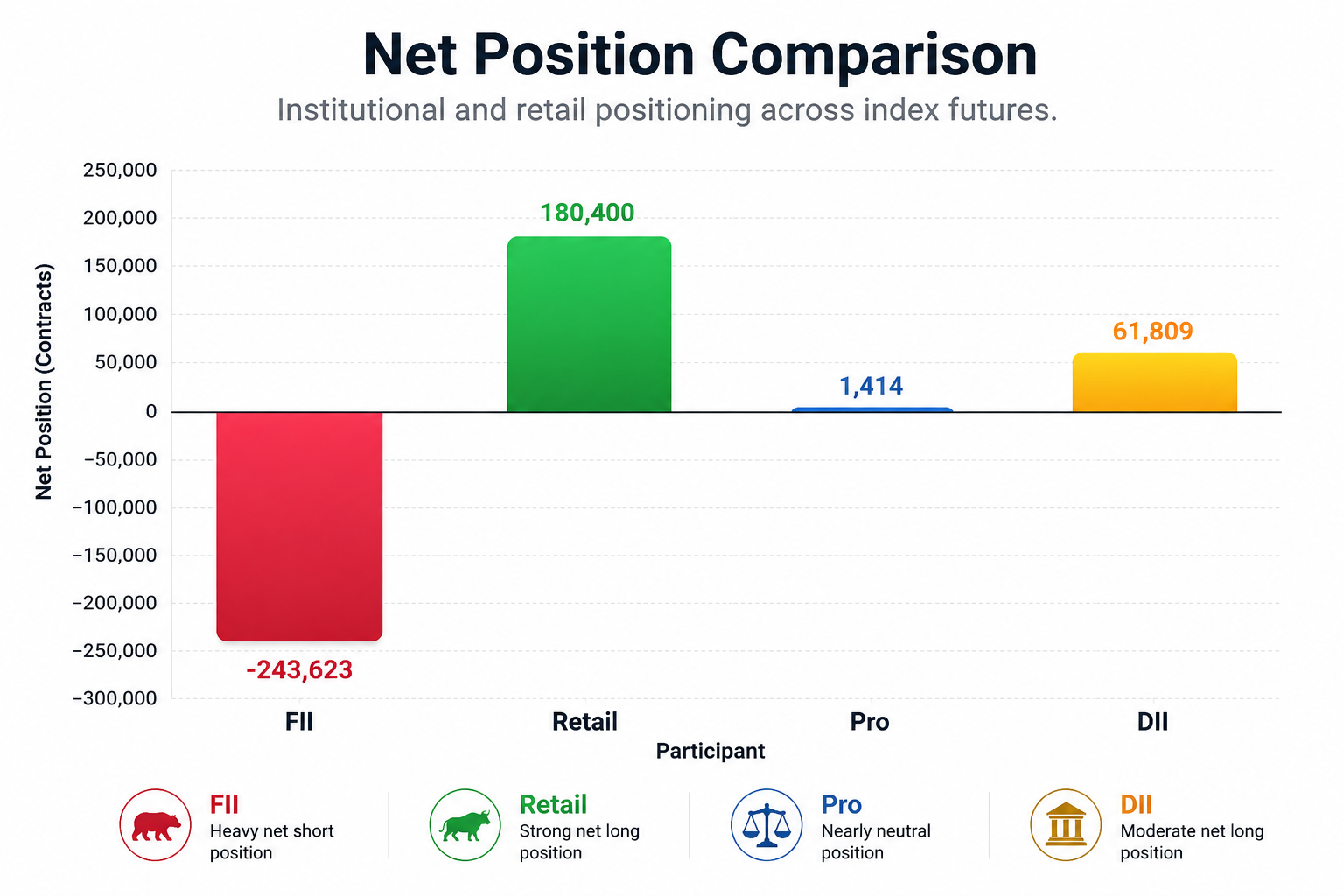
Market positioning data from June 12 shows a sharp difference between institutional traders and retail participants. The latest derivatives numbers reveal that foreign investors remain cautious, while retail traders continue to hold a strong bullish view.
A close look at futures and options activity across Foreign Institutional Investors (FII), Domestic Institutional Investors (DII), proprietary desks, and client positions gives an important picture of how different market participants view the next trading session.
The biggest takeaway from the data is simple. Large institutions show caution. Retail traders continue to expect upside.
This gap often matters because institutional money usually reacts early when risk starts to rise.
FIIs Hold Heavy Short Positions in Index Futures
The strongest signal comes from FII index futures open interest.
Data shows foreign institutional investors hold 39,971 long contracts in index futures. At the same time, they carry 283,594 short contracts.
This leaves FIIs with a net short position of 243,623 contracts.
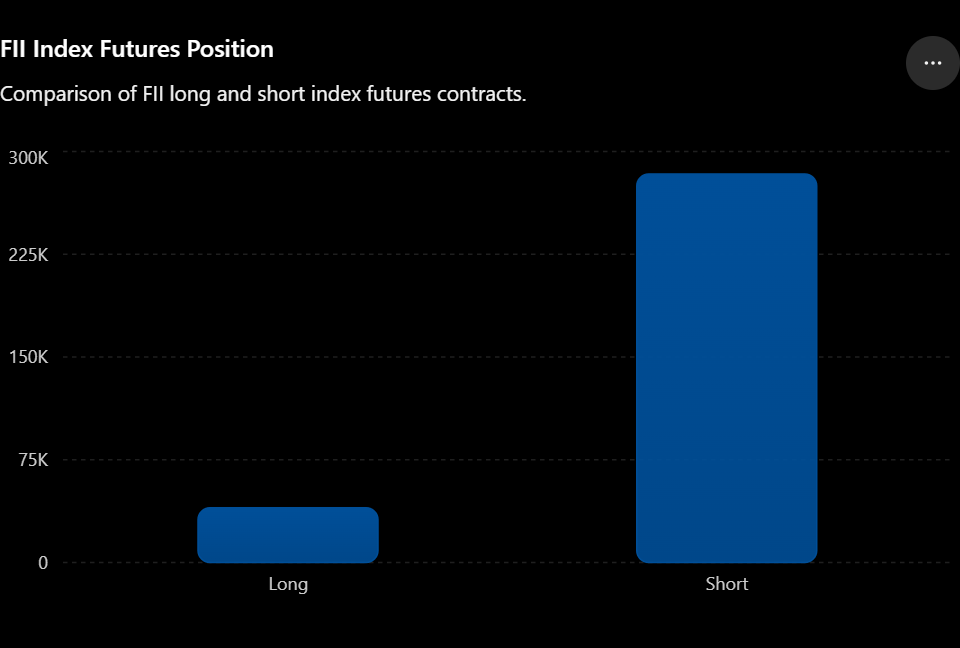
This number stands out because it shows institutions prefer a defensive approach instead of an aggressive bullish position.
Heavy short exposure usually means large investors either expect weakness in the broader market or want protection against possible downside movement.
Although intraday activity showed some fresh buying, total carry-forward positions still remain strongly negative.
At this stage, FII positioning reflects caution rather than confidence.
Retail Clients Continue to Hold Bullish View
Retail participation shows a completely different picture.
Client open interest data shows 258,005 long index futures contracts against only 77,605 short contracts.
This leaves retail traders with a net long position of 180,400 contracts.
The bullish positioning becomes even stronger in stock futures.
Retail traders currently hold 3,198,550 long stock futures contracts while short positions remain limited at 218,213 contracts.
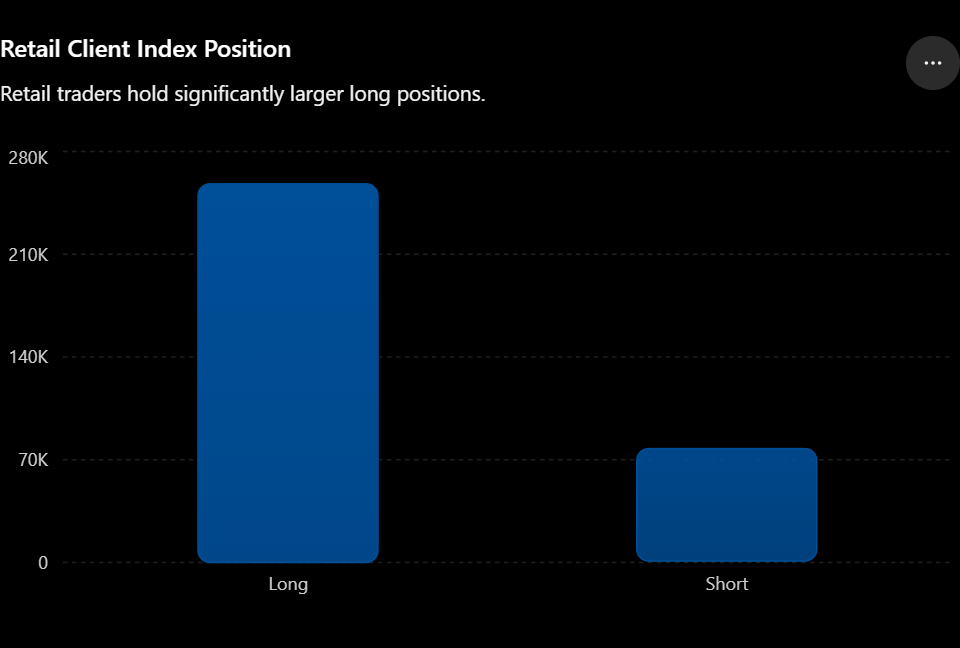
This clearly shows that retail participants expect market strength to continue.
Historically, strong retail optimism against institutional caution often creates unstable short-term setups.
Retail conviction remains strong, but market direction may not fully support this view.
Proprietary Desks Show Balanced Exposure
Proprietary traders, usually broker-owned trading desks, present a more neutral setup.
Open interest numbers show 56,144 long index contracts and 54,730 short index contracts.
This difference remains very small.
At first glance, this looks directionless. However, options activity tells a more complete story.
Proprietary desks hold 1,054,697 long call contracts and 1,441,958 long put contracts. On the short side, they carry 878,944 short calls and 1,291,206 short puts.
The larger put exposure suggests a preference for protection.
This normally indicates a hedged structure rather than a direct market bet.
Instead of choosing clear bullish or bearish direction, proprietary desks appear prepared for volatility.
That usually means professional traders prefer caution at present levels.
DII Positioning Gives Mixed Signals
Domestic institutional investors present a more complex picture.
In index futures, DIIs hold 75,317 long contracts and only 13,508 short contracts.
This suggests a positive index bias.
However, stock futures positions tell a very different story.
DIIs carry 391,708 long stock futures contracts, but short stock futures positions rise sharply to 4,699,485 contracts.
This large difference often reflects hedging activity rather than outright bearish expectations.
Many domestic institutions manage large equity portfolios. Large stock future shorts often act as protection against sudden market weakness.
Because of this structure, DII data does not offer a strong directional signal for the broader market.
The numbers mainly suggest portfolio protection.
Volume Data Shows Fresh Institutional Activity
Daily volume helps identify fresh action rather than old carry-forward positions.
FII futures volume shows 46,080 long contracts traded and 22,720 short contracts traded during the session.
This suggests institutions added fresh buying activity during the day.
However, total open interest still remains heavily net short.
This means some short covering likely happened, but overall institutional positioning remains defensive.
Retail volume tells a slightly different story.
Clients traded 81,121 long index futures contracts and 100,566 short contracts during the session.
While both sides saw active participation, total carry-forward positions still remain strongly net long.
This means retail traders continue to hold bullish conviction beyond intraday activity.
The difference between short-term volume and overall open interest becomes important here.
Fresh trading activity changed slightly, but broader positioning remains unchanged.
ALSO READ: Stablecoin Supply Hits $31.5B but Crypto Market Stays Weak
Smart Money and Retail View Remain Opposite
The biggest message from the data comes from the sharp difference between institutional and retail behavior.
Foreign investors remain heavily short in index futures.
Retail traders continue to hold large bullish exposure in both index and stock futures.
Proprietary desks show hedged positions with defensive option structures.
Domestic institutions remain active mainly through stock hedges rather than direct index bets.