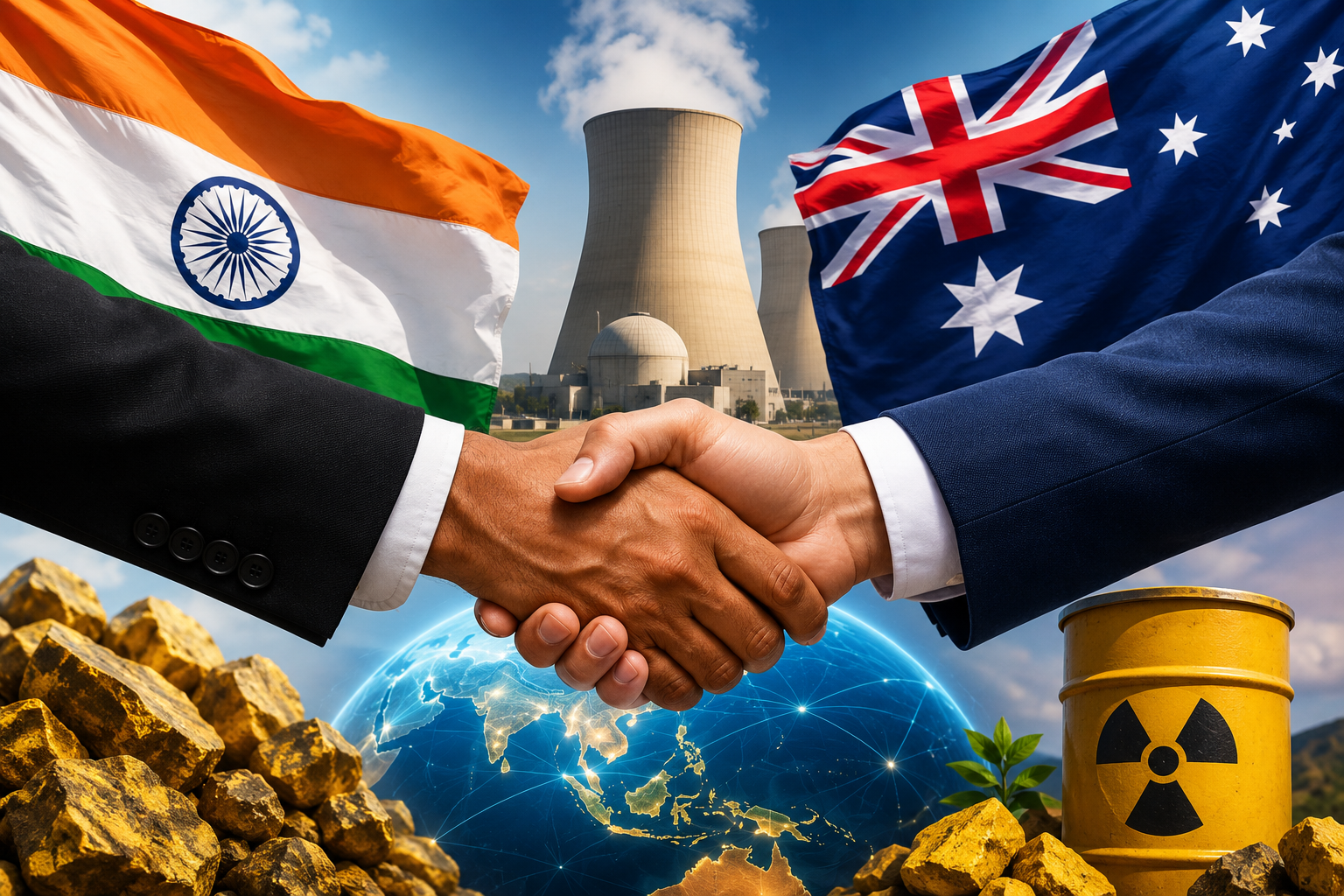
India and Australia are ready to take an important step in their relationship. During Prime Minister Narendra Modi’s visit from July 6 to July 11, both countries are expected to announce a major uranium supply agreement. This deal has been under discussion for a long time. If both sides complete the final talks, it will become one of the biggest achievements of the visit.
The tour includes Indonesia, Australia, and New Zealand. However, the Australia visit has received special attention because of the expected uranium agreement. The visit to Australia is scheduled from July 8 to July 10. Along with the uranium deal, both countries are also likely to announce new plans in defence, trade, maritime security, and critical minerals.
The expected agreement shows that India and Australia want a stronger partnership for the future.
Why This Uranium Deal Is Important
The planned agreement is important because India needs a steady supply of uranium for its nuclear power plants. Nuclear power helps produce electricity without large carbon emissions. As India’s demand for electricity continues to rise, the country needs more clean and reliable energy sources.
Australia has some of the largest uranium reserves in the world. It is also one of the world’s leading uranium exporters. A long-term supply agreement with Australia can help India secure enough fuel for its civilian nuclear reactors.
This deal is not only about energy. It also shows that both countries trust each other and want to build a stronger relationship across many sectors.
India’s Need for More Clean Energy
India is one of the fastest-growing economies in the world. Every year, the country needs more electricity for homes, industries, transport, and modern technology.
The rise of artificial intelligence, large data centres, and digital services has also increased electricity demand. At the same time, India wants to reduce pollution and lower carbon emissions.
For these reasons, the government has placed strong focus on clean energy. Solar and wind power are growing quickly, but nuclear energy also has an important role. Nuclear power can produce electricity throughout the day and night without depending on weather conditions.
A steady uranium supply will support India’s long-term plans for nuclear energy.
Australia’s Role in India’s Nuclear Plans
Australia has rich uranium resources and follows strict rules for uranium exports. The country supplies uranium only for peaceful civilian use under international agreements.
India can use Australian uranium only in civilian nuclear reactors. These reactors produce electricity and are separate from military nuclear programmes.
Australia has become an important partner because it can provide a reliable and long-term source of uranium. This gives India greater energy security and supports future nuclear projects.
A Partnership That Started Years Ago
The expected agreement did not begin overnight. India and Australia signed a Civil Nuclear Cooperation Agreement in 2014. That agreement opened the way for uranium exports from Australia to India.
In 2017, Australia sent its first shipment of uranium to India. Since then, both countries have continued talks on stronger energy cooperation.
The new agreement is expected to build on that earlier partnership. Instead of limited shipments, both sides now aim for a more structured and long-term commercial supply arrangement.
This shows how the relationship has grown over the last decade.
More Than Just an Energy Agreement
The uranium deal is only one part of Prime Minister Modi’s Australia visit. Leaders from both countries are also expected to discuss several other important issues.
Defence cooperation is likely to become stronger. India and Australia already work together in military exercises and security discussions. Both countries also support peace and stability in the Indo-Pacific region.
Maritime security will remain another major topic. Safe sea routes are important for global trade, and both countries want stronger cooperation in this area.
Trade and investment are also expected to receive fresh support. Leaders may announce new efforts to increase business opportunities and improve economic cooperation.
Critical minerals will be another area of focus. These minerals are important for electric vehicles, batteries, electronics, and clean energy technology. Australia has large reserves of many critical minerals, while India wants secure supplies for future industries.
A Stronger Indo-Pacific Partnership
India and Australia have become close partners in recent years. Both countries work together on regional security and economic development.
They are also members of the Quad, a group that includes India, Australia, Japan, and the United States. The four countries cooperate on issues such as security, technology, supply chains, disaster response, and infrastructure.
The expected uranium agreement will add another important chapter to this growing partnership.
As global politics continue to change, India and Australia want closer cooperation to protect shared interests and support stability across the Indo-Pacific region.
What Happens Next
Reports suggest that talks on the uranium agreement have reached the final stage. Officials from both countries have worked on the details for many months.
If everything goes as planned, the agreement could become one of the biggest announcements during Prime Minister Modi’s Australia visit.
However, until both governments officially sign the documents and make a formal announcement, the agreement remains under negotiation.
Even so, expectations are high because both countries have shown strong interest in completing the deal.
A Major Step for the Future
The expected India-Australia uranium supply agreement represents much more than a fuel contract. It reflects growing trust, shared goals, and a long-term vision between two important Indo-Pacific partners.
For India, the agreement can support clean energy, strengthen energy security, and help meet rising electricity demand. For Australia, it opens the door to deeper cooperation with one of the world’s fastest-growing economies.
The visit from July 6 to July 11 could therefore mark an important moment in relations between the two nations. If the agreement is signed, it will strengthen cooperation in energy while also creating fresh opportunities in defence, trade, maritime security, and critical minerals.
The expected announcement will show that India and Australia are ready to work more closely in many areas and build a stronger partnership for the years ahead.