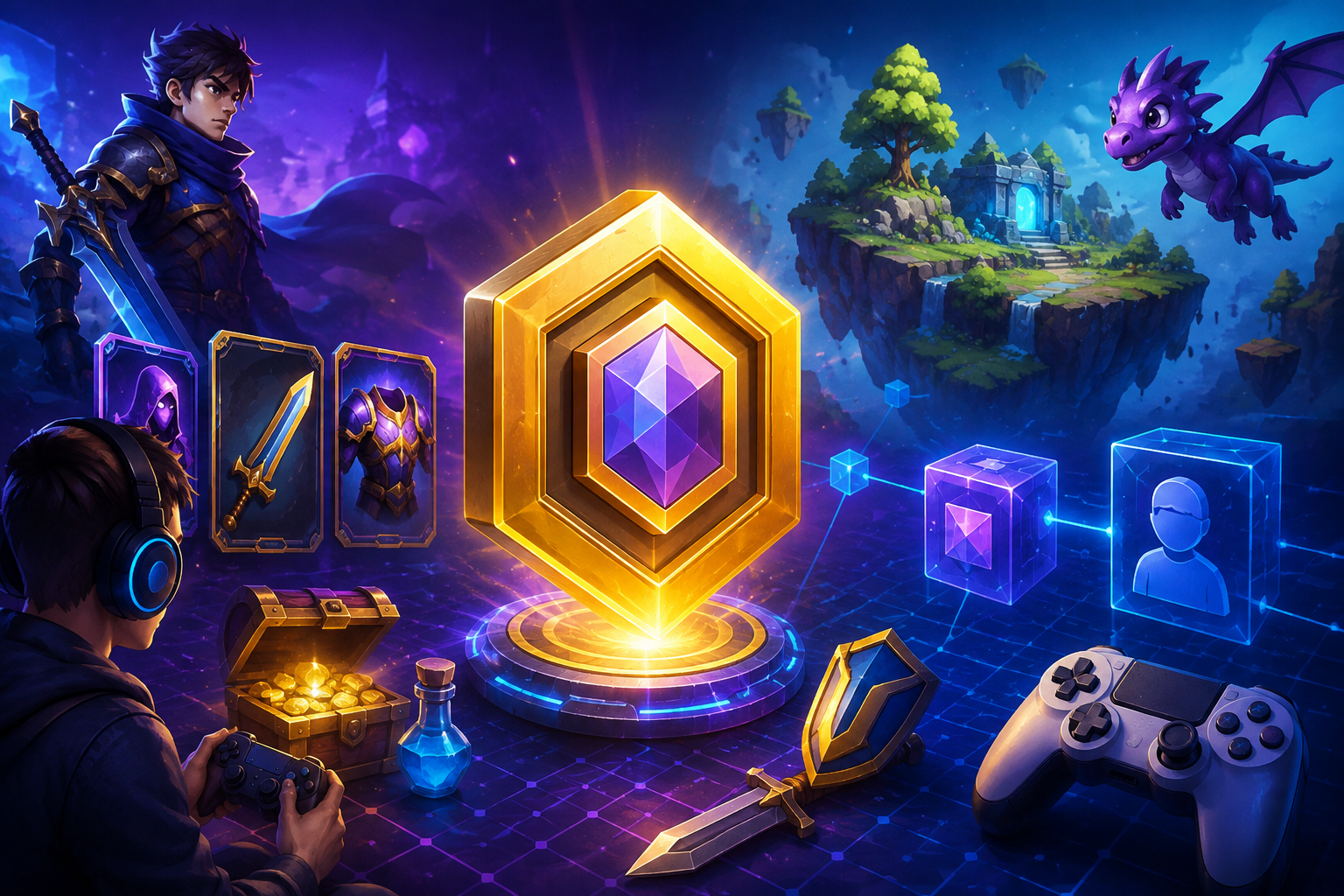
NFTs once had a huge place in the crypto world. Many people saw them as rare digital items that could rise in value. Games soon became one of the biggest areas for NFT use. The idea was simple. A player could own a game item as an NFT, use it inside a game, and perhaps sell it later.
That idea still exists, but the market has changed a lot. In 2026, players and game makers care less about an NFT only because it is rare. They want a clear reason to own it. An NFT may now give access to a character, item, event, reward, or special part of a game.
This shift is one of the main trends in the NFT and gaming market today. The focus is moving from hype and fast profit toward real use, better game design, and long-term player value.
Utility Has Become the Main Focus
The biggest change is the rise of utility. In simple terms, utility means that an NFT has a real purpose.
A digital item can act as a character, weapon, card, skin, piece of land, membership pass, or access key. It can also give a player access to special events or game features. This gives the NFT a role beyond simple ownership.
This change matters because players do not want to spend money on an asset that has no clear use. They want something that adds value to their time inside the game.
The strongest NFT projects are therefore more likely to connect ownership with a useful game feature. The NFT becomes part of the game system rather than the main product itself.
From Play-to-Earn to Play-and-Own
The early NFT game market was built around the play-to-earn idea. Players could play a game, receive digital assets, and sell those assets for money. This model attracted many users, but it also created major problems.
Some games placed too much focus on rewards. Players could enter mainly for financial gain instead of fun. When token prices fell, the reason to play could also disappear.
A 2026 research study gives a clear view of this problem. Researchers studied NFT transaction data from 12 games. They found that a small number of top wallets controlled a very large share of NFTs, while most wallets held only one or two NFTs and did not trade often. The study also found that promotions could raise NFT trade volume and prices, but these effects did not last. Most importantly, few players made a profit. Players who traded NFTs had a negative average profit in 9 out of 12 games.
This data helps explain why the market has moved toward a play-and-own model. The game must first offer a good experience. Ownership can then add another layer of value.
Better Game Design Comes First
A successful NFT game still needs to be a good game. This may sound obvious, but it was not always the main focus during the first NFT boom.
Today, players expect strong gameplay, good graphics, fair rules, useful rewards, and a reason to return. Blockchain features cannot replace these basics.
A player may like the idea of owning a digital sword, for example. But that sword will have little value if the game itself is boring. A rare character also has little appeal if nobody wants to play the game.
This creates a simple rule for the market: the game should come first, while the NFT should support the game.
Lower Costs Can Help NFT Games
Cost has also been a major issue for blockchain games. Traditional blockchain networks can make small transactions slow or expensive. That is a problem for games because players may need many transactions.
Layer-2 networks and other lower-cost systems can help reduce this burden. They can make digital asset transfers faster and cheaper, which can make blockchain features easier to use.
This is especially useful when players trade items, claim rewards, create assets, or move digital property. A player should not have to think about a high network fee every time they make a small game action.
The wider goal is simple: blockchain should work in the background instead of becoming a constant obstacle.
Digital Ownership Still Has Strong Appeal
NFTs also offer a different idea of digital ownership. In a normal game, a player may buy a skin or character, but that item usually stays inside the publisher’s system.
With an NFT, ownership can exist on a blockchain network. This can allow the asset to move through supported marketplaces outside the game.
That does not mean every NFT will work in every game. True cross-game use remains difficult because different games use different rules, art styles, economies, and technical systems.
Still, the idea has value. A player may want digital items that can remain useful beyond one closed game system.
Interoperability Remains a Long-Term Goal
Interoperability means that an asset can work across more than one platform or game. It has been one of the biggest promises of Web3 gaming.
Imagine a character that can move from one game world to another. A weapon could have one use in a combat game and another role in a strategy title. In theory, this could create a much wider digital economy.
In practice, this is hard to achieve. Game makers must agree on technical standards, asset rules, balance, copyright, and player rights. A powerful item in one game could also create an unfair advantage in another.
For this reason, true interoperability remains more of a long-term goal than a common feature.
Big Game Companies Are Still Testing the Model
Large game publishers have shown interest in NFTs, but their results also show the limits of the idea.
Ubisoft’s Champions Tactics: Grimoria Chronicles became one of its most visible Web3 game experiments. The game offered NFT-based Champions and blockchain features. However, in May 2026, Ubisoft said the game would move away from blockchain functions because of changes to the infrastructure that supported its Web3 features.
The game is now set to shut down on October 30, 2026. Its NFT features were already phased out before the shutdown. Reports also noted that some NFT characters had once appeared on the marketplace for more than $63,000.
This case is important because it shows that NFT ownership alone cannot guarantee a game’s success. A strong player base and a useful game experience remain essential.
Players Want Less Friction
Another major trend is simpler access. Many players do not want to create a crypto wallet, buy tokens, pay network fees, and learn complex blockchain steps before they can play a game.
This creates a clear need for simple systems. Players should be able to start a game with a normal account and only explore blockchain features if they want them.
Some projects now treat blockchain as an optional layer rather than the main entry point. This can help reduce fear and confusion among normal gamers.
The goal is to make the technology almost invisible. If blockchain works well in the background, players can focus on the game rather than the technology.
What Comes Next for NFT Gaming
The next phase of NFT gaming is likely to be more practical and less focused on hype. Projects may place greater value on characters, items, access, digital identity, creator tools, and player-owned economies.
The market may also become smaller but stronger. Projects without a real purpose could struggle, while games with good design, useful assets, strong communities, and sensible economies may have a better chance to survive.
The lesson from the early NFT era is clear. Scarcity alone is not enough. A high price cannot create long-term demand. Rewards cannot replace fun. Blockchain cannot fix a weak game.
Conclusion
NFT gaming is not simply disappearing. Instead, its role is changing. The market is moving away from the idea that every game needs an NFT economy and toward a model where digital ownership has a clear purpose.
Utility is now at the heart of the discussion. Players want assets that have meaning, games that are worth their time, and systems that do not create unnecessary complexity.
The future may not look like the first NFT boom. It may be quieter and more practical. The strongest projects will likely be those where players enjoy the game first and see blockchain ownership as an added benefit.
In that sense, the most important NFT trend today is not the NFT itself. It is the value that the NFT can provide to the player.
ALSO READ: Real-World Assets in Crypto: A Guide to RWA and Tokenization


