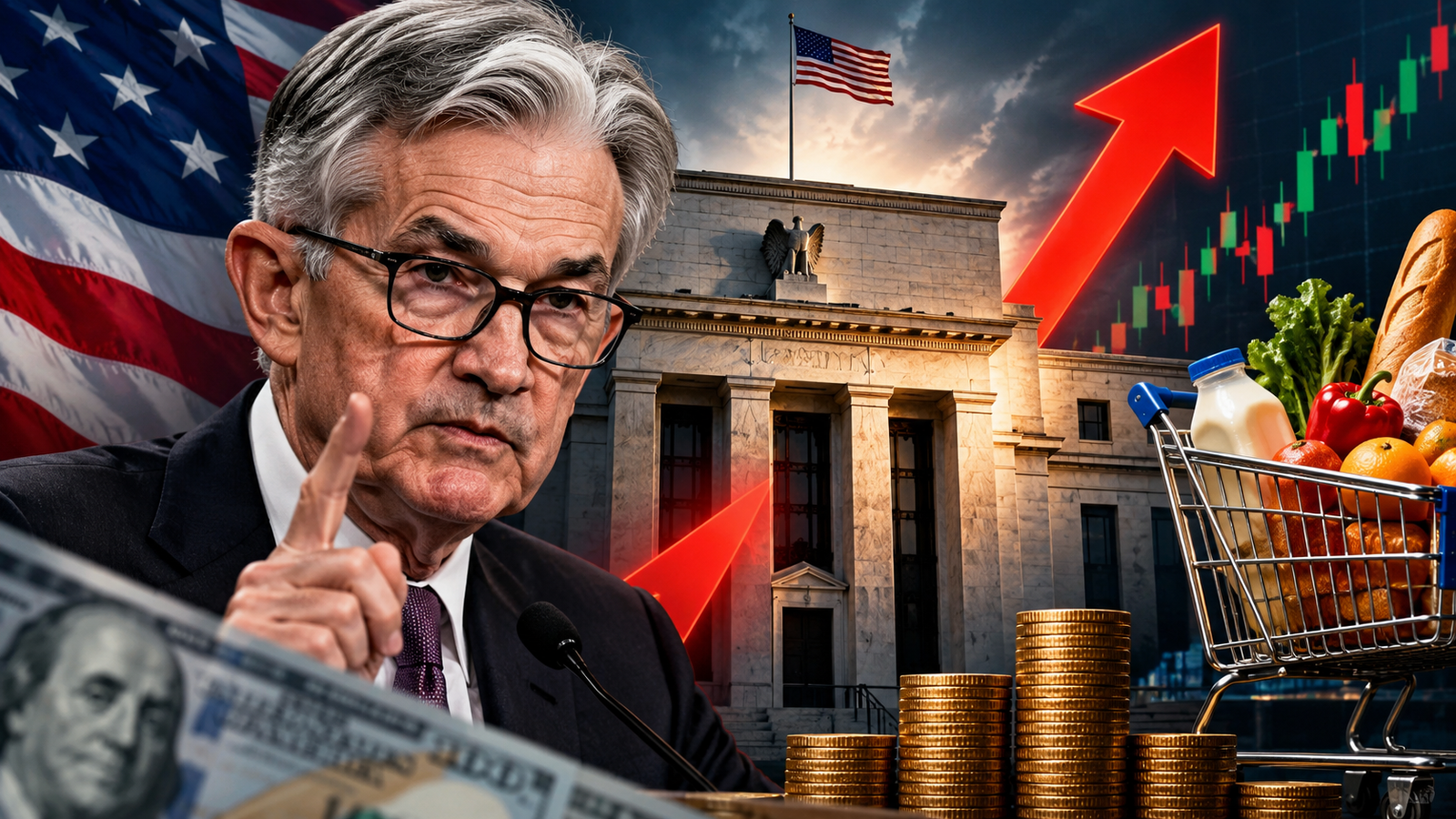
The outlook for the US Federal Reserve has changed fast. Markets now price about a 57% chance of a rate hike in September, after stronger US jobs data raised concern that the economy may still have enough strength to handle higher rates.
A rate hike means the Fed would raise its key interest rate by 25 basis points. Such a move would make borrowing more costly across the US economy. It could affect loans, mortgages, credit cards, company debt, stocks, bonds, the US dollar, gold and cryptocurrencies.
But the September decision is far from certain. After the latest jobs report, some market measures placed the chance of a hike near 58% to 60%.
That makes the next US inflation report extremely important.
Strong Jobs Data Changed the Picture
The main reason behind the rise in rate hike expectations is the latest US employment report.
US employers added 162,000 jobs in August 2026. That was much stronger than the roughly 65,000 jobs economists had expected. The unemployment rate stayed at 4.1%. Earlier figures for June and July also saw an upward revision of 55,000 jobs.
This report gave markets a clear message: the US economy still has strength.
For the Fed, that matters because its job is not only to control inflation. It also has to consider the health of the labor market. If companies continue to hire at a solid pace and unemployment stays low, the central bank has more room to keep rates high or even raise them.
The latest figures therefore reduced some of the pressure on the Fed to avoid a rate hike.
At the same time, the jobs report did not remove every concern. Wage growth remained moderate, which could help reduce fears about a new wave of wage-driven inflation.
This is why the next inflation report has become even more important.
Friday’s Inflation Report Is the Key Test
The biggest event for markets this week is the US Consumer Price Index report due on September 11.
Economists expect headline inflation to stay around 3.4% year over year. Core inflation, which removes food and energy prices, is expected at around 2.4%.
The core number may receive special attention from the Fed.
Energy prices have been a major source of concern, especially as oil prices have moved higher. Higher oil can push headline inflation up even when the wider price picture is less severe. Core inflation gives policymakers a better view of some underlying price pressure.
If Friday’s data comes in close to expectations, markets may still keep a strong chance of a September hike.
But if inflation comes in much higher than expected, the case for a rate increase could become stronger.
A softer report could have the opposite effect.
Why a Hot CPI Could Change Everything
A higher-than-expected CPI number would create a difficult situation for the Fed.
The central bank wants inflation to move toward its 2% target. If price growth remains well above that level, cutting or holding rates may allow inflation pressure to last for longer.
A hot CPI report would therefore give hawkish Fed officials more support for a rate hike.
It could also push Treasury yields higher. The dollar could gain as investors price in higher US rates. Stocks could face pressure because higher yields can reduce the appeal of riskier assets.
Growth stocks may feel the impact more clearly because their valuations often depend on future profits. When interest rates rise, those future profits become less valuable in today’s terms.
The effect could also spread to other global markets.
A Cool CPI Could Reduce Hike Bets
A softer inflation report would tell a very different story.
If headline and core inflation both come in below expectations, traders could reduce their bets on a September hike. A hold could again become the more likely outcome.
That view has support inside the Fed.
Federal Reserve Governor Christopher Waller recently said he could support keeping rates unchanged at the September meeting if inflation continues to cool. He has stressed that the Fed should give disinflation more time to continue.
His comments show why the September decision is not already locked in.
The strong jobs report pushed rate hike odds higher, but a weak enough CPI report could reverse that move.
This leaves investors with a simple question: Will inflation confirm the strength seen in the labor market, or will it show that price pressure is still easing?
The Fed Has a Difficult Balance
The Fed’s current situation is not easy.
On one side, the labor market looks stronger than many expected. The addition of 162,000 jobs gives policymakers more confidence that the economy can handle tighter policy.
On the other side, inflation remains above the Fed’s 2% goal. That means the central bank cannot simply focus on economic growth and ignore prices.
There is also another problem: energy prices.
Oil has moved sharply higher as tensions in the Middle East have increased. On Monday, Brent crude was around $96.45 a barrel, while US crude was around $91.85. Higher energy costs can add fresh pressure to consumer prices.
This makes the inflation outlook harder to predict.
If higher oil prices last for a long period, they could keep headline inflation high. The Fed will have to decide whether that pressure is temporary or a sign of a wider inflation problem.
Markets Are Near a 50-50 Decision
One important point is that the 57% probability is not a prediction made by the Fed.
It is a market estimate based on interest-rate futures. Traders use these contracts to express their views on future Fed policy.
These odds can change quickly after major economic reports.
Recent market data showed how fast the view can shift. One measure had the chance of a 25-basis-point hike at 49.4%, while the probability of a hold was 50.6%. After the stronger jobs report, other market measures moved the hike probability toward 58% to 60%.
This tells us something important: the market has not made up its mind.
The September decision remains highly sensitive to new data.
What It Could Mean for Stocks
US stocks may react strongly to Friday’s CPI report.
A lower inflation number could support stocks because it would reduce pressure on the Fed to raise rates. Investors could also expect easier financial conditions later.
A higher CPI number could have the opposite effect.
Higher inflation could raise Treasury yields and increase the chance of a rate hike. That could put pressure on major stock indexes.
Technology stocks may be especially sensitive because many large technology companies have high valuations based on future earnings.
However, a strong economy can also support stocks. That creates a complicated picture. Good economic data is positive for company profits, but it can also lead to higher interest rates.
The market therefore has to balance two forces at the same time.
What It Could Mean for the Dollar and Gold
The US dollar could also react to the CPI report.
A hot inflation report would likely increase rate hike expectations. Higher US rates can make dollar assets more attractive, which may support the currency.
Gold could face the opposite pressure if Treasury yields and the dollar rise sharply.
A softer CPI report could reduce rate hike expectations. That may push yields lower and weaken the dollar, which could provide support for gold.
The same broad pattern can also affect Bitcoin and other risk assets, although their price moves depend on many other factors.
September 15–16 Is the Final Date
The Federal Reserve will meet on September 15–16 to decide its next policy move.
By then, officials will have the August jobs report and the August CPI report in hand.
The jobs data has already moved the market toward a hike. The CPI report now has the power to either support that view or weaken it.
That is why Friday’s report may be one of the most important economic releases of the month.
If inflation stays high, the Fed may see a stronger reason to raise rates by 25 basis points. If price pressure cools, officials may prefer to keep rates at their current level and wait for more evidence.
The Bottom Line
The market has moved from uncertainty toward a mild expectation of a September rate hike. The current 57% probability shows that traders see a hike as slightly more likely than a hold, although recent readings have moved closer to 58% to 60% after the strong jobs report.
The next major test is US CPI on September 11.
A hot inflation report could push hike expectations higher and put pressure on stocks, bonds and gold. A soft report could bring those expectations back down and give markets some relief.
For now, the message is simple: the jobs report made the September hike more likely, but inflation will have the final word.