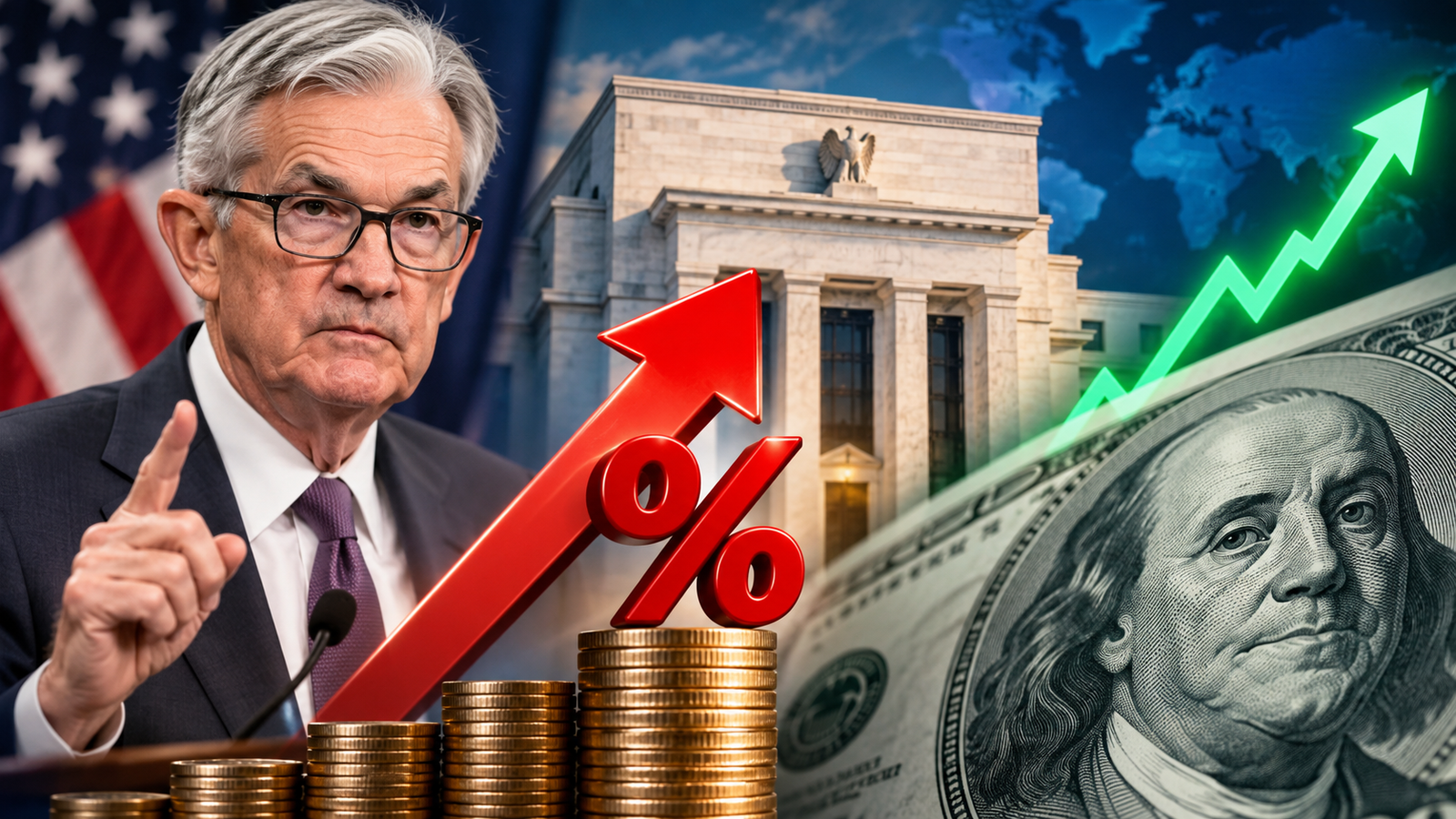
The U.S. Federal Reserve has delivered its first rate hike in more than three years. The central bank raised its target interest rate range to 3.75–4%. The move marks an important change in U.S. monetary policy and has also had a clear effect on the value of the U.S. dollar.
Interest rates play a major role in the financial system. They affect the cost of loans, the return on savings, business decisions, home purchases and investment choices. When the Federal Reserve raises its key rate, money can become more expensive to borrow. At the same time, some dollar-based assets can offer better returns.
The latest move has also drawn attention to the currency market. Soon after the Fed rate decision, the dollar index climbed to around 100.33, which marked a seven-week high.
Why the Rate Hike Matters
The Federal Reserve uses interest rates as one of its main tools to guide the U.S. economy. A higher rate can help slow demand when price pressure is too strong. It can also affect how much households and companies choose to borrow and spend.
A rate hike can make loans more costly. For consumers, this can affect areas such as mortgages, credit cards and other forms of borrowing. For businesses, higher borrowing costs can affect plans for expansion, investment and new projects.
The impact does not stop inside the United States. The U.S. dollar has a major role in world trade and global finance. As a result, a change in U.S. interest rates can affect markets far beyond the country.
The latest decision is especially important because it is the first Fed rate hike in more than three years. That gives the move added importance for investors and financial markets.
The Dollar Moves Higher
The dollar index reached around 100.33, its highest level in seven weeks. The index is a common measure of the U.S. dollar against a group of major foreign currencies.
The rise shows that the dollar gained strength after the Fed decision. One major reason is the link between interest rates and investment.
When U.S. interest rates rise, dollar assets may become more attractive to investors. If investors expect better returns from U.S. assets, demand for dollars can rise. More demand can support the value of the currency.
This does not mean every rate hike will always lead to a stronger dollar. Currency markets react to many factors at the same time. Investors also look at economic data, inflation, jobs, central bank policy in other countries and expectations for future interest rates.
Still, the move toward 100.33 shows that the Fed decision had a notable effect on the dollar.
How Higher Rates Can Support the Dollar
The relationship between U.S. interest rates and the dollar is fairly simple. Suppose investors can earn a better return on U.S. assets after a rate increase. Some may choose to move money toward those assets.
To buy many U.S. assets, investors need U.S. dollars. This can create more demand for the currency.
The same idea works in reverse. If U.S. rates fall while rates in other major economies stay high, the gap between returns can become smaller. That can reduce some of the demand for dollar assets.
This is why traders pay close attention not only to the Fed’s rate decision but also to its future plans. The next steps can matter just as much as the current move.
What It Means for Borrowers
Higher interest rates can create pressure for borrowers. A person who needs a new loan may face a higher cost than before. Companies can also face higher costs if they need debt to fund their plans.
The effect can vary from one borrower to another. Some loans have fixed rates, while others can change when market rates move. The timing of the loan also matters.
For households, higher rates can reduce the amount of money available for other spending. A larger interest bill can leave less room for purchases, travel or other expenses.
For companies, higher financing costs can affect profits and investment plans. A business may delay a project if the cost of borrowing becomes too high.
Impact on Global Markets
The dollar is not just a U.S. currency. It is also one of the most important currencies in global trade. Many goods, raw materials and financial contracts use the dollar.
A stronger dollar can therefore have wider effects. Countries and companies that need dollars to pay debts or buy goods may face higher costs when their own currency loses value against the dollar.
This can be a concern for some emerging markets. A company that earns money in its local currency but has debt in dollars may need more local currency to make the same dollar payment.
A stronger dollar can also affect global investment flows. Investors may review their exposure to different countries when U.S. rates rise and the dollar gains strength.
What It Can Mean for Commodities
Many major commodities have prices set in U.S. dollars. This includes products such as oil, gold and several other raw materials.
When the dollar becomes stronger, these commodities can become more expensive for buyers who use other currencies. That can affect demand and market prices.
However, commodity prices do not depend on the dollar alone. Supply, demand, global growth, wars, trade policy, weather and production levels can also play major roles.
So, the rise in the dollar index to 100.33 should be viewed as one part of a much larger market picture.
The Fed’s Future Path Matters
Markets will now pay close attention to what comes next from the Federal Reserve. The rate hike has changed the target range to 3.75–4%, but investors also want to know whether more rate increases could follow.
Future Fed decisions will depend on economic conditions. Inflation, employment, consumer demand and other data can shape the central bank’s choices.
The dollar can also react before the Fed makes another move. If investors expect more rate hikes, those expectations can affect currency prices. If expectations change, the dollar can move even without an immediate change in the official rate.
This makes the Fed’s statements and economic forecasts important for financial markets.
A Major Shift for the Dollar
The latest Fed decision marks an important point for both U.S. interest rates and the currency market. The central bank has raised its target range to 3.75–4%, marking its first rate hike in more than three years.
At the same time, the dollar index has climbed to around 100.33, a seven-week high. The two developments show how closely interest rates and currency markets can interact.
Higher U.S. rates can support demand for dollar assets, while a stronger dollar can affect borrowers, investors and commodity buyers around the world. The full effect will depend on future economic data and the Fed’s next policy decisions.
For now, the key figures remain clear: the Fed’s target range stands at 3.75–4%, while the dollar index sits around 100.33. Together, they point to a notable shift in the U.S. financial landscape and a market that will watch the Fed’s next moves very closely.
ALSO READ: Asian Stocks Hold Firm as Fed Decision Nears