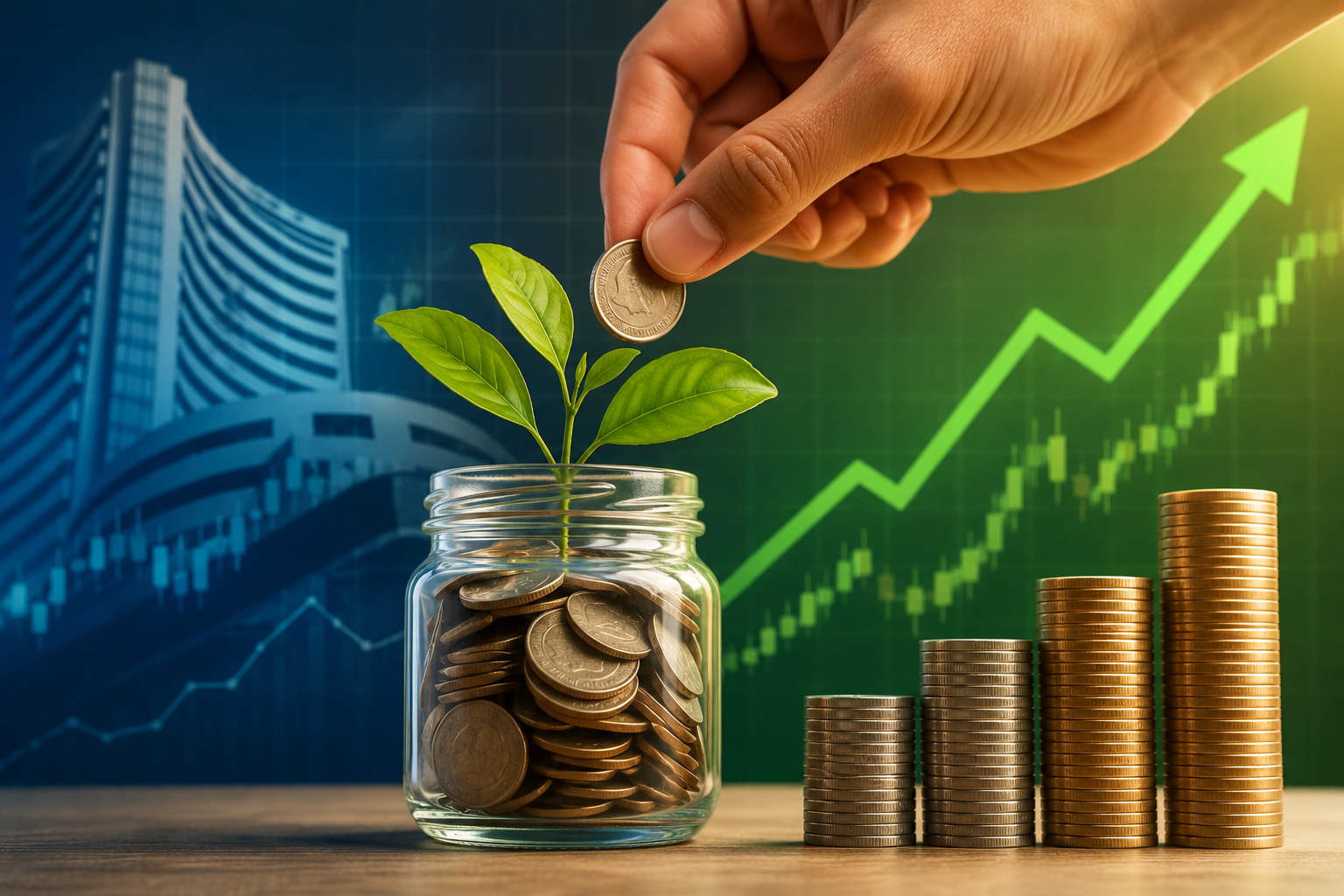
Financial markets do not move only because of company profits, economic data, interest rates, or government policy. Human emotions also play a major role. Two of the strongest emotions in finance are fear and greed. These emotions can affect what people buy, what they sell, how much risk they accept, and how they react to good or bad news.
Fear often leads people to protect their money. Greed often makes people want more profit. Both emotions can affect markets in a very short time. A small piece of bad news can cause fear across the market. A strong rise in prices can create excitement and greed. Once these emotions spread from one investor to another, they can create large price moves.
This is why financial markets can sometimes look confusing. A company may have solid profits, but its share price can still fall sharply. A company with weak results may see its share price rise for a while. The reason is simple: prices depend not only on facts but also on what investors expect and feel about the future.
Greed Can Push Prices Higher
Greed often appears when investors see a chance to make easy or fast money. When prices rise for some time, people may start to believe that the rise will continue. They may buy shares, property, crypto assets, or other investments because they expect higher prices in the future.
This can create a simple cycle. Prices rise, investors feel more confident, more people buy, and prices rise again. The higher prices then create even more confidence.
For example, imagine a stock that starts at $100. After strong demand, its price rises to $120. Investors may see this rise and expect the stock to reach $150. More buyers enter the market. The price may then rise to $140 or even $150.
At this point, some buyers may no longer care much about the company’s actual value. They may buy simply because they believe another person will pay more later. This is a key sign of greed.
The same idea can affect entire markets. If investors become very confident, they may accept higher prices and take greater risks. They may also ignore warning signs because they do not want to miss a chance for profit.
This behavior is often linked to FOMO, or the fear of missing out. A person may see friends, news reports, or other investors make money and feel pressure to enter the market. They may buy without enough research because they fear that the opportunity will disappear.
Fear Can Push Prices Lower
Fear has the opposite effect. When investors believe that prices may fall, they often try to protect their money. They may sell their shares or move their money into assets that they see as safer.
A fall in prices can create more fear. For example, if a stock drops from $100 to $80, investors may worry that it could fall to $60. Some sell at $80 to avoid a larger loss. Their sales can push the price even lower.
Other investors see the lower price and become nervous. They may also sell. This creates a cycle of fear.
The process can look like this: bad news causes some sales, sales push prices lower, lower prices create more fear, and more fear leads to more sales.
This can happen across an entire market. A major economic problem, political crisis, banking issue, war, or sudden shock can make investors reduce risk very quickly.
Fear can therefore make markets fall much faster than many people expect.
Why Markets Can Move So Fast
Modern financial markets allow investors to react almost instantly to new information. News can spread across television, websites, mobile apps, and social media within seconds.
Suppose a company reports weak profits. Investors may react before they have time to study the full report. Some sell because they expect trouble. Other investors see the price fall and also sell. News reports then highlight the sharp decline, which can create even more concern.
The same process can happen on the way up. A company may report strong results, and its share price may rise. Other investors see the rise and decide to buy. More demand can push the price higher.
This means that one event can have a much larger effect than the event itself might deserve.
A small change in facts can sometimes create a large change in investor expectations. Since prices reflect expectations about the future, this can cause large market moves.
Fear and Greed Can Create Bubbles
A financial bubble can form when prices rise far above what many investors would consider a reasonable value. Greed often plays an important role in such periods.
At first, the price rise may have a real reason. A company may have strong growth, a new product, or better profits. Investors buy the stock, and the price rises.
After a while, the rise itself becomes the reason for more purchases. People see the price increase and assume that the trend will continue. New investors enter the market because they want a quick profit.
At the peak of a bubble, some investors may buy even when they know prices look very high. They may believe they can sell before the market falls.
This can continue until confidence breaks.
Once buyers disappear, prices can fall quickly. Investors who bought at high prices may rush to sell. Fear then replaces greed. A strong rise can turn into a sharp decline.
Fear Can Create Panic
Panic is one of the strongest forms of fear in financial markets. It can cause people to make decisions without enough thought.
During a panic, investors may focus more on avoiding losses than on the real value of an asset. They may sell simply because other people are selling.
This behavior can cause prices to move far below reasonable value.
Imagine that a company has strong assets, healthy cash flow, and good long-term prospects. A sudden market shock causes its share price to fall by 30 percent. Investors may fear further losses and sell.
If enough investors do the same, the share price can fall even more. At some point, the market price may become much lower than the company’s actual worth.
This does not mean every fall creates a good buying opportunity. Some companies deserve lower prices when their business outlook becomes worse. The important point is that fear can sometimes push prices beyond what the facts alone would suggest.
Investor Expectations Matter
Financial markets are based on expectations about the future. Investors do not buy a stock only because of what a company earned last year. They also think about what the company may earn in the future.
This makes emotions very important.
If investors expect strong future growth, they may pay a high price today. If they expect weak future results, they may accept a much lower price.
Fear can make future results look worse than they may be. Greed can make future results look better than they may be.
For example, a company may report excellent profits today. However, if investors believe those profits cannot last, the share price may still fall.
On the other hand, a company may have weak profits today but a strong future plan. Investors may buy the stock because they expect better results later.
This is why market prices do not always match current business results.
The Role of Herd Behavior
People often feel safer when they act with a group. This can also happen in financial markets.
When many investors buy the same asset, others may assume that the group knows something important. They may buy too. This is known as herding.
The same thing happens when prices fall. If many people sell, others may assume that a serious problem exists. They may sell even if they do not fully understand the reason.
Herd behavior can make both rises and falls much stronger.
A person may start with a personal opinion about a stock. After seeing thousands of other investors make the opposite choice, that person may change their view.
This does not always mean the group is wrong. Sometimes a large group may correctly identify a major opportunity or risk. The problem appears when people follow the group without proper thought.
Losses Can Feel More Powerful
Human beings often react more strongly to losses than to similar gains. A loss of $1,000 may feel much worse than a gain of $1,000 feels good.
This idea is called loss aversion.
Loss aversion can explain why fear can become so powerful after a market decline. An investor who sees a portfolio fall may feel a strong need to stop further losses.
As a result, the investor may sell at a poor time.
The same person may later see prices rise again and feel regret. This can lead to another emotional decision, such as buying back at a much higher price.
Such behavior can hurt long-term results because the investor buys after confidence returns and sells after fear takes control.
Fear and Greed Affect Risk
Investor emotions also affect how much risk people accept.
During periods of greed, investors often feel more comfortable with risk. They may invest more money in stocks, speculative companies, crypto assets, or other high-risk investments.
During periods of fear, investors may prefer cash, government bonds, or other assets they see as safer.
This change in risk appetite can affect entire markets.
When investors accept more risk, money can move toward assets with higher potential returns. When investors become afraid, money can move away from risky assets.
This is one reason why market sentiment can affect many different types of investments at the same time.
Behavioral Finance Explains These Actions
The study of these habits is called behavioral finance. It looks at how emotions and mental shortcuts affect financial decisions.
Traditional financial theory often assumes that people make rational choices based on available information. Real people do not always act that way.
Investors can make decisions because of fear, excitement, past experiences, social pressure, or recent events.
Another common bias is confirmation bias. This happens when people search for information that supports what they already believe.
For example, an investor who believes a stock will rise may pay more attention to positive news and ignore negative information.
Another bias is recency bias. This occurs when people give too much importance to recent events. After a long market rise, investors may assume the market will keep rising. After a major crash, they may believe that prices will keep falling forever.
Both views can be wrong.
Fundamentals Still Matter
Fear and greed can have a powerful effect in the short term, but they do not completely control markets forever.
Over longer periods, business results, economic conditions, interest rates, cash flow, productivity, and other fundamental factors matter greatly.
If a company continues to earn strong profits and grow its business, its value may rise over time. If a company continues to lose money and cannot improve its business, its value may fall.
Emotions can move prices away from fair value for a period, but the underlying facts can eventually become more important.
This is why long-term investors often try to separate price from value.
Price is what the market says an asset costs today. Value is an estimate of what that asset may really be worth based on its future cash flows, assets, profits, and risks.
The two can differ for some time.
Extreme Fear Can Create Opportunity
Fear is not always bad for investors. When fear becomes extreme, some assets may become cheaper than their long-term value.
A patient investor may see such periods as possible opportunities.
However, buying during fear is not easy. Prices can continue to fall after an investor buys. A cheap asset can become even cheaper.
This is why investors need research, patience, and proper risk control. Fear alone is not a reason to buy.
The same idea applies to greed. A market with extreme optimism may continue to rise for longer than expected. That does not mean every expensive asset will fall immediately.
The lesson is not to predict the exact top or bottom. The better lesson is to understand how emotions can affect decisions.
What Happens When Fear Turns Into Greed
Market sentiment can change very quickly.
A market may suffer a major fall because of fear. Later, new information may reduce concern. Investors begin to feel more confident. Prices rise. Other investors notice the recovery and buy.
Confidence can then grow into optimism and eventually into greed.
This creates a cycle that appears again and again in financial history.
Markets can move from fear to hope, hope to confidence, confidence to greed, greed to doubt, doubt to fear, and fear back to panic.
The exact timing is never easy to predict.
The Main Lesson for Investors
The most important lesson is that financial markets are not machines. They are made up of people and institutions that react to information through human judgment and emotion.
Greed can make investors take too much risk. Fear can make them sell too quickly. Herd behavior can make both moves stronger. Loss aversion can make losses feel worse than they really are. FOMO can make people buy assets at very high prices.
A calm approach can help investors avoid some of these mistakes.
Instead of asking only whether a price is rising or falling, investors can ask why it is moving. They can look at company results, economic conditions, valuations, debt, cash flow, and future prospects.
The goal is not to remove emotion completely. That is difficult because emotion is a normal part of human behavior. The goal is to avoid letting emotion make every financial decision.
Conclusion
Fear and greed are two powerful forces in financial markets. Greed can push investors toward higher prices, greater risk, and sometimes bubbles. Fear can cause investors to sell quickly, accept large losses, and sometimes create panic.
These emotions can make market moves much larger than the original news may justify. They can also cause prices to move away from fundamental value for a period.
Still, fear and greed are only part of the story. Over time, business performance, economic growth, interest rates, profits, cash flow, and other fundamental factors play a major role in asset values.
The best lesson is simple: prices are shaped by facts, expectations, and human emotions. When investors understand this, they can better understand why markets rise too fast, fall too hard, and sometimes behave in ways that seem completely irrational.
If you want, I can also help you use Deep Research to build a sourced comparison of fear and greed across major market crashes and bubbles.