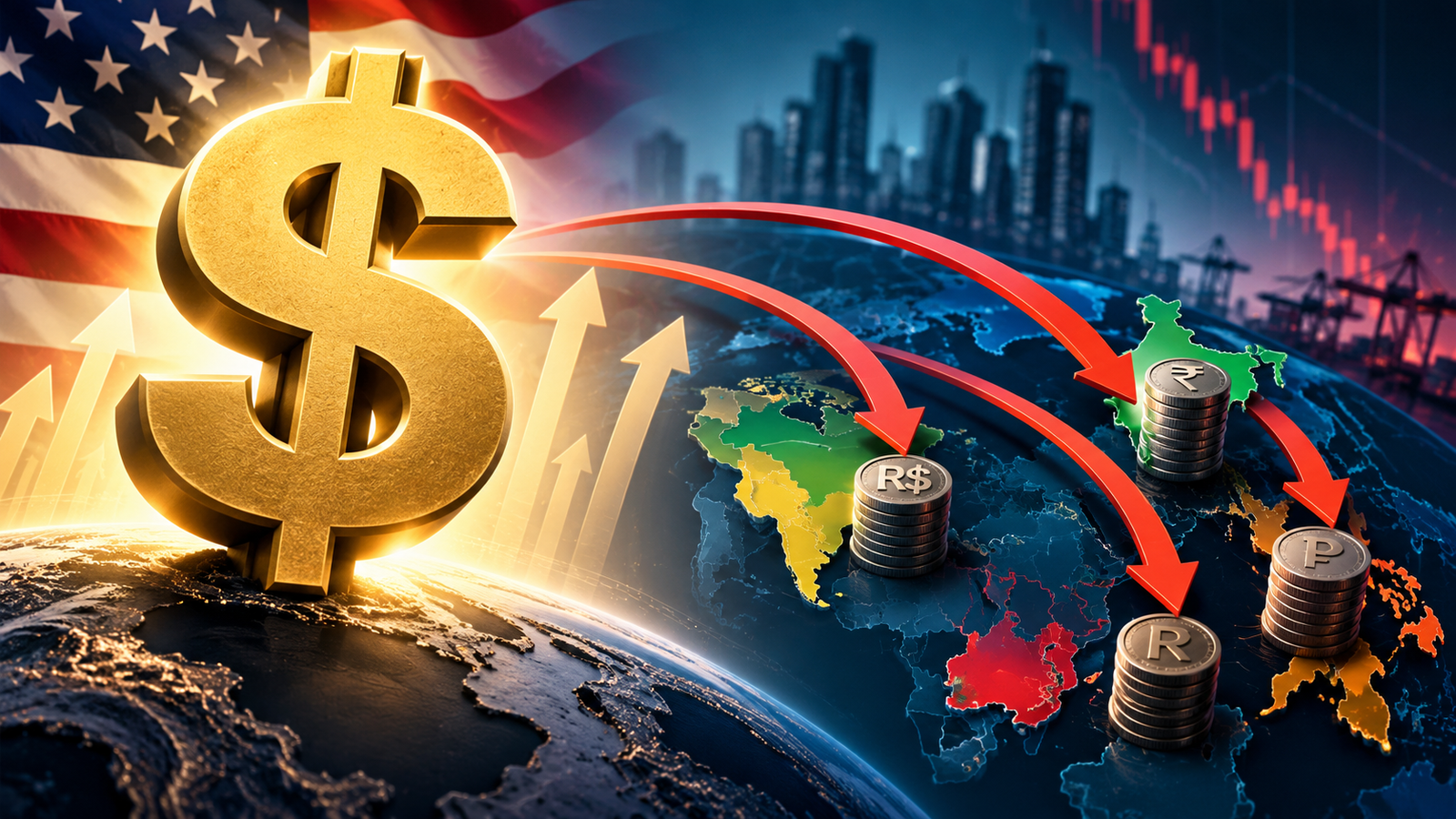
The US dollar plays a major role in the world economy. Many countries use it for trade, loans, oil purchases, and other business needs. When the dollar becomes stronger against other currencies, it can create problems for many emerging markets.
Emerging markets are countries whose economies grow fast but may face financial risks. These countries include India, Brazil, Indonesia, and South Africa. A strong dollar can affect their businesses, governments, investors, and ordinary people.
The impact is not the same for every country. Some may face higher costs and slower growth, while others may gain from stronger export income. The final result depends on each country’s economy, debt, trade, and government policies.
What Does a Strong Dollar Mean?
A strong dollar means that the US dollar has more value than before when compared with another currency. For example, if one dollar costs ₹83, and later it costs ₹90, the Indian rupee has lost value against the dollar.
In this case, a person or business needs more rupees to buy the same amount of dollars. This matters because many countries use dollars to pay for goods from abroad and repay foreign loans.
A strong dollar often gains more attention when US interest rates remain high. Investors may prefer US assets because they offer better returns or seem safer during uncertain times. As more investors move their money to the US, other currencies may lose value.
Higher Costs for Foreign Debt
Many emerging markets borrow money in US dollars. Governments may use these loans to build roads, improve transport, or support public services. Companies may borrow dollars to expand their business or buy equipment.
A stronger dollar makes these loans more expensive in local currency terms. The amount owed in dollars stays the same, but the borrower needs more local money to repay it.
For example, a company that owes $100 million must pay ₹8.3 billion when the exchange rate is ₹83 per dollar. If the rate rises to ₹90 per dollar, the same debt costs ₹9 billion. This creates an extra cost of ₹700 million, or about 8.4%.
This example shows how a currency change can place pressure on a company even when its total dollar debt does not rise. If a company earns most of its money in local currency, it may struggle to repay its loans. The same problem can affect governments and banks.
Less Foreign Investment
Foreign investors often look for places where they can earn good returns with lower risk. When US assets offer attractive returns, some investors may move their money away from emerging markets and into the United States.
This can reduce demand for local stocks and bonds. Stock prices may fall, and local currencies may lose more value. Businesses may also find it harder or more costly to raise money for new projects.
However, this does not mean that all foreign investors will leave emerging markets. Some countries still offer strong growth, good business opportunities, and attractive returns. The size of the effect depends on investor confidence and the condition of the local economy.
Higher Prices for Imported Goods
A strong dollar can make imports more expensive for countries whose currencies lose value against it. This is a major concern for countries that depend on foreign supplies of oil, gas, food, machinery, or other important goods.
For example, if a country must pay for crude oil in dollars, a weaker local currency means it needs more local money to buy the same amount of oil. Higher oil costs can raise transport and factory costs. Businesses may then charge customers more for their goods and services.
As a result, families may have to spend more on fuel, transport, food, and other basic needs. This rise in prices is known as imported inflation.
The effect depends on how much a country imports, the price of goods in world markets, and whether businesses pass higher costs on to consumers.
Higher Interest Rates and Slower Growth
When a local currency loses value, a country’s central bank may face pressure to act. It may raise interest rates or delay planned rate cuts to control inflation and support the currency.
Higher interest rates can make loans more expensive for families and businesses. People may spend less on homes, cars, and other major purchases. Companies may delay plans to open new factories or hire more workers because credit costs more.
These changes can slow economic growth. At the same time, higher rates may help control price rises and make local assets more attractive to investors.
Central banks must balance these risks. A decision that helps the currency may also place pressure on jobs, business activity, and household budgets.
Effects on Trade and Exports
A weaker local currency can help some exporters. When a company sells goods abroad and receives dollars, it may earn more local currency after it converts those dollars.
For example, an exporter that earns $1 million receives ₹83 million at an exchange rate of ₹83 per dollar. At ₹90 per dollar, the same income becomes ₹90 million.
This can raise local-currency revenue, but it does not always mean higher profit. If the exporter uses imported fuel, raw materials, or equipment, its costs may also rise.
A weaker currency may also make a country’s goods and services cheaper for foreign buyers. This can support exports and tourism. Yet the benefit depends on foreign demand, local production costs, and the ability of businesses to increase sales.
Who Gains and Who Faces Problems?
The effects of a strong dollar differ across the economy. Governments with large dollar debts may face higher repayment costs. Companies with dollar loans and no currency protection may also face greater pressure.
Businesses that rely on imported goods may see their costs rise. Consumers may face higher prices for products from abroad. Foreign investors may lose money when they convert local investments back into dollars if the local currency has fallen.
On the other hand, exporters that earn dollars may receive more local currency for the same sales. Tourism businesses may also gain if their country becomes less expensive for foreign visitors.
Countries with strong foreign exchange reserves, low external debt, reliable central banks, and healthy export income may handle these pressures more easily. Commodity exporters may gain from dollar income, although lower world prices for their products can reduce that benefit.
What Governments and Investors Can Do
Governments can reduce their exposure to a strong dollar through careful debt management and sound economic policies. They can also build foreign exchange reserves and encourage more borrowing in local currency rather than dollars.
Central banks can use interest rates and other suitable measures to manage inflation and protect financial stability. However, these steps have limits and may also affect economic growth.
Investors should look at a country’s foreign debt, export income, current account, foreign exchange reserves, and inflation rate. They should also check whether companies have loans in dollars and enough dollar income to repay them.
These factors help explain why some emerging markets cope well with a strong dollar while others face greater financial stress.
Conclusion
A strong US dollar can create serious challenges for emerging markets. It can raise foreign debt costs, push up import prices, reduce foreign investment, and place pressure on economic growth. It can also help some exporters and tourism businesses earn more local currency.
The final effect depends on each country’s debt, trade, reserves, and economic policies. A strong dollar does not always lead to a crisis, but it can expose weaknesses in countries that rely too much on foreign loans or imported goods.
The key lesson is simple: emerging markets are better prepared for a strong dollar when they manage debt carefully, maintain healthy reserves, and build strong local economies.