The world of money is goin’ through a major change. For many years, people have used cash, bank accounts, credit cards, and online payment apps to send and receive money. These methods are still important, but new technology has created another way to move money. One of the most important developments in this area is the rise of stablecoins.
Stablecoins are a type of digital currency that aims to keep a steady value. Unlike Bitcoin and many other cryptocurrencies, their prices do not usually rise or fall sharply. Most stablecoins link their value to a traditional currency, such as the US dollar. This makes them useful for people who want the benefits of digital money without the large price changes that are common in the crypto market.
Stablecoins could change how people send money, make payments, save value, and do business across borders. They may also help banks and financial companies offer faster services. At the same time, they come with risks related to safety, trust, rules, and the companies that issue them. To understand their future, it is important to first learn what stablecoins are, how they work, and why they matter.
What Are Stablecoins?
A stablecoin is a digital asset that aims to keep a fixed value. Most stablecoins are linked to the US dollar. For example, one USDT or one USDC is designed to be worth close to one US dollar. This gives users a more stable option than cryptocurrencies such as Bitcoin and Ethereum, whose market prices can change a lot within a short time.
Stablecoins use blockchain technology. A blockchain is a digital record system that stores details of transactions. It allows people to send and receive digital assets through a network without the need for a traditional bank to handle every transfer.
The main purpose of stablecoins is to combine the ease of digital payments with the steady value of traditional money. People can use them to transfer funds, trade crypto assets, make payments, or take part in digital financial services.
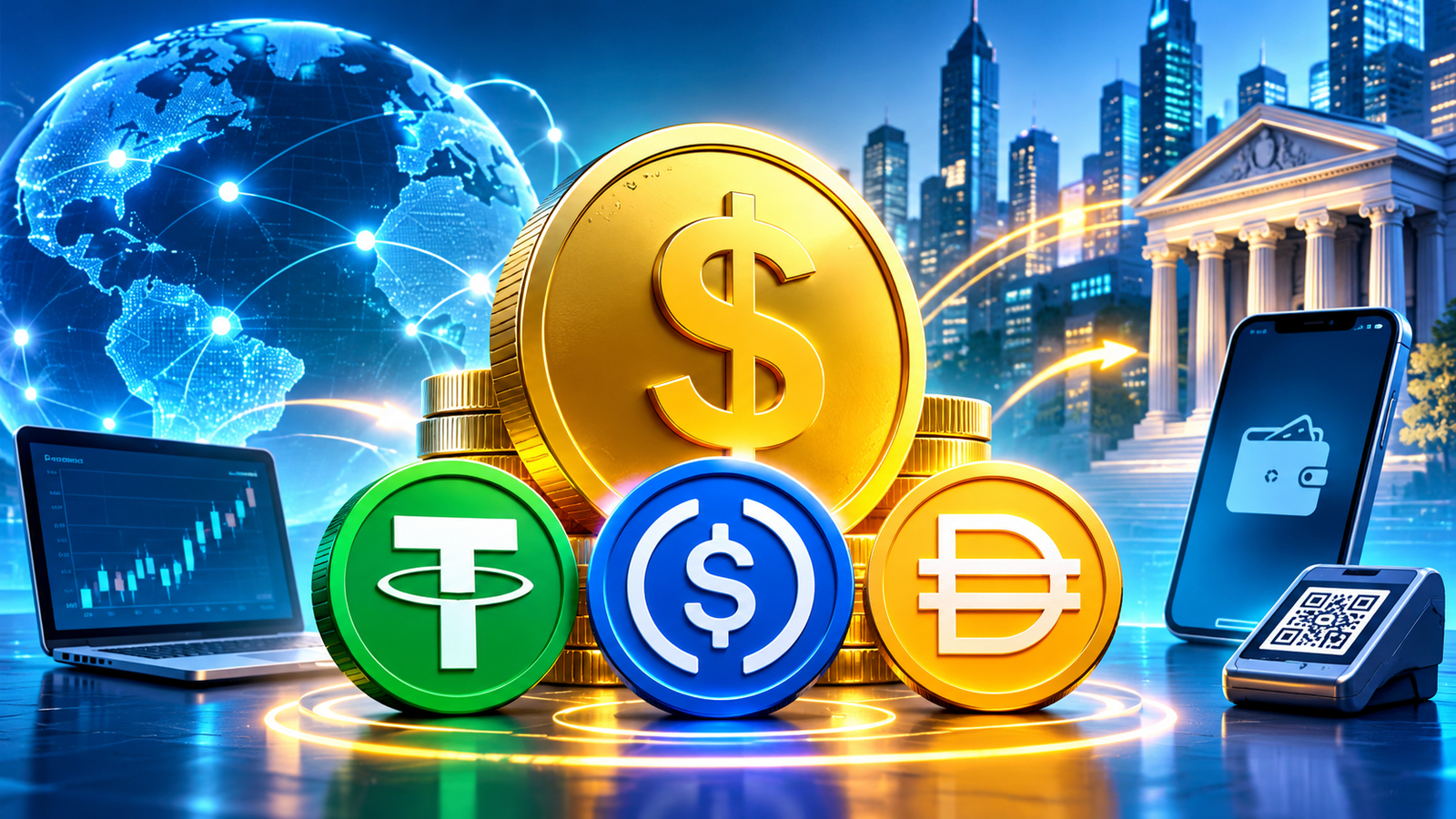
Some well-known examples are Tether (USDT), USD Coin (USDC), and Dai (DAI). USDT and USDC aim to maintain a value close to one US dollar. Dai also aims to stay close to the dollar, but it uses a different system that relies on crypto assets as support.
How Do Stablecoins Work?
Stablecoins use different methods to maintain their value. The method depends on the type of stablecoin and the system behind it.
The most common type is a fiat-backed stablecoin. Fiat money refers to a national currency, such as the US dollar or the euro. A fiat-backed stablecoin has reserve assets that support the value of its digital tokens. These reserves may include cash and short-term government securities.
For example, when a user buys 100 USDC, the issuer is expected to hold reserve assets that support those 100 tokens. This reserve system helps the stablecoin maintain its value close to one dollar. Users may also be able to exchange their tokens for regular money, based on the issuer’s rules and available services.
Another type is a crypto-backed stablecoin. It uses cryptocurrencies as support for its value. Since crypto prices can change very fast, these systems often require more assets than the value of the stablecoins they create. This extra support helps protect the system from sudden price falls.
The third type is an algorithmic stablecoin. It uses computer rules and market-based methods to try to keep its value stable. Unlike fiat-backed coins, it may not rely on traditional cash reserves. However, this model can be risky. If people lose trust in the system, the coin may lose its target value.
Each type has its own benefits and risks. The safety of a stablecoin depends on its reserve assets, design, management, and the level of trust people have in its issuer.
Why Are Stablecoins Important for Digital Finance?
Stablecoins are important because they can make digital payments easier and faster. Traditional financial systems often depend on banks, payment companies, and other middlemen. These services work well in many cases, but some transfers can take several days, especially when money moves between countries.
Stablecoins offer another option. A person can send digital dollars to another person through a supported blockchain network. In many cases, the transfer can take only a few seconds or minutes. The exact time depends on the network and the service used.
They can also help reduce the need for several middlemen. This may lower some costs linked to payments and money transfers. However, users may still have to pay network fees, exchange charges, and other service costs.
Another major benefit is access. People with internet access and a suitable digital wallet may be able to use stablecoins without a regular bank account. This could help people who have limited access to traditional financial services.
Stablecoins also have an important role in digital finance because they offer a steady unit of value. This makes it easier for people to trade, borrow, lend, and make payments within the crypto market.
Faster International Payments
One of the biggest uses of stablecoins is international money transfer. Today, people and businesses often use banks or money transfer companies to send funds from one country to another. These transfers may pass through several financial institutions before the money reaches the receiver.
This process can take time and may involve high fees. It can also be harder to track the payment when several banks take part in the transfer.
Stablecoins could make this process simpler. A business in the United States, for example, may send digital dollars to a supplier in Asia through a supported blockchain network. The supplier may then hold those tokens or exchange them for local currency through a suitable service.
This method can offer faster transfers and may reduce some costs. It can also work outside normal bank hours, as many blockchain networks remain active 24 hours a day.
However, stablecoins do not remove every problem. Users still need a safe wallet, a reliable platform, and a way to convert digital assets into local money. Local laws and payment rules also play an important role.
Lower Costs and Easier Payments
The cost of sending money is another reason why stablecoins have gained attention. Traditional payments can involve fees from banks, card companies, payment services, and currency exchange providers. These charges can add up, especially when money moves across borders.
Stablecoin transfers may reduce some of these costs because they can use blockchain networks with fewer middlemen. This may help people and businesses save money on certain types of payments.
For small businesses, lower payment costs could make a real difference. A company that sells products to customers in other countries may use stablecoins to receive payments faster and reduce some transfer charges.
Still, stablecoins are not always free or cheap to use. Blockchain networks charge transaction fees, and crypto exchanges may charge extra for the purchase or sale of digital assets. The final cost depends on the network, service provider, and country.
Stablecoins and Financial Inclusion
Millions of people around the world still have limited access to banks and other financial services. Some live far from bank branches, while others face high account fees or strict account rules.
Stablecoins could offer another way to access digital money. A person with a smartphone, internet access, and a suitable digital wallet may be able to receive, hold, and send stablecoins.
This can be useful for people who work online, receive money from other countries, or take part in digital business. It may also help people in areas where local currencies face high inflation or a fall in value.
For example, a person who earns money from a client abroad may receive payment in a dollar-linked stablecoin. This can provide access to a digital asset whose value aims to remain close to the US dollar.
However, stablecoins are not a perfect answer to financial exclusion. People still need basic digital skills, safe internet access, and a reliable wallet. They must also understand the risks before they use these assets.
The Role of Stablecoins in Decentralized Finance
Stablecoins are a key part of decentralized finance, also known as DeFi. DeFi refers to financial services that use blockchain technology and smart contracts instead of relying fully on traditional banks or financial companies.
Smart contracts are computer programs that carry out set tasks when certain rules are met. They can support services such as loans, savings products, and digital asset trades.
Stablecoins are useful in DeFi because they offer a more stable value than many other crypto assets. Users can lend them, borrow them, exchange them, or use them to provide funds to digital markets.
For example, a person may lend stablecoins through a DeFi platform and receive interest in return. Another user may borrow those assets by placing other digital assets as security.
However, DeFi comes with risks. Smart contracts may have errors, platforms may face cyberattacks, and users may lose their funds. Interest rates can also change, and some services may not offer the same protection as a traditional bank.
Stablecoins and Traditional Banking
Stablecoins may change how banks and financial companies handle payments. Traditional banks have played a major role in money transfers for many years. They help people store money, send payments, receive salaries, and manage business funds.
Stablecoins offer a new digital option that may work faster and remain active at all hours. While bank transfers may depend on office hours and payment systems, blockchain networks can often process transfers at any time.
This does not mean that stablecoins will replace banks. Banks still provide many important services, such as loans, account management, financial advice, and legal payment support.
Instead, stablecoins may work alongside traditional banking. Banks and payment companies could use blockchain technology to improve their services. They may also offer their own digital payment systems or work with stablecoin providers.
The future may include a mix of traditional bank accounts, stablecoins, tokenized deposits, and central bank digital currencies. Each may serve a different purpose within the wider financial system.
Risks and Challenges of Stablecoins
Despite their benefits, stablecoins come with several risks. One major concern is the quality of the reserve assets. Users need to trust that an issuer has enough reliable assets to support the value of its tokens.
If an issuer does not hold enough reserves or faces serious financial trouble, users may lose confidence in the stablecoin. This can cause its market value to fall below its target price. This event is known as de-pegging.
Regulation is another major challenge. Different countries have different rules for stablecoin issuers, crypto exchanges, and digital asset users. Some governments support the use of stablecoins under strict rules, while others place limits on their use.
Cybersecurity is also important. Digital wallets, exchanges, and smart contracts can face attacks. If users lose access to their private keys or send funds to the wrong address, they may not be able to recover their money.
There is also the risk of central control. Many stablecoins depend on private companies that issue and manage the tokens. These companies may have the power to freeze certain assets under specific conditions.
Users must also remember that stablecoins are not the same as bank deposits. They may not have the same legal protection or deposit insurance that people receive through certain traditional bank accounts.
The Future of Stablecoins
The future of stablecoins may depend on how well they gain trust among users, businesses, banks, and governments. Their use could grow as more companies look for faster and more flexible ways to send and receive money.
Large financial institutions and payment companies have shown interest in blockchain-based payment systems. Stablecoins may help them move funds across borders and settle certain transactions with fewer delays.
Another major area is tokenization. This means that real-world assets, such as bonds, funds, and other financial products, can be represented as digital tokens on a blockchain. Stablecoins may act as the payment method for these digital assets.
Businesses may also use stablecoins for international trade. A company could pay a supplier in another country through a blockchain network instead of relying only on traditional bank transfer systems.
Governments are also likely to play a major role. Clear rules can help protect users and build trust in the market. At the same time, strict rules may affect which companies can issue stablecoins and how people can use them.
Stablecoins and the US Dollar
The US dollar has a major role in global trade and finance. Many countries, companies, and financial institutions use it for international payments and trade deals.
Since many of the most popular stablecoins link their value to the US dollar, their growth could increase access to digital dollars around the world. People may be able to hold and transfer dollar-linked assets without the need to use a traditional US bank account.
This could support the dollar’s role in digital finance. However, it may also raise questions about currency control, local financial rules, and the effect of foreign digital assets on national economies.
For countries with weak currencies, dollar-based stablecoins may look attractive. People may use them to protect some of their savings from local currency loss. But this can also create challenges for local banks and governments if a large number of people move away from their national currency.
Stablecoins and the Global Financial System
Stablecoins could make the global financial system more connected. Today, money often moves through different banks, payment networks, and national systems. Each system has its own rules, costs, and limits.
Blockchain-based payments may offer a common digital method for certain types of transfers. This could make it easier for people and businesses in different countries to exchange value.
For example, a company in the United States could pay a supplier in Asia with a dollar-backed stablecoin. The supplier could then exchange the tokens for local currency through a suitable platform. This process may take less time than some traditional payment methods.
However, global use will depend on local laws, exchange services, user trust, and safe payment systems. Stablecoins alone cannot solve every problem in international finance.
Conclusion
Stablecoins are an important part of the future of digital finance. They aim to bring the steady value of traditional money together with the speed and ease of blockchain technology. They may help people send money across borders, reduce some payment costs, access digital financial services, and take part in DeFi.
At the same time, they face major challenges. Reserve quality, cyber risks, price stability, user protection, and government rules will all affect their future.
Stablecoins are unlikely to replace traditional money or banks completely. Instead, they may become another part of the financial system and work alongside existing services.
Their long-term success will depend on trust, clear laws, and real-world use. The key change is simple: money may soon move across borders with the same ease as digital information. Stablecoins could play a major role in that shift.