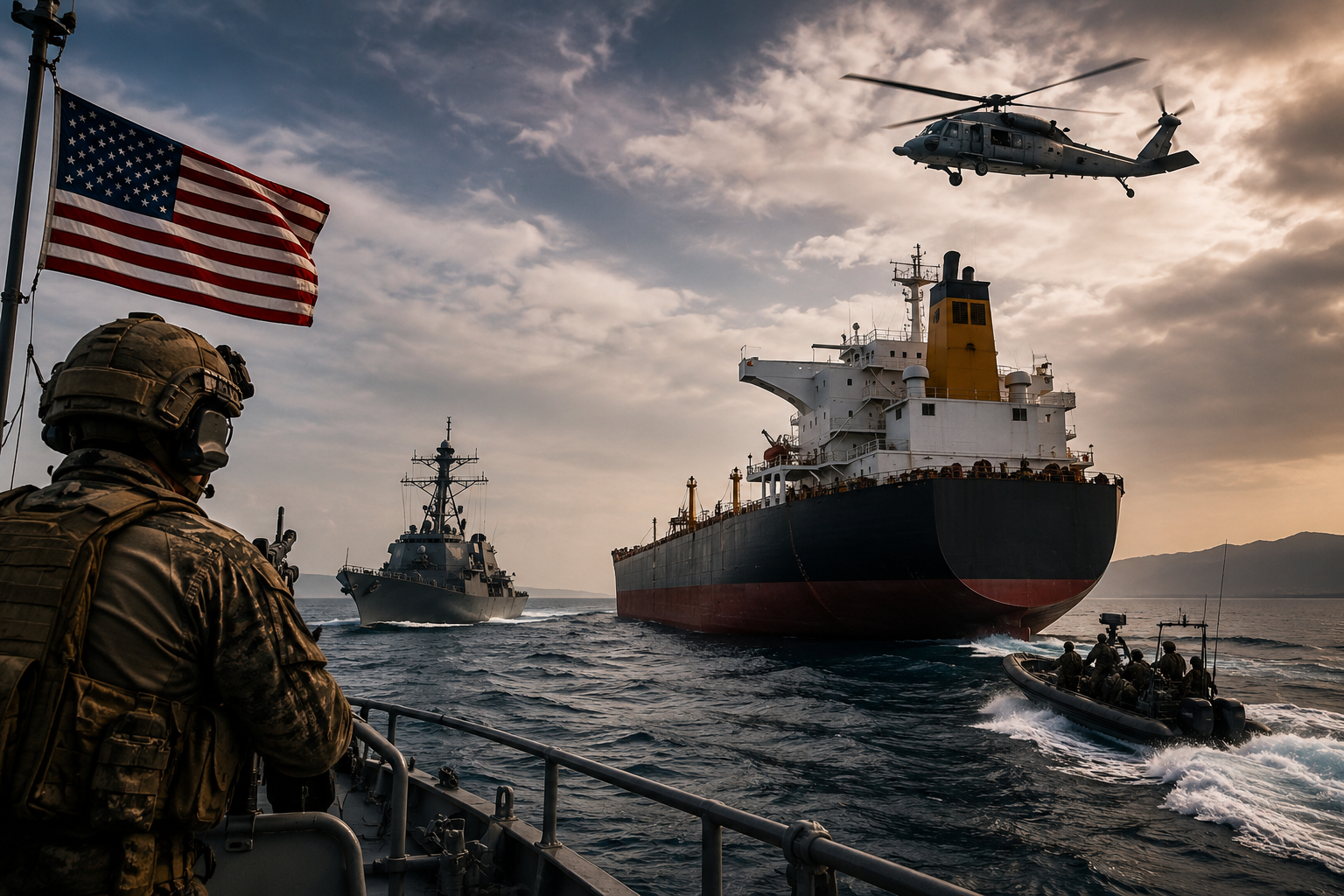
The United States has stepped up its naval pressure on Iran as the blockade of Iranian ports continues. U.S. Central Command, or CENTCOM, said U.S. forces have now redirected 87 commercial vessels as part of the effort to enforce the blockade.
The latest figure came after a new round of action at sea. As of September 3, U.S. forces had also disabled three vessels and boarded two others to make sure commercial ships follow the rules of the blockade.
The numbers show how large the U.S. naval operation has become. What started as a measure against trade with Iran has now affected dozens of commercial ships in waters near the Strait of Hormuz and the Gulf of Oman.
What the 87 Redirected Ships Means
A ship that was redirected was not necessarily attacked or destroyed. In most cases, the U.S. action meant that the vessel had to change its route rather than continue toward an Iranian port.
The United States says the blockade covers maritime traffic that enters or leaves Iranian ports and coastal areas. This includes Iranian ports on the Arabian Gulf and the Gulf of Oman.
CENTCOM has also made clear that the blockade does not mean that every ship in the Strait of Hormuz must stop. Ships that do not violate the blockade and travel to or from non-Iranian ports can still pass through the waterway.
This distinction is important because the Strait of Hormuz is one of the world’s most important sea routes. A large amount of global oil trade passes through or near this narrow waterway.
Three Ships Were Disabled
The U.S. response has not been limited to route changes. CENTCOM has also reported that three vessels were disabled under the current set of enforcement actions.
Earlier U.S. operations show what such action can involve. In June, U.S. forces disabled the Guinea-Bissau-flagged oil tanker M/T Jalveer after the ship tried to carry Iranian oil through the Gulf of Oman.
According to CENTCOM, the crew did not follow repeated orders from U.S. forces. U.S. aircraft then fired two Hellfire missiles at the ship’s engine room. CENTCOM said the action left the vessel unable to continue its route.
The U.S. military has said such steps are meant to stop ships that do not follow the blockade rules. The action against a vessel can therefore become much more serious if the crew does not comply with U.S. orders.
Two Ships Were Boarded
Along with the 87 redirected vessels and three disabled ships, U.S. forces have boarded two vessels as part of the current enforcement effort.
A boarding allows U.S. personnel to inspect a vessel and check whether it is in violation of the blockade. One recent case involved an Iranian-flagged oil tanker in the Gulf of Oman that U.S. forces suspected of trying to break the blockade.
The U.S. military said the tanker, known as M/T Celestial Sea, was searched and then redirected after it was suspected of trying to reach an Iranian port.
These cases show the different levels of action used by U.S. forces. A ship may first face a demand to change course. If there is a more serious violation, U.S. forces may take further action.
The Blockade Started Earlier This Year
The current blockade is not the first U.S. naval blockade against Iran in 2026.
CENTCOM first began the blockade on April 13. That first phase lasted until June 18. During that period, U.S. forces redirected more than 140 compliant vessels, disabled nine non-compliant ships, and allowed more than 50 commercial vessels that carried humanitarian aid to pass.
The United States later resumed the blockade on July 14 at 4 p.m. Eastern Time.
When the blockade resumed, CENTCOM said its forces would focus on vessels that traveled to or from Iranian ports and coastal areas. The U.S. military also said it would continue to support normal traffic through regional waters for ships that did not violate the blockade.
The latest total of 87 redirected ships therefore refers to the renewed phase of the blockade, rather than the earlier April-to-June period.
Why the Strait of Hormuz Matters
The location of this naval operation is a major reason for the concern around it.
The Strait of Hormuz links the Persian Gulf with the Gulf of Oman and the wider Arabian Sea. It is a narrow but vital route for energy trade. Any major disruption in this area can affect oil supplies, fuel costs and global markets.
The United States has said it wants to keep the waterway open for vessels that do not violate its blockade. At the same time, the presence of U.S. warships and the risk of action against vessels have created more uncertainty for commercial operators.
CENTCOM has previously said that U.S. forces use warships, aircraft and other military assets to protect commercial traffic and enforce the blockade. The wider U.S. operation has involved thousands of service members and major naval assets.
Iran Faces More Economic Pressure
The blockade adds another layer of pressure on Iran at a time when Washington is also using sanctions and other economic measures.
The basic goal is to reduce Iran’s ability to move goods, especially oil, through its ports. A naval blockade can make it harder for Iran to export oil and receive goods by sea.
For Iran, this creates a serious economic challenge. For the United States, however, the policy also carries risks because any confrontation with a commercial ship can raise tensions very quickly.
The presence of many countries’ vessels in the region makes the situation even more complex. Commercial ships do not all have the same flag, cargo or destination. A decision made at sea can therefore have consequences far beyond the United States and Iran.
Risk of a Wider Crisis
The growing number of naval actions comes as tensions around the Strait of Hormuz remain high.
Recent U.S. military action has also focused on Iranian forces that Washington says pose a threat to ships. On August 30, U.S. forces struck Iranian rocket launchers near the Strait of Hormuz, with Washington saying the action aimed to stop a threat to international maritime traffic. Iran later responded with missile attacks on U.S. sites in Jordan, according to reports.
This makes the latest blockade figures more important. The 87 redirected vessels are not just a statistic. They show the scale of direct U.S. involvement in commercial sea traffic around Iran.
The three disabled ships and two boardings also show that the U.S. response can move beyond warnings and route changes.
What Happens Next
The main question now is how long the blockade will continue and whether the number of affected ships will rise further.
CENTCOM said on September 2 that U.S. forces had redirected 86 commercial vessels, disabled three, and boarded two. By September 3, the redirected total had reached 87.
That one-day rise may look small, but it shows that the operation remains active.
For companies that operate commercial vessels in the region, the situation means more checks, route changes and uncertainty. For Iran, it means continued pressure on maritime trade. For the wider world, the biggest concern is the Strait of Hormuz itself.
If tensions rise further, even a single serious incident involving a commercial vessel could have a much larger effect on energy markets and international trade.
For now, the figures remain clear: 87 commercial vessels have been redirected, three have been disabled and two have been boarded under the renewed U.S. blockade effort. The numbers underline the scale of Washington’s pressure on Iran and the growing role of naval power in the wider U.S.-Iran crisis.
ALSO READ: Trump Says US Ready for More Strikes on Iran Anytime