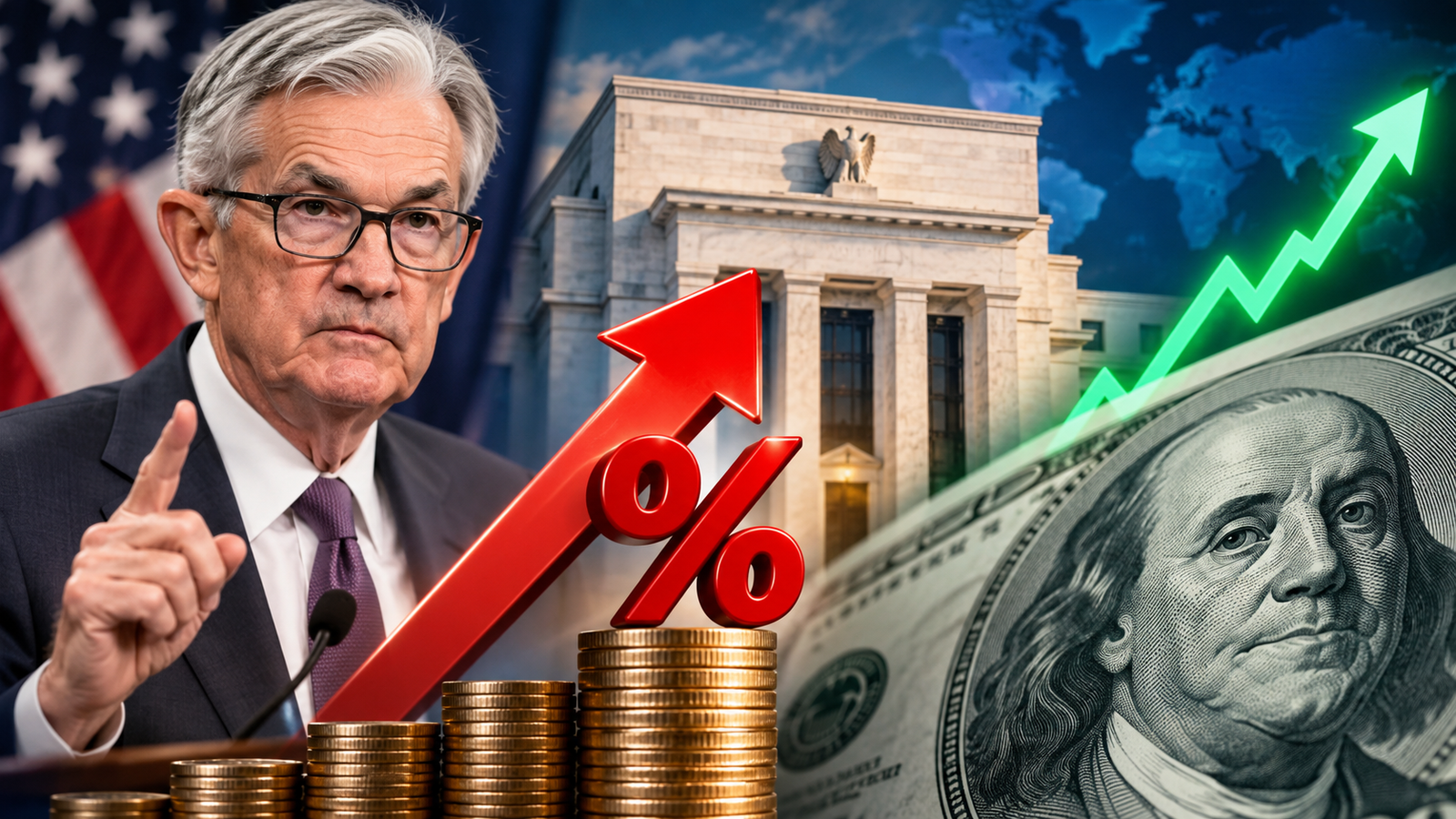
Friday, 18 September 2026, is a major day for the foreign-exchange market. The main theme is a shift toward tighter monetary policy across several large economies. The United States Federal Reserve has raised rates, the Bank of Japan has raised rates, and the Bank of England has kept rates high while warning that another increase may become necessary. Australia also faces a higher rate path because inflation risks have returned. At the same time, oil remains close to or above $100 a barrel because of the Middle East conflict.
This mix creates a difficult environment for currency traders. A higher interest rate can support a currency, but the market reaction also depends on what traders already expected. The Japanese yen is a clear example today. The Bank of Japan raised its rate to 1.25%, yet the yen weakened after the decision. The main reason was the lack of a clearly aggressive message about future increases and the fact that two policymakers voted against the move.
The table below gives a simple view of the main forex drivers.
| Market factor | Latest information | Main currencies affected |
|---|---|---|
| Bank of Japan | Rate raised to 1.25% | JPY |
| BOJ vote | 7-2 decision | JPY |
| Fed | Rate raised to 3.75%-4.00% | USD |
| Fed outlook | 16 of 18 policymakers see at least one more 2026 hike | USD |
| Bank of England | Rate held at 3.75% | GBP |
| RBA | Cash rate at 4.35%; more hikes under discussion | AUD |
| Oil | Brent near $104; WTI near $101 | USD, CAD, JPY, AUD, NOK |
| EUR/USD | Around 1.148 | EUR, USD |
| USD/JPY | Around 157 after the BOJ decision | USD, JPY |
| USD/INR | Rupee closed near 95.93 on 17 September | INR, USD |
1. Bank of Japan Raises Rates to 1.25%
The most important forex event today is the Bank of Japan decision. The BOJ raised its policy rate from 1% to 1.25%. This is the highest Japanese policy rate in 31 years. The decision came from a two-day policy meeting and was approved by a 7-2 vote. Board members Toichiro Asada and Ayano Sato opposed the increase.
The purpose of the move is to reduce the risk that inflation stays above the BOJ’s 2% target. Japan has spent many years with very low interest rates. The current policy path marks another step away from that period.
For forex markets, the important point is that the rate increase itself was widely expected. Because traders had already prepared for the move, the announcement did not automatically create a stronger yen.
In fact, the yen weakened after the decision. Reports showed the dollar rose to around 157.1 yen, with the yen falling as much as about 0.8% against the dollar.
This is a useful example of how markets work. A rate increase can appear positive for a currency, but the currency can still fall if the decision is already priced into the market or if the future policy message appears less aggressive than expected.
2. The 7-2 BOJ Vote Matters
The split inside the BOJ is an important part of today’s story.
Two members wanted to leave the policy rate unchanged. That does not mean the BOJ has ended its rate-hike cycle. It does, however, show that there is not full agreement about how quickly policy should become tighter.
For the yen, this creates uncertainty about the next move. Traders will now focus less on today’s 25-basis-point increase and more on the language used by Governor Kazuo Ueda.
Reuters reported that Governor Ueda is due to hold a press conference at 3:30 p.m. Japan time, or 0630 GMT, on Friday. His comments may provide more information about the pace of future rate increases.
This means USD/JPY can remain sensitive to headlines from the BOJ even after the formal rate decision.
3. Ueda’s Press Conference Is a Key Risk
Governor Ueda’s comments are important because the market wants to know what comes next.
If Ueda gives a clear signal that the BOJ may raise rates again soon, traders could reassess the yen’s interest-rate outlook. If he stresses patience and uncertainty, the market may place less weight on another near-term hike.
It is important not to treat either outcome as certain. The BOJ itself has shown a divided view through today’s 7-2 vote.
For traders, the main issue is therefore not simply whether Japan has raised rates. The larger issue is the expected pace and timing of future increases.
4. The Federal Reserve Has Also Turned More Restrictive
The US dollar has another major source of support: the Federal Reserve.
The Fed raised its benchmark rate by 25 basis points to 3.75%-4.00%. This was the first US rate increase in more than three years. The decision was unanimous.
The Fed’s projections also matter. Sixteen of the 18 policymakers who submitted rate projections expect at least one more rate increase before the end of 2026.
That message has helped strengthen the dollar. Higher US rates can make dollar assets more attractive relative to assets with lower returns, although actual currency moves also depend on expectations, bond yields, economic data and risk sentiment.
The Fed’s policy message is especially important for EUR/USD, GBP/USD and USD/JPY.
5. US Treasury Yields Add Support to the Dollar
US Treasury yields remain another major forex factor.
After the Fed decision, short-term Treasury yields moved higher, while longer-term yields were more mixed. The 10-year Treasury yield moved below 5% after initially rising.
The relationship between the dollar and US yields is not always direct, but higher US yields can increase the appeal of dollar assets.
Reuters also reported that the dollar index remained above 100 after a rise of almost 0.7% on Wednesday.
For the forex market, this means the dollar continues to have a strong interest-rate story behind it.
6. Oil Remains a Major Currency Driver
Oil is now one of the most important factors across the forex market.
On Friday, Brent crude fell by about 79 cents to $104 a barrel, while US WTI fell by about 70 cents to $101.20. Brent was on course for a weekly loss of about 0.5%, while WTI was on course for a weekly gain of about 1.2%.
The fall in oil prices came as concern about Saudi supply disruption eased. Saudi Arabia has worked to restore part of its pipeline capacity and has increased crude shipments to Asia through Oman. Even so, the wider Middle East conflict remains a major source of risk.
Oil matters for forex because energy prices affect inflation, trade balances and central-bank policy.
For an oil-importing country, higher crude prices can increase the cost of imports. For an oil-exporting country, higher prices can support export income.
That is one reason oil-sensitive currencies such as the Canadian dollar and Norwegian krone can react differently from currencies in large energy-importing economies.
7. The Bank of England Keeps Rates at 3.75%
The Bank of England kept its benchmark interest rate at 3.75% on Thursday. The vote was 6-3. Three members preferred an increase to 4%.
The decision was not a simple dovish signal.
Governor Andrew Bailey said that if the Middle East conflict continues for a long period and second-round inflation effects become more likely, monetary policy may need to become tighter. Other senior officials also pointed to the risk from energy prices and domestic price pressure.
The UK inflation rate had already reached 3.1% in August, while the market had become more concerned about the effect of higher energy prices.
As a result, GBP/USD remains sensitive to both US rate expectations and the possibility of future BoE action.
8. Markets Discuss a November BoE Increase
There is also a change in market expectations for the next Bank of England decision.
Barclays expects a 25-basis-point increase in November. J.P. Morgan also expects increases in November 2026 and February 2027. Reuters reported that market data showed about a 63% probability of a November hike at the time of its report.
These are market expectations, not confirmed future decisions.
The BoE has not promised a November increase. Its policy path will depend on inflation, wages, energy prices, economic activity and the wider geopolitical situation.
This distinction matters because market expectations can change quickly.
9. Australia Faces Fresh Inflation Risk
Australia is another important currency story today.
RBA Governor Michele Bullock said some of the upside risks to inflation that policymakers had previously identified now appear to be materialising. The main factors include the Middle East conflict and the global AI investment boom.
The RBA has already raised rates three times this year. Its cash rate is now 4.35%, a post-pandemic high.
Bullock said the key question is whether these three increases will be enough to return inflation to the 2%-3% target. She also noted that higher oil prices can add directly to inflation.
Market pricing at the time of the Reuters report showed a 93% chance of a fourth increase to 4.60% at the RBA meeting on September 28-29. Market expectations also pointed to 4.85% by early 2027.
These figures are market probabilities and can change as new data arrive.
10. USD/INR Remains Important for Asian FX
The Indian rupee also deserves attention.
On Thursday, the rupee closed almost unchanged at 95.93 per US dollar, compared with 95.9550 on Wednesday. The rupee had briefly moved above 96 per dollar before recovering.
Reuters reported that probable Reserve Bank of India intervention and portfolio flows helped limit the rupee’s decline. Traders also reported possible dollar-rupee swaps by the RBI.
The 96 level has therefore become an important reference point in recent trading.
At the same time, higher oil prices create a challenge for India because the country is a major oil importer. Higher crude prices can increase the import bill and place pressure on the external balance.
This means USD/INR can react to both US dollar strength and oil prices.
Current Currency Picture
| Pair | Key factor today | Data or reference |
|---|---|---|
| USD/JPY | BOJ rate decision and Ueda comments | Around 157.1 after BOJ hike |
| EUR/USD | Fed policy and European rate expectations | Around 1.148 |
| GBP/USD | BoE inflation outlook versus Fed | GBP near $1.34 before BoE decision |
| AUD/USD | RBA inflation risk and commodity prices | RBA cash rate 4.35% |
| USD/INR | Fed, oil and RBI action | Rupee near 95.93 on 17 Sep |
| CAD pairs | Oil and US rate expectations | Brent around $104 |
| NOK pairs | Oil and European risk | Brent around $104 |
EUR/USD was around 1.148 on 18 September in available market data. Its recent daily history shows a close near 1.14756 on 17 September after a sharp fall on 16 September.
The pair therefore remains highly sensitive to the relative path of US and European interest rates.
What the Market Is Watching Now
The forex market is currently dealing with several policy differences at the same time.
The United States has moved toward higher rates. Japan has also raised rates, but its policy rate remains much lower than the US rate. The UK has held rates but has warned that persistent inflation could lead to further tightening. Australia has already raised rates three times and now faces another possible increase.
This creates a market where central-bank expectations can change quickly.
The table below summarises the current policy picture.
| Central bank | Current rate | Latest action | Main issue |
|---|---|---|---|
| Federal Reserve | 3.75%-4.00% | +25 bps | Inflation |
| Bank of Japan | 1.25% | +25 bps | Inflation and yen weakness |
| Bank of England | 3.75% | Held | Energy-driven inflation |
| Reserve Bank of Australia | 4.35% | Previously raised | Renewed inflation risk |
The differences between these rates help explain why interest-rate expectations remain central to forex price action.
Risk From the Middle East Conflict
The Middle East conflict remains a common factor across these markets.
The effect is not limited to oil. A longer conflict can affect inflation, shipping costs, trade routes, investor risk appetite and central-bank decisions.
Reuters reported that Saudi Arabia and Yemen’s Iran-backed Houthis exchanged fresh strikes, while concerns about oil supply remained elevated. Oil prices were still above $100 despite the latest decline.
For forex traders, this creates two separate channels.
The first is the inflation channel. Higher oil prices can push consumer prices higher and may lead central banks to keep rates high.
The second is the risk channel. A sharp rise in geopolitical uncertainty can increase demand for some traditional defensive assets and reduce demand for risk-sensitive currencies.
Neither effect is guaranteed in every market session.
The Main Forex Theme for 18 September
The main theme today is higher interest rates versus geopolitical risk.
The Fed has adopted a more restrictive stance. The BOJ has raised rates to 1.25%. The BoE has kept rates at 3.75% while leaving the door open to further tightening. The RBA is also assessing whether another increase is required.
At the same time, oil remains close to $100 or above it. That creates a difficult policy problem because central banks must balance inflation control against economic growth.
For the US dollar, the higher-rate story remains important. For the yen, today’s BOJ decision shows that the size of a rate move alone does not decide currency direction. For sterling and the Australian dollar, future rate expectations remain closely linked to inflation and energy prices.
Final Analytical View
The information available on 18 September points to a forex market where central-bank communication may matter more than the headline rate decisions themselves.
The BOJ has already delivered its 25-basis-point increase, yet the yen weakened because the decision was expected and the two dissenting votes reduced the impression of immediate aggressive tightening. Governor Ueda’s comments therefore remain important for USD/JPY.
The Fed has created a stronger interest-rate case for the dollar through its move to 3.75%-4.00% and the fact that 16 of 18 policymakers see at least one more increase in 2026.
The BoE has left rates at 3.75%, but its internal split and warnings about energy-driven inflation keep the possibility of future tightening alive.
The RBA faces a similar issue. Its cash rate is already 4.35%, but Governor Bullock has said that some upside inflation risks are now materialising.
Oil adds another layer of uncertainty. Brent remains near $104 and WTI near $101.20, even after recent declines.
For that reason, today’s forex market should be viewed as a market driven by rate expectations, inflation risk, oil prices and geopolitical developments at the same time. The available evidence does not establish a certain direction for any currency pair. Instead, it shows why sharp price moves can occur when central-bank comments or energy headlines change market expectations.
The figures above are factual market references available at the time of research. They should not be treated as guarantees of future currency prices or as a substitute for individual financial advice.
ALSO READ: Indian Stock Market News: 18 September 2026