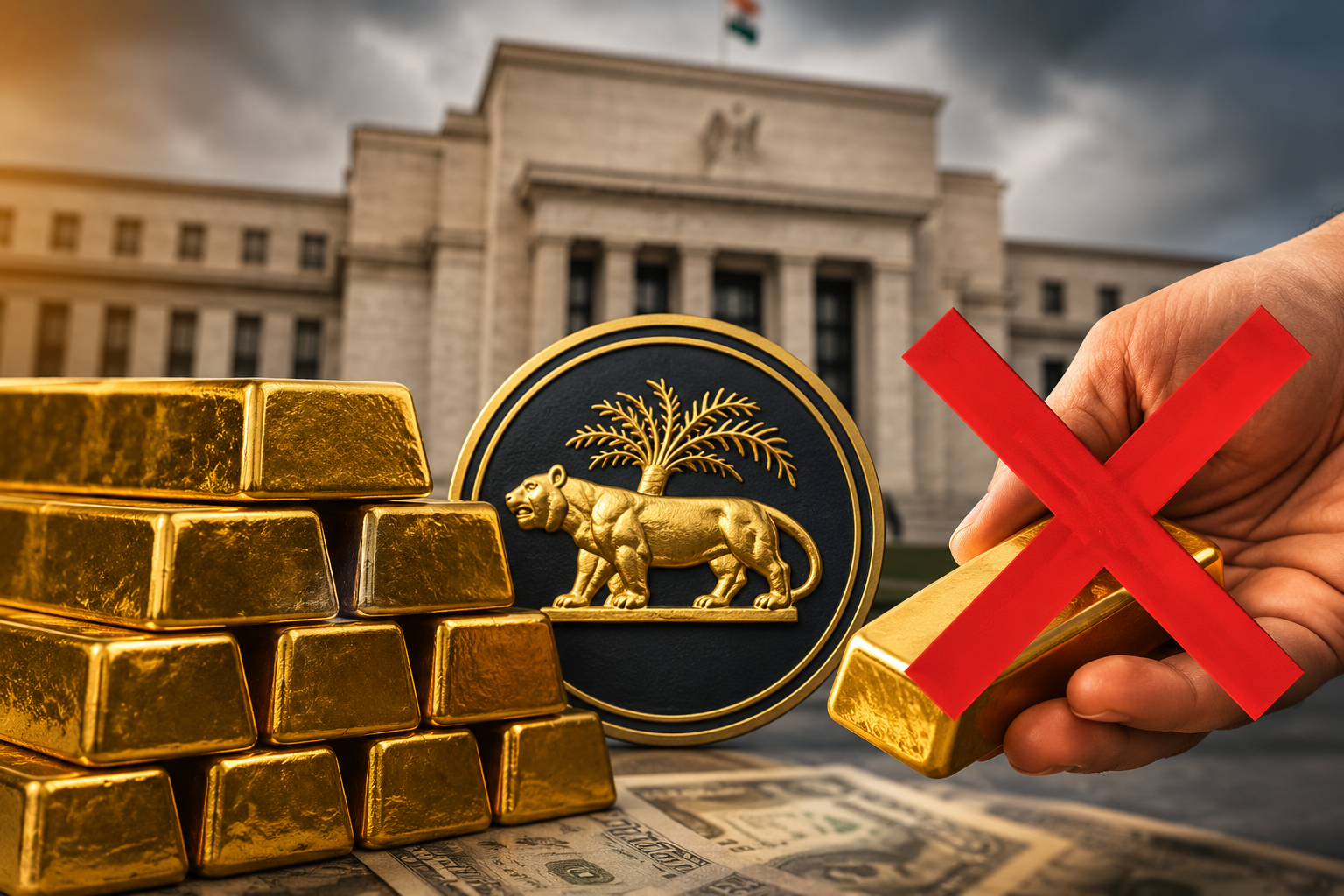
A recent report about the Reserve Bank of India, also known as the RBI, created huge debate across the country. The report claimed that the RBI may have sold gold worth nearly $12 billion to support India’s foreign exchange reserves and protect the value of the rupee. Soon after this news came out, the Indian government and the RBI gave a clear reply. Both denied the claim and said no such gold sale took place.
The matter caught public attention because gold reserves play a very important role in a country’s economy. India holds a large amount of gold as part of its total reserves. Any news about a gold sale can raise questions about the strength of the economy, the value of the rupee, and the condition of the country’s foreign reserves.
What the Report Claimed
The report came from Bloomberg Economics. According to the analysis, the RBI may have sold around $12 billion worth of gold during the two weeks that ended on May 22. The report also said that India’s foreign currency assets rose by almost $7.5 billion during the same period.
Experts who worked on the report studied the weekly reserve data released by the RBI. They noticed changes in the value of gold reserves and foreign currency assets. Based on those changes, they believed the RBI may have used part of its gold reserves to support the economy.
The report linked the possible gold sale to pressure on the Indian rupee. Global uncertainty, oil prices, and tension in the Middle East also became part of the discussion. Many people felt the RBI may have used gold reserves to protect the rupee from sharp weakness.
RBI Gives Strong Reply
Soon after the report spread online and across news channels, the RBI released an official statement. The central bank clearly said that the report was “not correct.” The RBI stated that India’s physical gold holdings remained unchanged.
The RBI also shared an important figure. According to the bank, India still holds 880.52 tonnes of gold. This number has not changed despite the recent market movement and reserve fluctuations.
The statement aimed to remove confusion among investors, businesses, and common citizens. The RBI wanted to make it clear that the country’s gold stock remains safe and stable.
Centre Also Rejects the Claim
The Indian government also stepped into the matter. The Press Information Bureau, also known as the PIB, rejected the report and called it fake. The PIB supported the RBI’s statement and repeated that India’s physical gold reserves remain the same.
Government officials said the report created unnecessary fear and confusion. They explained that reserve values often change because of global gold prices and currency movement. Such changes do not always mean the RBI sold gold.
The government also pointed out that gold now forms a bigger part of India’s forex reserves compared to earlier months. This statement tried to show that India still keeps strong confidence in gold as a reserve asset.
Why Gold Reserves Matter
Gold reserves hold great value for every country. Central banks keep gold as a financial safety tool. During economic stress or global crisis, gold often helps countries maintain trust and stability.
India’s forex reserves include foreign currencies, gold, special drawing rights, and reserve positions with the International Monetary Fund. Gold forms an important part of this reserve system.
When a country holds a large amount of gold, it creates confidence among global investors. It also helps protect the economy during market shocks. Because of this reason, any report about gold sales quickly becomes major news.
Changes in Forex Reserve Data
The discussion started after the RBI released reserve data for the week that ended on May 22. The numbers showed that India’s forex reserves dropped to nearly $681.4 billion.
The data also showed that the value of gold reserves fell by around $4.5 billion in one week. Foreign currency assets also declined by close to $3 billion during the same period.
These figures raised questions among market experts. Some analysts believed the sharp fall in gold value could signal a gold sale by the RBI. Bloomberg Economics used this data to build its analysis.
However, the RBI later explained that a fall in reserve value does not always mean a fall in physical quantity. Gold prices change almost every day in the global market. Currency exchange rates also affect reserve calculations.
Difference Between Value and Quantity
One important point in this debate is the difference between value and quantity. The value of gold reserves can rise or fall because of market prices. But the actual quantity of gold may remain the same.
For example, if international gold prices fall, the total value of a country’s gold reserves may also decline. This change appears in official reserve data. However, it does not prove that the country sold gold.
The RBI used this explanation to reject the report. Officials said India still owns 880.52 tonnes of gold. According to the central bank, only the market value changed due to global price movement.
This clarification became very important because many people misunderstood the reserve figures.
Impact on Financial Markets
Reports about reserve changes often affect financial markets. News about a possible gold sale can influence investor confidence, currency movement, and stock market activity.
After the report appeared, many traders and analysts closely watched the rupee and bond market. Some feared the RBI may have faced pressure due to global economic conditions.
However, the official denial from the RBI and the government helped calm market concerns. Investors received assurance that India’s reserve position remains stable.
Experts believe clear communication from the RBI helped avoid panic. Financial markets usually react strongly to rumors related to reserves and central bank actions.
India’s Strong Gold Position
India remains one of the countries with large gold reserves. Over the last few years, the RBI increased gold purchases as part of reserve diversification.
Many central banks around the world now prefer higher gold holdings because gold acts as a safe asset during uncertain times. India also follows this approach.
The RBI’s current gold stock of 880.52 tonnes reflects this long-term strategy. The central bank sees gold as a key part of financial security and reserve management.
This is another reason why the RBI strongly rejected reports of a major gold sale.
Final Words
The recent report about a possible $12 billion gold sale created major discussion across India. Bloomberg Economics linked changes in reserve data to a possible sale by the RBI. However, both the RBI and the Indian government denied the claim.
Officials clearly stated that India’s physical gold holdings remain unchanged at 880.52 tonnes. They explained that reserve values often move because of global market prices and currency changes.
The issue also showed how closely people watch India’s forex reserves and gold stock. Gold remains a symbol of financial strength and economic trust. Because of this, even small changes in reserve data can create large debate.
For now, the official position remains firm. India has not sold its gold reserves, and the country continues to hold a strong reserve base.
Also Read – Steel Stock Sees Sharp Rise Amid High Volatility