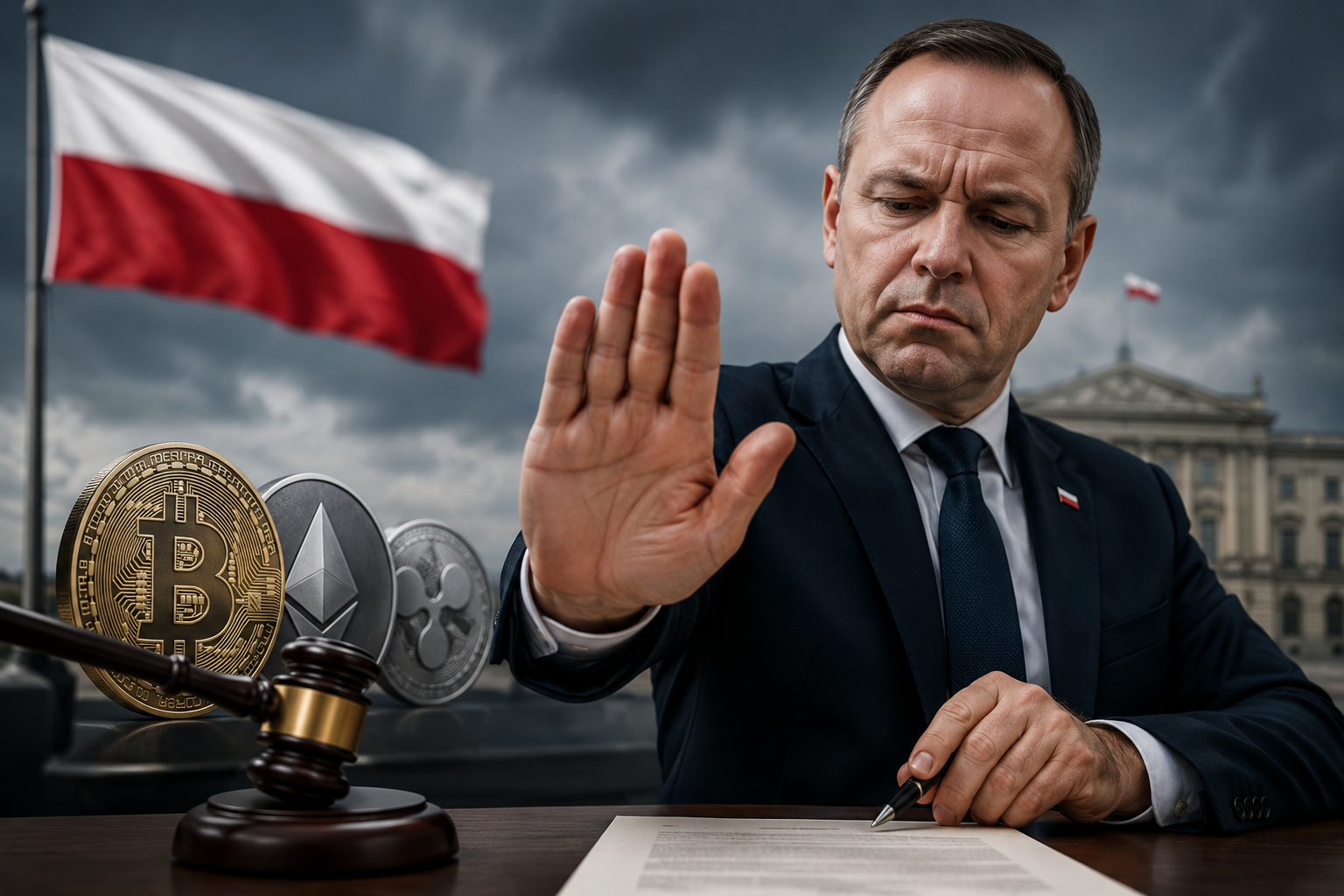
Poland has once again delayed a major cryptocurrency law after President Karol Nawrocki used his veto power for the third time. The decision has drawn attention across Europe because the proposed law would help Poland follow the European Union’s crypto rules under the Markets in Crypto-Assets framework, also known as MiCA.
The latest veto shows that a serious disagreement still exists between the president and lawmakers over the future of digital asset regulation in the country. While supporters of the bill say the law would bring clear rules and stronger protection for consumers, critics believe some parts of the proposal could place too much pressure on crypto businesses.
As a result, Poland now faces more uncertainty at a time when many European countries already move ahead with the new EU crypto framework.
What the Proposed Law Planned to Do
The proposed legislation aimed to align Poland’s crypto market with the European Union’s MiCA regulations. These rules create a common legal framework for cryptocurrency companies across EU member states.
Under MiCA, crypto firms must meet certain standards before they can provide services. The framework covers areas such as licensing, consumer protection, transparency, and supervision.
European officials introduced these rules to make the crypto market safer and more stable. They also want to reduce risks for investors and create similar standards across all member countries.
For Poland, the law would serve as the country’s local version of these EU requirements.
Why President Nawrocki Said No
President Karol Nawrocki stated that lawmakers failed to address concerns he had raised in previous versions of the bill. Because those issues remained unresolved, he decided to reject the legislation once again.
This marks the third time that he has used his veto power against a crypto regulation proposal.
Supporters of the president argue that the proposed law contains measures that could place heavy burdens on cryptocurrency businesses. They fear that strict requirements could make it harder for firms to operate in Poland.
According to this view, excessive regulation could push companies to move their operations to other countries where conditions appear more favorable.
The president and his supporters believe lawmakers should create a better balance between oversight and business growth.
Government Push for Stronger Rules
The Polish government has taken a different position. Officials support stronger regulation and believe the country needs clear rules for the crypto sector.
One reason behind this effort comes from concerns about investor protection. Authorities want to reduce risks and improve trust in digital asset markets.
The government also faces pressure after a major investigation linked to the collapse of the Zondacrypto exchange. The case involves allegations of fraud that reportedly affected thousands of users.
Events such as this have increased calls for stronger oversight. Many policymakers believe clearer regulations could help prevent similar problems in the future.
For government officials, the proposed law represents an important step toward a safer environment for investors and businesses alike.
The Importance of MiCA Rules
The Markets in Crypto-Assets framework stands as one of the most important crypto regulations in Europe. The rules aim to create consistency across all EU countries.
Before MiCA, each nation often followed its own approach. This situation created confusion for companies that wanted to operate across borders.
The new framework seeks to solve that problem. Once a company meets the required standards in one member state, it can access opportunities across the European Union more easily.
Supporters say this system promotes innovation while also protecting consumers. It can also help attract legitimate businesses that seek clear legal guidance.
Because of these benefits, many EU countries have already started the process of implementing the framework.
Challenges for Poland
Poland’s continued delay creates several challenges. The country remains under pressure to implement the required EU rules.
Without national legislation that supports MiCA, crypto firms may face uncertainty about future operations. Businesses often prefer clear regulations because they help with long-term planning and investment decisions.
A lack of clarity can slow business activity and create hesitation among investors. Companies may delay expansion plans until they understand what rules will apply in the future.
The situation could also place Poland behind other European countries that have already moved forward with implementation.
Possible Effects on Crypto Companies
The president’s veto does not prohibit cryptocurrency activity in Poland. People can still buy, sell, and use digital assets under current rules.
However, the absence of a finalized framework creates uncertainty for exchanges, custodians, and other crypto service providers.
These businesses need to know what standards they must follow. They also need clarity on licensing requirements, reporting obligations, and consumer protection measures.
If delays continue, some firms may find it harder to prepare for future regulatory changes. Others may consider alternative locations within the European Union.
For companies that operate across multiple countries, regulatory certainty often plays a major role in business decisions.
Impact on Consumers and Investors
Consumers also have an interest in the outcome of this debate. Supporters of the legislation argue that stronger regulation can increase protection for users.
Clear rules can help define company responsibilities and improve transparency. They can also provide better safeguards for customer funds and information.
At the same time, critics worry that excessive regulation may reduce competition and limit innovation.
The challenge for policymakers is to create a framework that protects consumers without making business operations unnecessarily difficult.
This balance remains at the center of the current dispute in Poland.
A Political Standoff Continues
The latest veto highlights a broader political conflict between President Karol Nawrocki and the government.
Both sides agree that cryptocurrency regulation matters, but they differ on how strict those rules should be.
Lawmakers must now decide whether to revise the proposal again or pursue another path toward compliance with EU requirements.
Until a compromise emerges, uncertainty will likely remain a major issue for the country’s digital asset sector.
What Happens Next
The future of crypto regulation in Poland now depends on further discussions between political leaders and lawmakers.
Any new proposal will likely need to address the president’s concerns while still meeting European Union standards. This may require additional negotiations and changes to the legislation.
The outcome will affect businesses, investors, and consumers across the country. It will also determine how Poland fits into the wider European crypto landscape.
For now, one fact remains clear. President Karol Nawrocki has vetoed crypto regulation for the third time, and the debate over the future of digital asset rules in Poland is far from over.
Also Read – How Telegram Groups Secretly Empty Your Bank Balance