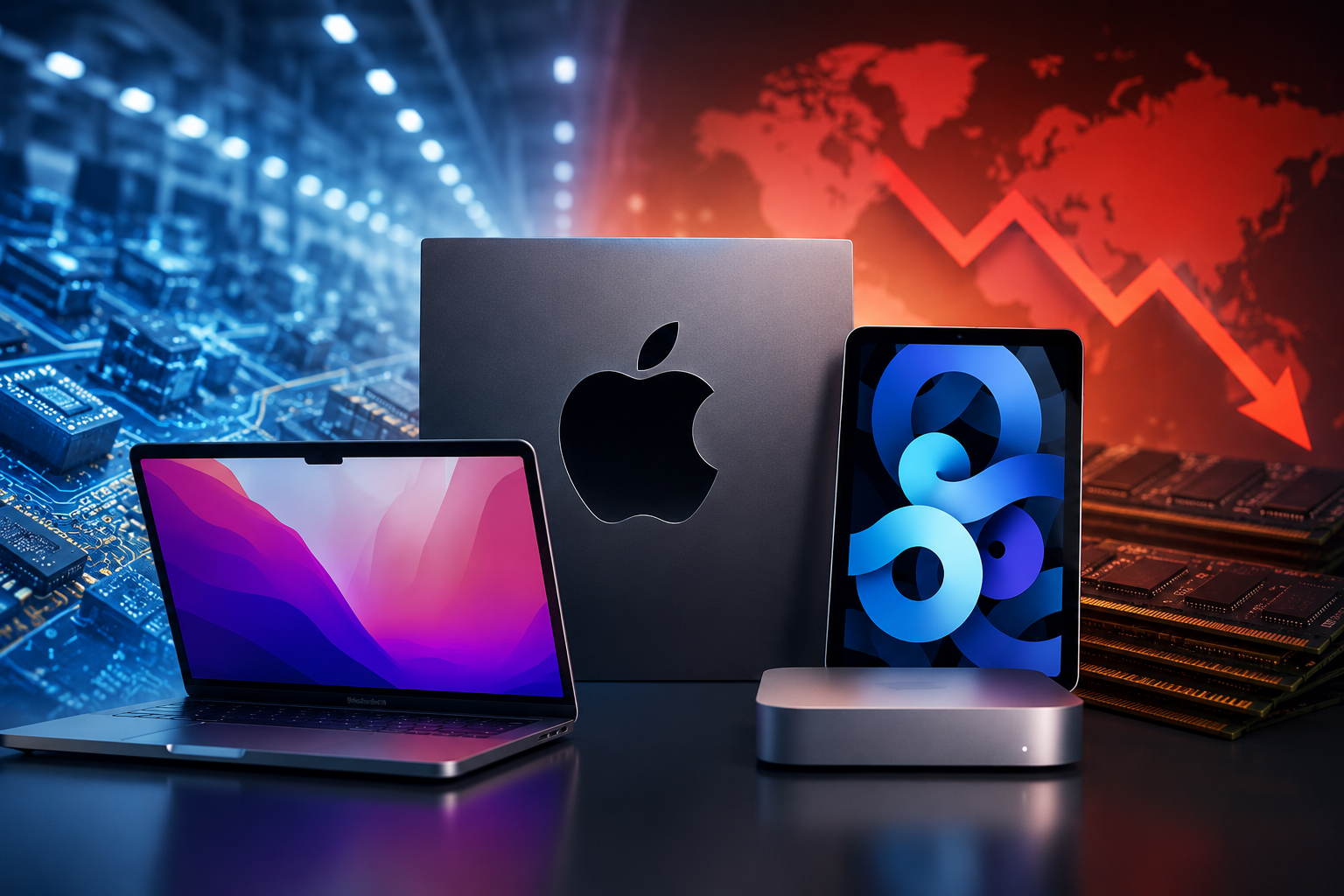
Apple has increased the prices of Mac and iPad devices after a global memory chip shortage started affecting production costs. The shortage has become one of the biggest challenges for the tech industry this year, and experts say artificial intelligence is one of the main reasons behind it.
For many years, Apple products have stayed expensive because of premium design and advanced technology. But now, the company has decided to raise prices again, not because of new features or major upgrades, but because an important part of the supply chain has become much more costly.
The problem comes from memory chips. These tiny parts are essential inside almost every electronic device. Without them, products like laptops, tablets, smartphones, and computers simply cannot work properly. Apple depends heavily on these chips for MacBooks, iPads, and many other devices. As supply becomes tight across the world, Apple now has no choice but to pass some of those extra costs to customers.
The Global Memory Chip Shortage Explained
The current issue comes from a shortage of memory chips, especially DRAM and NAND flash memory. These are critical components that help devices store files, run apps, and manage daily tasks smoothly.
Normally, companies around the world produce enough chips to meet demand. But over the past year, demand has increased at an unexpected speed. Large technology companies have started buying huge amounts of memory chips, which has created pressure across the entire market.
As a result, supply has become limited. When supply drops and demand rises, prices naturally go up. This is exactly what has happened in the memory chip market.
Apple, like many other electronics companies, now pays much more for these parts than before.
Artificial Intelligence Is Driving The Problem
One of the biggest reasons behind this shortage is the rapid growth of artificial intelligence.
AI companies now build massive data centers to train advanced AI systems. These powerful systems need huge amounts of memory to process large amounts of information quickly. Because of this, companies have started buying enormous quantities of advanced memory chips.
The main demand now comes from high-bandwidth memory, DRAM chips, and NAND storage chips. These are the same types of components that many consumer electronics companies also need.
As AI development grows faster every month, more chip supply now goes toward AI infrastructure instead of regular consumer products.
This shift has created a major imbalance in the technology market.
Major Chip Companies Are Focusing On AI Demand
The world’s biggest memory chip manufacturers now focus heavily on AI-related demand because that sector offers bigger profits.
Companies such as Micron Technology, Samsung Electronics, and SK hynix currently supply many of the memory chips used across the tech industry.
Because AI companies are buying at record levels, these manufacturers now prioritize server and data center orders over consumer electronics.
This means fewer chips remain available for products such as laptops, tablets, gaming consoles, and smartphones.
As supply becomes tighter, companies like Apple face rising production costs.
Eventually, these higher costs reach customers.
Apple Products Have Become More Expensive
Because of these rising component costs, Apple has already raised prices across several product categories.
MacBook Air models now cost roughly 100 to 200 dollars more than before.
MacBook Pro models, especially high-end versions, have seen even bigger increases because premium configurations require larger amounts of memory.
iPad Air and iPad Pro models have also become more expensive. Reports suggest price increases between 100 and 300 dollars depending on the model and storage option.
Other products such as Mac Studio and Mac Mini have also seen significant increases, especially premium versions with advanced hardware specifications.
For customers who regularly buy Apple devices, this sudden jump has come as a surprise.
Price Increase In India Is Much Higher
The impact has become even more noticeable in countries like India.
Reports suggest that some premium Apple devices have become costlier by as much as 70,000 rupees to nearly 1 lakh rupees.
Since Apple products already sit in the premium category, these price increases could make upgrades much harder for many customers.
India has become an important market for Apple in recent years. The company has invested heavily in local manufacturing and retail expansion.
However, rising global production costs now affect pricing even in fast-growing markets.
For many buyers, premium Apple devices may now feel even further out of reach.
Other Tech Companies May Follow Apple
This situation is not limited to Apple alone.
Many other technology companies also depend on the same chip manufacturers. If memory prices continue to rise, several companies may soon increase product prices as well.
Industry experts believe companies such as Microsoft, Dell Technologies, and several gaming hardware manufacturers may soon face similar pressure.
Products such as laptops, gaming consoles, desktop computers, and tablets could all become more expensive in the coming months.
This could affect millions of consumers around the world.
The entire electronics market now depends heavily on how quickly chip supply improves.
Will iPhone Prices Increase Next?
One major question now remains unanswered.
Will Apple raise iPhone prices too?
At the moment, iPhone prices have not changed. Apple has only increased prices for Mac and iPad products so far.
However, analysts believe iPhone price increases may happen later this year if the chip shortage continues.
Since iPhones also depend heavily on memory chips, Apple may eventually face similar cost pressure there as well.
If supply problems continue for several more months, future iPhone models could become more expensive.
Many consumers now wait closely for Apple’s next move.
A Bigger Shift In The Technology Industry
This situation shows a much bigger change happening inside the global technology industry.
For many years, new technology trends mostly affected software development. But now, artificial intelligence has started changing the physical supply chain itself.
The race to build stronger AI systems has become so intense that it now affects everyday consumer products.
The average customer may now pay higher prices simply because AI companies require massive computing power.
This marks an important moment for the entire technology sector.
Artificial intelligence no longer changes only software and digital services.
It now directly affects the cost of devices people buy every day.
Apple’s latest price increase may only be the beginning of a larger trend that could reshape the global electronics market in the months ahead.
ALSO READ: SBI Buys Bitbank in $290 Million Japan Crypto Deal